Current Account Balance Increases Year-on-Year After 9 Months... Exports Decline for 1 Year (Comprehensive)
November Current Account Surplus $5.97 Billion... Increased Year-on-Year After 9 Months
Goods Balance Decreased, Exports Down 12 Consecutive Months Year-on-Year
Semiconductor Price Decline and Manufacturing Contraction Persist
Reduced Overseas Dividend Payments Expand Primary Income Account
Low Oil Prices Reduce Refinery Profits... Overseas Dividend Payments Decline
Negative Impact from Oil Price Surge Due to Iran Crisis

[Asia Economy Reporter Kim Eun-byeol] In November last year, the current account balance turned to an increasing trend compared to the same period last year for the first time in nine months. The current account, which had started to decline due to the US-China trade conflict and falling semiconductor prices, showed signs of improvement after about a year. However, it is too early to interpret this positively. The size of the goods balance actually decreased, and the increase in the current account was largely influenced by corporate dividend payments.
On the 7th, the Bank of Korea announced that the current account balance for November 2019 was $5.97 billion (approximately 6.9 trillion KRW). This represents an increase of $840 million (about 16%) compared to the same period the previous year ($5.13 billion). This marks an improvement compared to the previous year for the first time in about a year since November 2018, when Korea's export economy began to deteriorate. The cumulative current account balance up to November was $55.64 billion, and it is expected to comfortably surpass the Bank of Korea's forecasted annual current account balance of $57 billion for 2019. Considering that the customs clearance balance for December is around $2 billion, the annual current account balance is expected to approach $60 billion. A Bank of Korea official stated, "Looking at the November current account, it can be interpreted that fears of a deficit reversal have at least subsided." However, they added, "We need to observe the trend for a few more months to determine whether this is a definite positive turnaround."
The increase in the current account balance in November cannot be immediately seen as a recovery in corporate exports. The goods balance surplus was $7.39 billion, which is $110 million less than a year ago ($7.5 billion). Although the decrease in the goods balance was smaller compared to October's decrease of $2.49 billion, the monthly goods balance is at its lowest level in three months. Exports ($46.5 billion) decreased by 10.3%, and imports ($39.11 billion) decreased by 11.7%. The year-on-year export decline has continued for 12 consecutive months. This indicates that the global manufacturing contraction and semiconductor price declines are still having an impact.
Based on cumulative data up to November last year (customs basis), semiconductor exports amounted to $89.11 billion, accounting for nearly 20% of total exports ($496.7 billion). Given Korea's industrial structure with a high proportion of semiconductor exports, the semiconductor price decline last year dealt a significant blow.
The decrease in imports was largely influenced by the drop in oil prices. Therefore, if oil prices surge due to heightened tensions between the US and Iran this year, imports may increase, worsening the current account balance. The Bank of Korea estimated that if oil prices rise by $10, the current account balance would decrease by $9 billion, assuming export and import volumes remain unchanged. In the previous year, the impact of a $10 increase in oil prices on the current account was estimated at $8 billion, indicating that the influence of oil prices has grown.
The service balance deficit was $1.89 billion, with the deficit narrowing by $300 million compared to the same period last year. Within the service balance, the travel balance deficit was $950 million, a $400 million decrease from a year ago. The boycott of Japanese products led to a decrease in the number of Korean outbound travelers, while the number of travelers from China and Southeast Asia increased, influencing this change.
Hot Picks Today
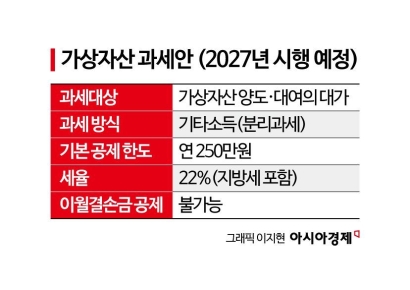 "Stocks Are Not Taxed, but Annual Crypto Gains Over 2.5 Million Won to Be Taxed Next Year... Investors Push Back"
- "Not Jealous of Winning the Lottery"... Entire Village Stunned as 200 Million Won Jackpot of Wild Ginseng Cluster Discovered at Jirisan
- "Rather Than Endure a 1.5 Million KRW Stipend, I'd Rather Earn 500 Million in the U.S." Top Talent from SNU and KAIST Are Leaving [Scientists Are Disappearing] ①
- "How Did an Employee Who Loved Samsung End Up Like This?"... Past Video of Samsung Electronics Union Chairman Resurfaces
- "Even With a 90 Million Won Salary and Bonuses, It Doesn’t Feel Like Much"... A Latecomer Rookie Who Beat 70 to 1 Odds [Scientists Are Disappearing] ③
The primary income balance, which includes wages, dividends, and interest, recorded a surplus of $970 million, nearly tripling from $340 million a year earlier. This was due to a reduction in dividends paid by oil refining companies to foreign investors, as their earnings sharply declined with falling oil prices. However, dividends earned by Korean companies from overseas investments increased. The financial account net assets, which indicate capital inflows and outflows, increased by $5.34 billion in November. In securities investment, as the US stock market continued its upward trend, domestic investors' overseas investments increased by $2.95 billion, while foreign investment in Korea decreased by $1.88 billion.
© The Asia Business Daily(www.asiae.co.kr). All rights reserved.







