US Rushes Minimum Wage Increases Amid Positive Economic Outlook
Minimum Wage Increases in 20 States for New Year
Low Unemployment Rate and Tax Cut Effects
[Asia Economy Reporter Naju-seok] As expectations for economic recovery grow, the minimum wage in the United States is rising rapidly. Despite the increase in the minimum wage, analyses suggest that a virtuous cycle is occurring, with overall wage levels improving without causing employment contraction.
According to the Economic Policy Institute (EPI) on the 2nd (local time), the minimum wage has increased in 20 states across the U.S., including California, New Jersey, and New York, since the beginning of the new year. EPI predicts that 6.8 million workers will receive an additional $8.2 billion (9.5 trillion KRW) due to the wage hikes.
Additionally, four states?Connecticut, Nevada, Illinois, and Oregon?are scheduled to raise their minimum wages within this year. Notably, Illinois plans to increase its minimum wage again in July following the hike in January. Half of the 50 states will raise their minimum wages this year.

The U.S. federal government has set the minimum wage at $7.25 per hour since 2009, but some states have minimum wages approaching $15, resulting in varying standards across regions. The increase amounts also differ by region. For example, New Mexico’s minimum wage rose from $7 to $9 per hour, a $1.5 increase, whereas Florida’s increased only from $8.46 to $8.56, a mere $0.10 rise.
The competitive increases in minimum wages by states are largely attributed to economic improvements. The record-low unemployment rate and benefits from tax reforms are significant factors.
In November last year, the U.S. unemployment rate was 3.5%, the lowest in 50 years since 1969. From the perspective of companies, it has become difficult to secure labor, prompting them to raise wages to attract workers. The U.S. Department of Labor reported on the 2nd (local time) that new unemployment claims last week were 222,000, 3,000 fewer than the expert forecast of 225,000. A decrease in unemployment claims indicates an improving job market. Manufacturing indicators also showed positive signs. The final U.S. Manufacturing Purchasing Managers’ Index (PMI) for December was 52.4, indicating continued economic expansion.
It is also explained that the tax cuts and other measures actively promoted by President Donald Trump have had an impact. Former White House National Economic Council Director Gary Cohn recently wrote in the Wall Street Journal (WSJ) that wage increases are due to tax reforms such as reductions in corporate and income taxes. With reduced tax burdens, companies purchase new equipment, which enhances worker productivity, thereby increasing productivity and wages.
There is also analysis that the minimum wage increase helps improve overall wage levels. The Washington Post (WP) reported that recent wage increases are influenced by minimum wage benefits. Over the past year, wages for the bottom 25% income workers in states that raised the minimum wage increased nearly 1.5 times faster than in states without such changes. The series of minimum wage policies implemented regionally have rapidly raised incomes for low-wage workers. In 2018, Arkansas decided to gradually raise its minimum wage from $8.50 to $11 per hour by 2021. In November last year, Arkansas’s unemployment rate was 3.6%, lower than the previous year’s 3.7%.
Concerns about wage increases causing employment contraction have also been raised within the U.S. However, Jeffrey Clemens, a professor at California State University who holds a negative view on the effects of minimum wage increases, said regarding the claim that it does not affect employment, "It can be considered a partial factor."
Hot Picks Today
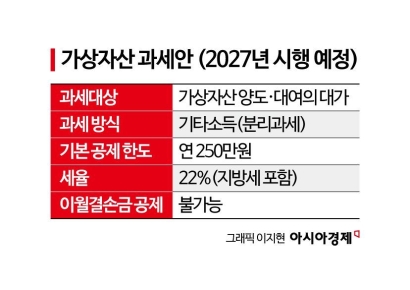 "Stocks Are Not Taxed, but Annual Crypto Gains Over 2.5 Million Won to Be Taxed Next Year... Investors Push Back"
- "Not Jealous of Winning the Lottery"... Entire Village Stunned as 200 Million Won Jackpot of Wild Ginseng Cluster Discovered at Jirisan
- "Even With a 90 Million Won Salary and Bonuses, It Doesn’t Feel Like Much"... A Latecomer Rookie Who Beat 70 to 1 Odds [Scientists Are Disappearing] ③
- "Rather Than Endure a 1.5 Million KRW Stipend, I'd Rather Earn 500 Million in the U.S." Top Talent from SNU and KAIST Are Leaving [Scientists Are Disappearing] ①
- "How Did an Employee Who Loved Samsung End Up Like This?"... Past Video of Samsung Electronics Union Chairman Resurfaces
© The Asia Business Daily(www.asiae.co.kr). All rights reserved.







