[2020 Corporate World Young Power] The Era of 4050 Young Chairpersons... Leadership Different from Their Predecessors
Chairman Koo Kwang-mo Abolishes Auditorium New Year's Ceremony, Sends Video Message
"Please Call Me Representative Instead of Chairman" Candid Approach
Vice Chairman Chung Eui-sun Also Moves Away from 'Military-Style Organizational Culture'
Promotes Open Innovation Including Appointment of Convergence-Type Talents
Distinctive Presence of Lee Jae-yong and Chung Yong-jin
![[2020 Corporate World Young Power] The Era of 4050 Young Chairpersons... Leadership Different from Their Predecessors](http://www.asiae.co.kr/news/img_view.htm?img=2020010311192377601_1578017963.jpg)
[Asia Economy Reporter Kim Hyewon] The 2020s are undoubtedly the heyday of the '4050 Young Business Leaders.' Among South Korea's top four conglomerates, the actual heads of the top three groups, excluding SK Group, are all in their 40s and 50s, representing a strong young power. Within just two to three years, these leaders, who share the common denominator of being the de facto number one in their groups, have begun to firmly grasp decision-making and personnel authority internally, while externally continuing bold activities without hesitation to showcase their unique colors. However, unresolved challenges remain, including governance restructuring or management disputes left unsettled during succession from their predecessors, as well as various lawsuits that need to be addressed going forward.
The recent wave of generational change among conglomerate heads has been led notably by Hyundai Motor Group and LG Group. Chung Euisun, the Executive Vice Chairman of Hyundai Motor Group born in 1970, and Koo Kwang-mo, Chairman of LG Group born in 1978, have been at the forefront of management since last year, bringing fresh winds to their organizations. Although Chung’s father, Chung Mong-koo, Chairman of Hyundai Motor Group, remains active, Chung Euisun has taken over the title of the group’s number one and openly exercises authority as the ultimate decision-maker. Chairman Koo ascended to the top position relatively early following the passing of the late Koo Bon-moo, adhering to the principle of eldest son succession.
Both leaders have given the business world a fresh shock with their unconventional management styles, different from previous generations. A representative example this year is LG’s changed New Year ceremony. Chairman Koo, who made the unprecedented decision to eliminate the offline New Year ceremony for the first time since the company’s founding, has earned nicknames such as pragmatic and unpretentious leader within less than three years of his appointment. In line with the digital transformation era, Koo’s intention to break away from outdated customs led LG to abolish the auditorium ceremony that had been held for over 30 years overnight. Instead, Koo sent a video message titled 'LG 2020 New Year Letter' to LG employees worldwide, urging them to make 2020 a year of practicing with the customer’s heart. LG employees have become accustomed to calling him 'Representative' rather than 'Chairman' at his request.
Executive Vice Chairman Chung has taken it upon himself to reform organizational culture by shedding the 'old-fashioned boss' image since his promotion. Starting with relatively minor issues such as installing Wi-Fi networks at the Hyundai-Kia Motors headquarters in Yangjae-dong, Seocho-gu, Seoul, he has been addressing long-standing employee grievances one by one, including personnel and rank system reforms. As a result, inside Hyundai-Kia Motors, there is growing sentiment that the previously military-style culture is fading and the organization is changing. Leading an open innovation strategy that appoints convergent talents both internally and externally in the right places and even collaborates with global competitors has become a new role for these 4050 young business leaders.
Cho Won-tae, Chairman of Hanjin Group born in 1976, who inherited management following his father’s sudden passing last April, is also busy imprinting his own 'Cho Won-tae color.' Making his official debut at the International Air Transport Association (IATA) annual general meeting in June last year, Cho revealed his intention for structural reform by stating at a year-end press conference that "unprofitable businesses will be discarded." In subsequent personnel changes, he exercised his authority by removing his father’s close 'old boy' associates and placing seasoned talents from the IT sector, an area of personal interest, in key positions. This led to a public apology after family discord, which had been under the surface, became widely known.
Samsung Electronics Vice Chairman Lee Jae-yong and Shinsegae Group Vice Chairman Chung Yong-jin, both born in 1968, have shown distinctive presences in different fields. Last year, the Fair Trade Commission officially changed the designated head (same person) of Samsung Group from Chairman Lee Kun-hee to Lee Jae-yong for the first time in 30 years, marking the start of the 'JY era.' Despite being embroiled in the 'Choi Soon-sil political scandal' and undergoing trial during a crisis management period, Lee attracted attention by broadly engaging in private diplomacy on issues such as Japan’s export restrictions on semiconductor materials to Korea and inter-Korean economic cooperation. However, judicial risks remain a major uncertainty for Samsung Group, making the resolution of these risks a critical issue.
Cho Hyun-joon, Chairman of Hyosung Group born early in 1968, is regarded as having solidified his position internally as head of the group but is currently on trial for alleged violations of the Fair Trade Act, including unfair support to affiliates. Excluding external variables, he has been expanding his control by successfully leading the transition to a holding company system since becoming chairman.
Hot Picks Today
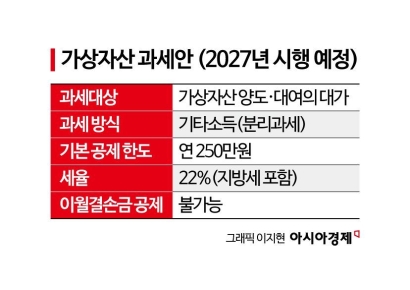 "Stocks Are Not Taxed, but Annual Crypto Gains Over 2.5 Million Won to Be Taxed Next Year... Investors Push Back"
- "Not Jealous of Winning the Lottery"... Entire Village Stunned as 200 Million Won Jackpot of Wild Ginseng Cluster Discovered at Jirisan
- "Even With a 90 Million Won Salary and Bonuses, It Doesn’t Feel Like Much"... A Latecomer Rookie Who Beat 70 to 1 Odds [Scientists Are Disappearing] ③
- "Rather Than Endure a 1.5 Million KRW Stipend, I'd Rather Earn 500 Million in the U.S." Top Talent from SNU and KAIST Are Leaving [Scientists Are Disappearing] ①
- "How Did an Employee Who Loved Samsung End Up Like This?"... Past Video of Samsung Electronics Union Chairman Resurfaces
There are also unfortunate cases. Park Se-chang, President of Asiana IDT born in 1975 and a third-generation member of the Kumho family, attracted attention inside and outside the business world but found himself in a somewhat ambiguous position after the group’s key affiliate, Asiana Airlines, was sold to HDC Group. Going forward, President Park faces the dual challenge of improving the financial structure of the remaining affiliates Kumho Express and Kumho Industrial with the proceeds from the Asiana Airlines sale and discovering new growth engines.
© The Asia Business Daily(www.asiae.co.kr). All rights reserved.







