
U.S. President Donald Trump has declared that Iran's proposed armistice agreement is "completely unacceptable." This reaction comes as both sides remain deadlocked over Iran's nuclear program, the central issue in the ceasefire negotiations, and as Iran refuses to compromise—insisting on war reparations and control over the Strait of Hormuz. Despite this, both countries are maintaining the ceasefire for now, while attention is turning to whether China will act as a mediator in the aftermath of the upcoming U.S.-China summit scheduled to begin on May 14.
Trump: "Iran's Response Completely Unacceptable"

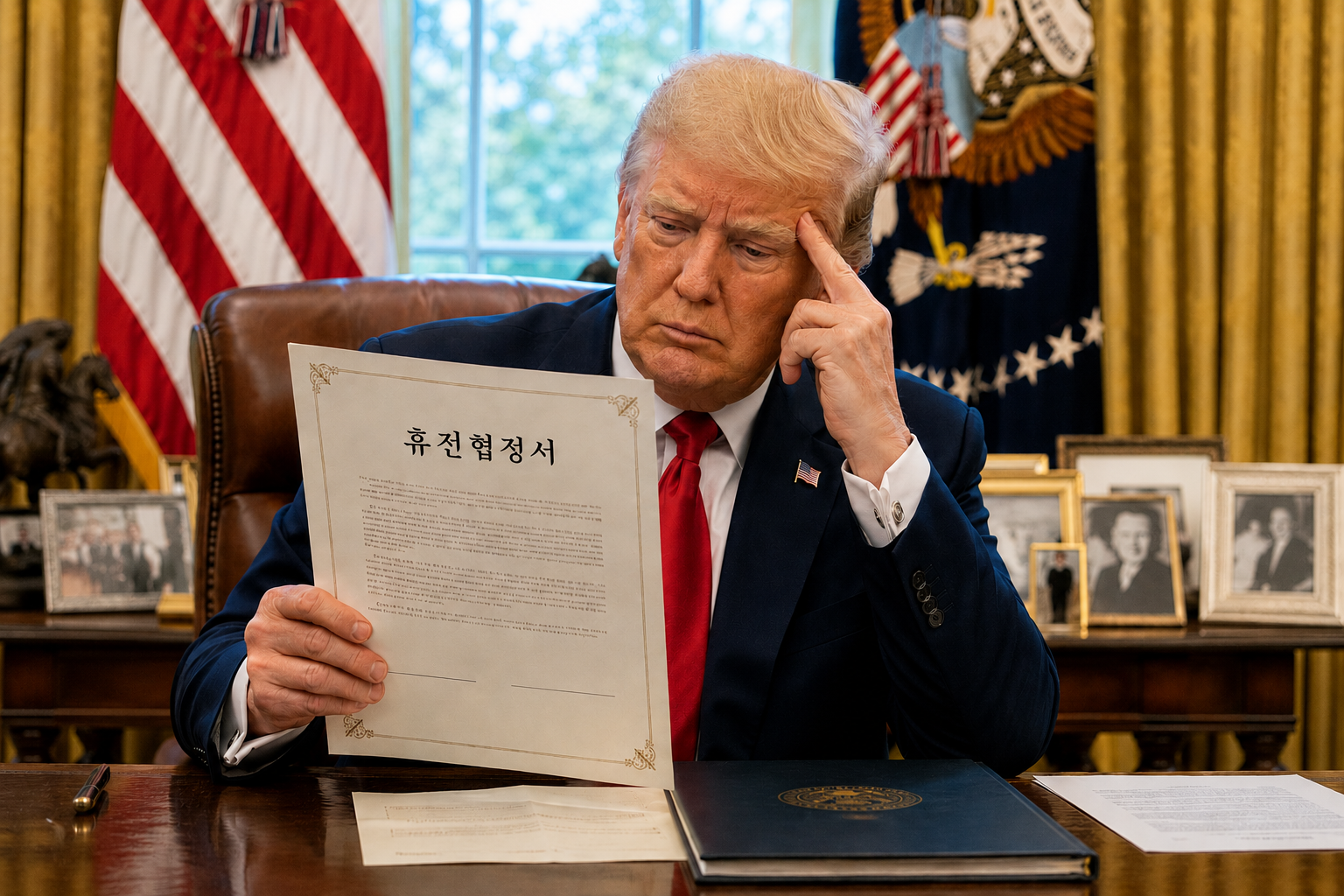
On May 10 (local time), President Trump wrote on his social media platform, Truth Social, "I just read the response from Iran's so-called 'representatives.' I do not like it. It is completely unacceptable." Previously, it had been reported that Iran submitted its response to the U.S.-proposed armistice agreement to the intermediary country, Pakistan.
President Trump did not disclose the specific details of Iran's response, but he strongly expressed his dissatisfaction. In another post on social media, he stated, "For 47 years, Iran has been playing the United States and the rest of the world. Iran has killed Americans with bombs and, most recently, wiped out 42,000 innocent protesters, mocking the U.S. But they will not be laughing anymore," he warned.
Israeli Prime Minister Benjamin Netanyahu, who spoke by phone with President Trump on the same day, also emphasized that the war would not end until the Iranian nuclear issue is resolved. In an interview with U.S. broadcaster CBS, Netanyahu said, "There is still work to be done as uranium and nuclear facilities remain in Iran. Highly enriched uranium must be removed from Iran, and all of Iran’s uranium enrichment facilities must be dismantled," he asserted.

It is being analyzed that the inability to bridge the differences regarding Iran's abandonment of its nuclear program—the core issue—has prevented a breakthrough in ending the war. The Wall Street Journal (WSJ), citing negotiation officials, reported, "The United States demanded that Iran limit uranium enrichment for 20 years, but Iran continues to seek a shorter period and has refused to dismantle its nuclear facilities." The report added, "Iran proposed diluting some of its highly enriched uranium and transferring the rest to a third country, while also demanding a guarantee that the uranium would be returned if the U.S. reneged on the deal."
However, some within the Trump administration are raising the possibility of a provisional armistice agreement that excludes the Iranian nuclear issue for now. U.S. Secretary of Energy Chris Wright, in an interview with NBC, said, when asked whether an interim agreement was possible without resolving all issues related to Iran's nuclear program, "There is certainly a possibility," but added, "However, the Trump administration's top priority is to end Iran's nuclear program."

Iran: "Demanding War Reparations... Trump's Response Not Important"
Iran is also remaining firm in its hardline stance, demanding war reparations. On state broadcaster IRIB, the Iranian government stated, "We have delivered our response to the U.S. proposal through intermediary country Pakistan, and we are demanding war reparations and recognition of our sovereignty over the Strait of Hormuz from the U.S." The government added, "We reject any matter that could weaken our control over this strategic maritime passage."
The Iranian Revolutionary Guard also responded forcefully to President Trump’s reaction. According to Tasnim News Agency, a Revolutionary Guard official said, "No one in Iran is planning to please Trump. His reaction is not important at all. Any negotiation proposal must be prepared with only the interests of the Iranian people in mind."
According to Tasnim News Agency, in addition to demanding war reparations and control over the Strait of Hormuz, Iran has made an end to the U.S. naval blockade and the lifting of the 30-day ban on Iranian oil sales its core conditions. Iran is also insisting that issues such as enriched uranium and other nuclear matters be excluded from the armistice agreement.

Difficult to Reach Agreement Before Trump's Visit to China... Will There Be Pressure for Mediation?
With President Trump's visit to China scheduled for May 13, he will hold talks with Chinese President Xi Jinping without having reached an armistice agreement. As a result, there is speculation that Trump may pressure China to act as a mediator at the summit with President Xi on May 14.
The Iranian side is requesting that China mediate an armistice agreement with the United States. Abdolreza Rahmani Fazli, Iran's ambassador to China, stated on social media platform X, "Any potential agreement must be accompanied by guarantees from major powers. Considering China's status with Iran and other Persian Gulf states, China can play a guarantor role in any agreement," he emphasized.
-

Reporter Lee Hyunwoo knos84@asiae.co.kr
-

Reporter Ryu Hyunseok guspower@asiae.co.kr
-
Edit Sung Kiho kihoyeyo@asiae.co.kr
© The Asia Business Daily(www.asiae.co.kr). All rights reserved.