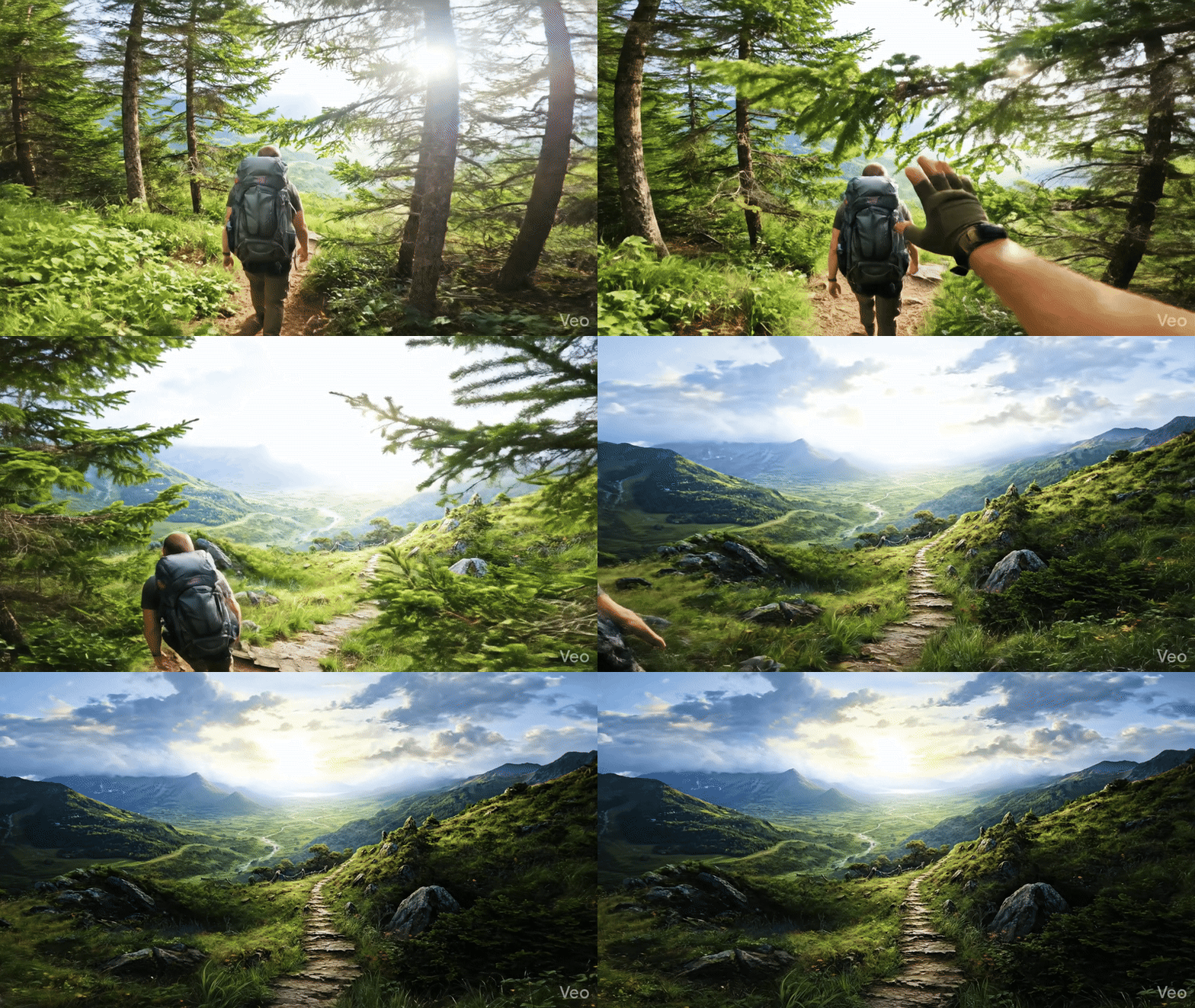
The East-West Trail is a forest path stretching 849 km across the Korean Peninsula from Anmyeondo in Taean County, Chungnam Province to Manghyangjeong in Uljin County, Gyeongbuk Province. It consists of a total of 64 sections, including 55 regular courses and 9 branch courses, and is being developed by the Korea Forest Service starting in 2023.
The long-distance forest trail known as the "Dongseo Trail," often referred to as Korea's version of the Camino de Santiago, has been included in The New York Times' list of recommended travel destinations for 2026.
On January 7 (local time), The New York Times featured the Dongseo Trail in its article "52 Places to Go in 2026."
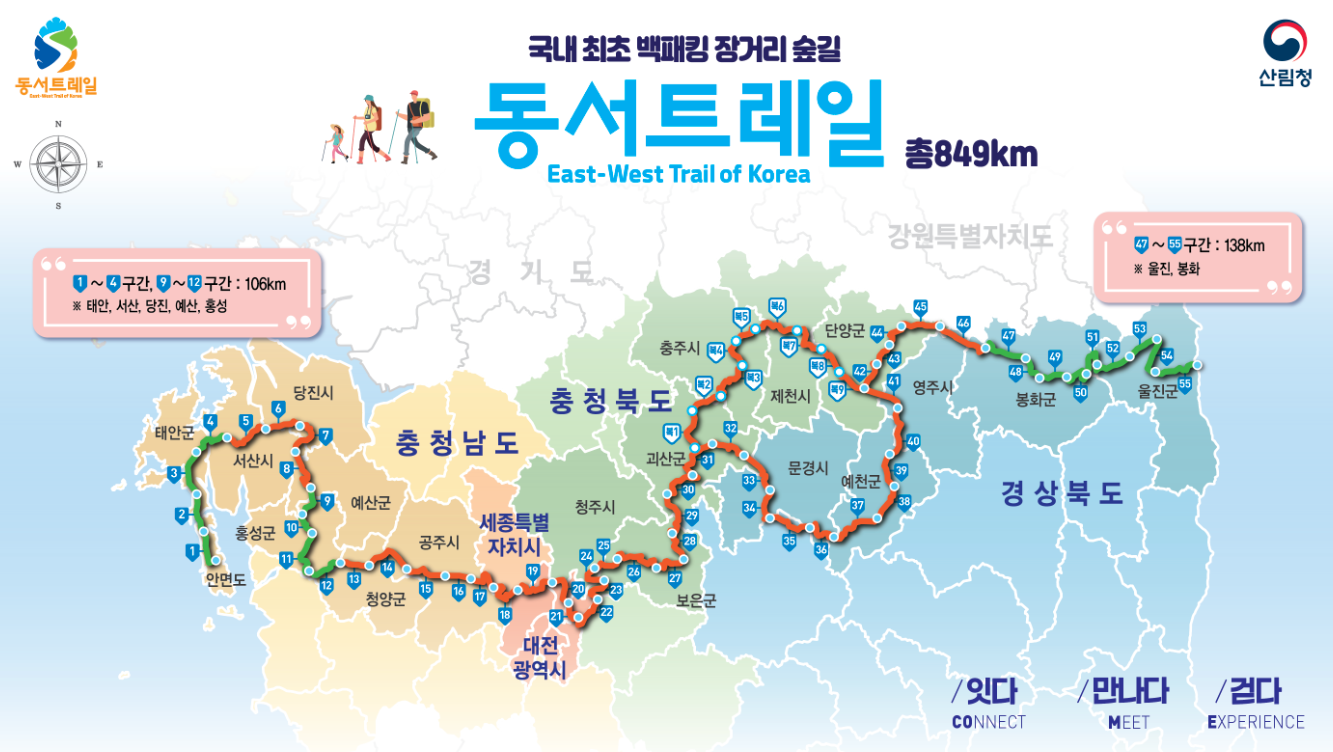
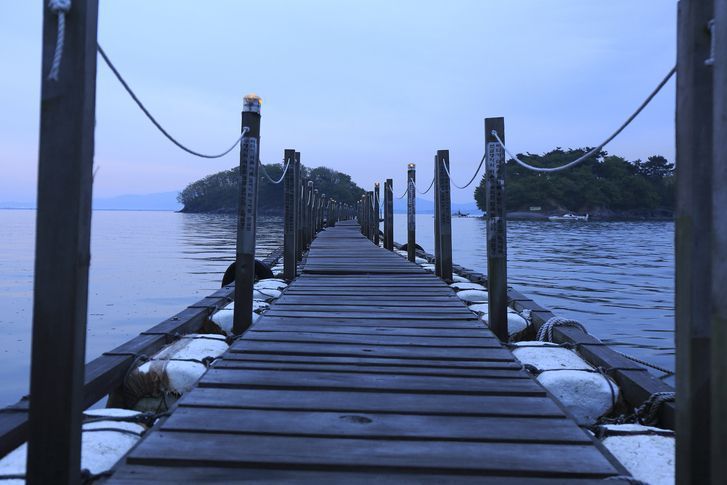
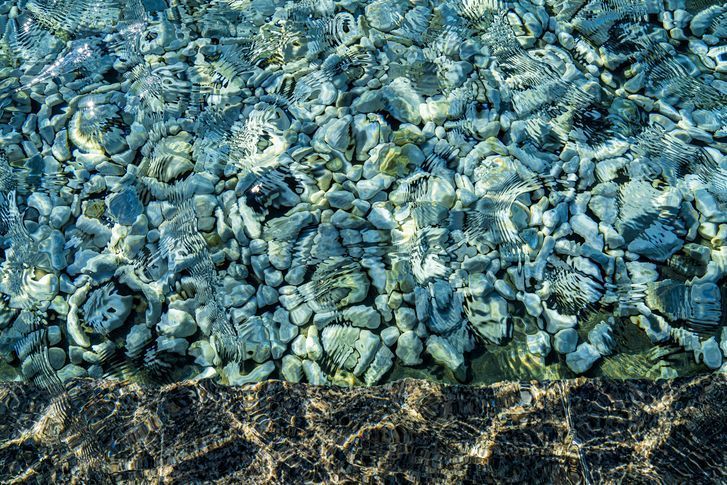
Seventeen sections (244 km) were pilot-opened last October, and construction is scheduled to be completed by this year with the goal of fully opening all sections by 2027.
It is notable for being the first in the country to promote a 'backpacking-based trail.' It is designed as a travel model where travelers carry backpacks and camping equipment and stay overnight or longer, rather than just a simple hiking course.
Unauthorized camping is prohibited, and accommodation and cooking are only allowed at designated shelters and campsites for each section. Base camp villages are designated for using restaurants, accommodations, and convenience facilities in each section, and related information and shelter reservations are provided through the 'Sopnadle-e' platform.
The New York Times introduced the Dongseo Trail as Korea's first east-west cross-country long-distance trail, describing it as "a new long-distance trail connecting Korea's hidden gems." It also recommended, "Escape the hustle and bustle of Seoul and discover the hidden charms of Korea along the Dongseo Trail."
The New York Times explained that "the Dongseo Trail connects natural, ecological, and cultural resources that remain largely unknown even to domestic travelers." The highlighted sections include: ▲The Sogwang-ri Pine Tree Colony in Uljin County, where 500-year-old Geumgang pine trees grow naturally ▲Beopjusa Temple's Palsangjeon, the only wooden pagoda in Korea and a UNESCO World Heritage site ▲Bonghwa, known for its sweetfish ▲Hansan in Seocheon, a traditional ramie production site ▲Hahoe Village in Andong, which preserves a Confucian clan society ▲Uljin, famous for its East Sea snow crab festival.


Other destinations recommended by The New York Times this year include: ▲Route 66 in the United States ▲the Himalayas in Nepal ▲the Rocky Mountains in Canada ▲Nagasaki and Okinawa in Japan ▲Yunnan Province in China. In addition, the 250th anniversary celebrations of American independence, a total solar eclipse observable in Iceland, and the newly established Museum of Modern Art in Warsaw, Poland, were also introduced as noteworthy attractions.
-

Reporter Choi Seungwoo loonytuna@asiae.co.kr
-
Edit Bae Byoungmin wuhaha@asiae.co.kr
© The Asia Business Daily(www.asiae.co.kr). All rights reserved.