Even as the overall self-employed sector has contracted recently due to the economic downturn,
eyeglasses stores continue to experience "reverse growth."
On the afternoon of the 27th, at Namdaemun Eyeglasses Street in Jung-gu, Seoul,
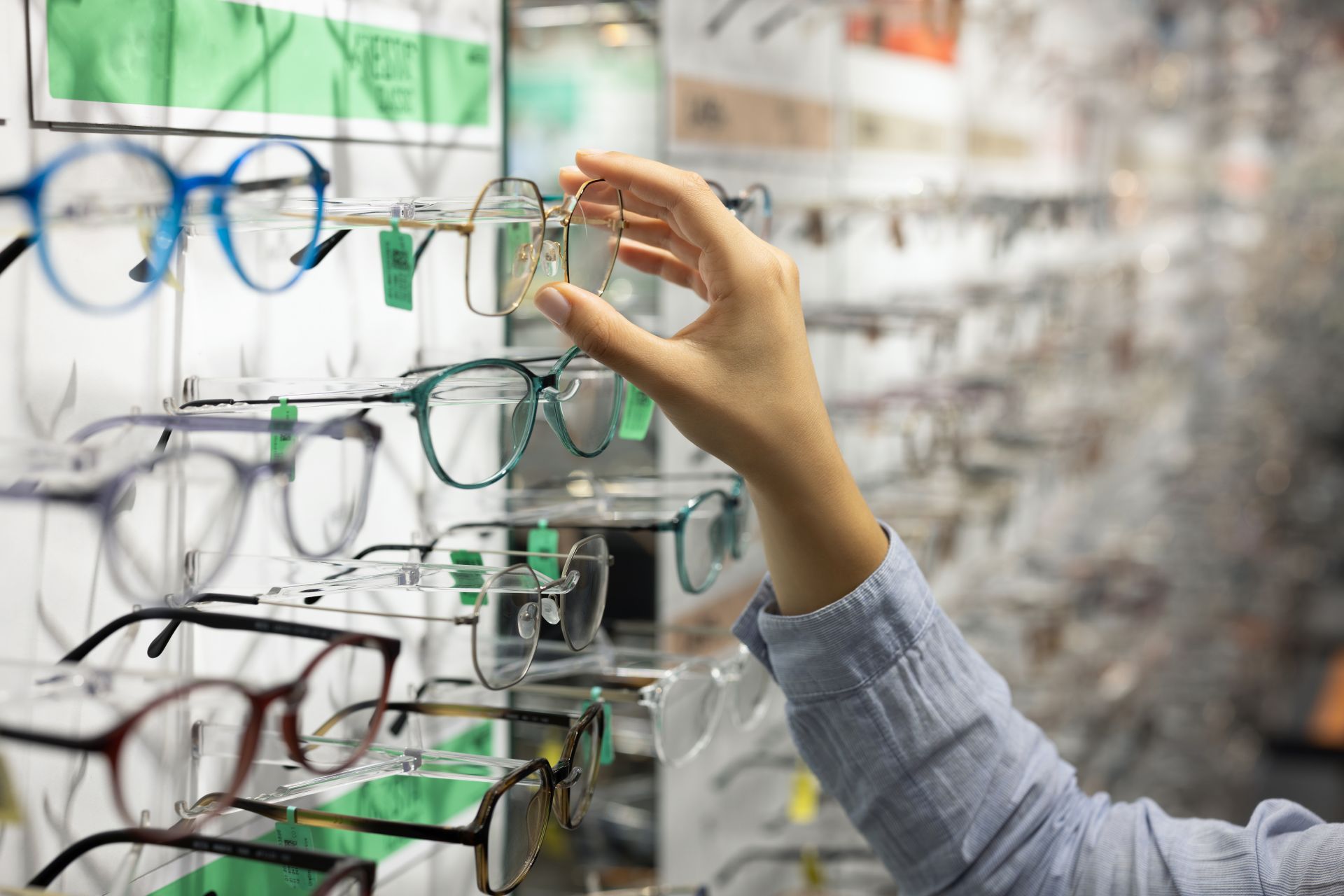
the area in front of the glass display cases was bustling with customers selecting new products.
Some stores were adept at serving Chinese tourists,
and owners who have run their shops for over 30 years remained as busy as ever.
When asked, "Is business good these days?" eyeglasses shop owner Mr. Lee (64)
waved his hands dismissively, but still smiled and said, "With this business, I was able to send my children to college
and even see them get married."
Kim Chungman (61), who has been running his store since the early 2000s,
said, "These days, there has been a clear increase in foreign customers, especially from the United States and Japan,"
"I want to keep this up for at least another 10 years," he added.
Why Are Eyeglasses Stores Increasing?
Impact of Increased Smartphone Use and Aging Population
Steady Rise in Eyeglasses Demand; 5-Year Survival Rate of Eyeglasses Stores at 63%
Significantly Higher Than the Average of 40.2%
739 Stores Opened by November This Year, 6.8 Times More Than Closures
Global Eyeglasses Market Expected to Grow 8.6% Annually Over the Next 5 Years
In addition to the expansion of smartphone use and the aging population,
eyeglasses have also become part of the fashion sector,
leading to a steady increase in demand for eyeglasses.
According to the National Tax Service's "Top 100 Everyday Business Sectors" data,
the 5-year survival rate for eyeglasses stores is 63.0%,
which is significantly higher than the average of 40.2%.
The annual sales growth rate is also 10.13%,
which stands out compared to restaurants (0.26%) and bookstores (-2.71%).
Profitability Is Also a Factor in Startup Expansion
Profitability is also a factor in the expansion of startups. The cost of eyeglass frames and lenses is low, and with added service value such as eye exams and fittings, the margin is high. The ability to operate solo reduces labor costs, which is another advantage. Mr. Yoo, a 59-year-old eyeglass store owner, explained, "Even during COVID-19, I was able to manage alone and endure the rent burden."
Getty Images Bank
According to the Ministry of the Interior and Safety's Local Administration Licensing Data,
as of November this year, there were 10,940 eyeglasses stores nationwide,
an increase of 630 stores compared to five years ago.
During the same period, 739 stores opened,
while 109 stores closed, meaning that openings outnumbered closures by a factor of 6.8.
Global market research firm Grand View Research
projects that the global eyeglasses market will grow from $200.46 billion in 2024
to $335.9 billion in 2030,
with an average annual growth rate of 8.6% from 2025 to 2030.
Lee Eunhee, Professor of Consumer Studies at Inha University,
"Consumers are increasingly questioning price appropriateness,
so price competition may intensify in the future," she said.
"As more consumers purchase online at lower prices using eye exam data,
the distribution structure could be reshaped," she added.


!["Please Help Us": How Much Do Those Bowing 90 Degrees These Days Actually Earn? [Data Pick]](https://cwcontent.asiae.co.kr/asiaresize/323/2026052010120870131_1779239528.png)