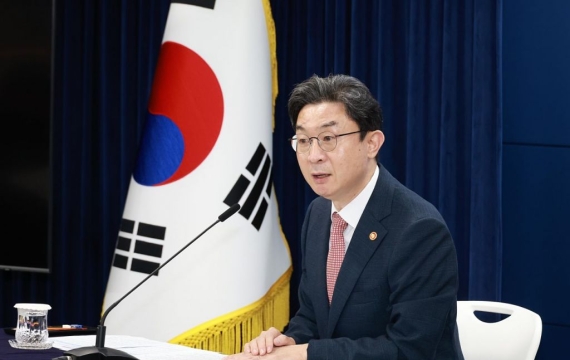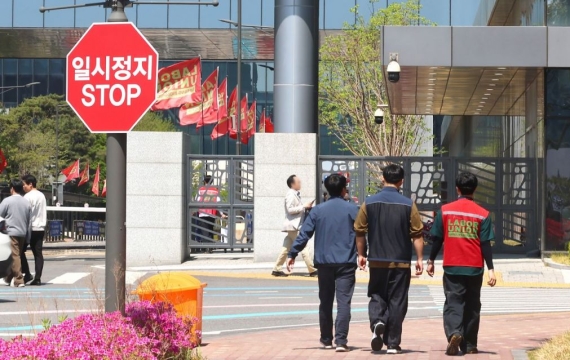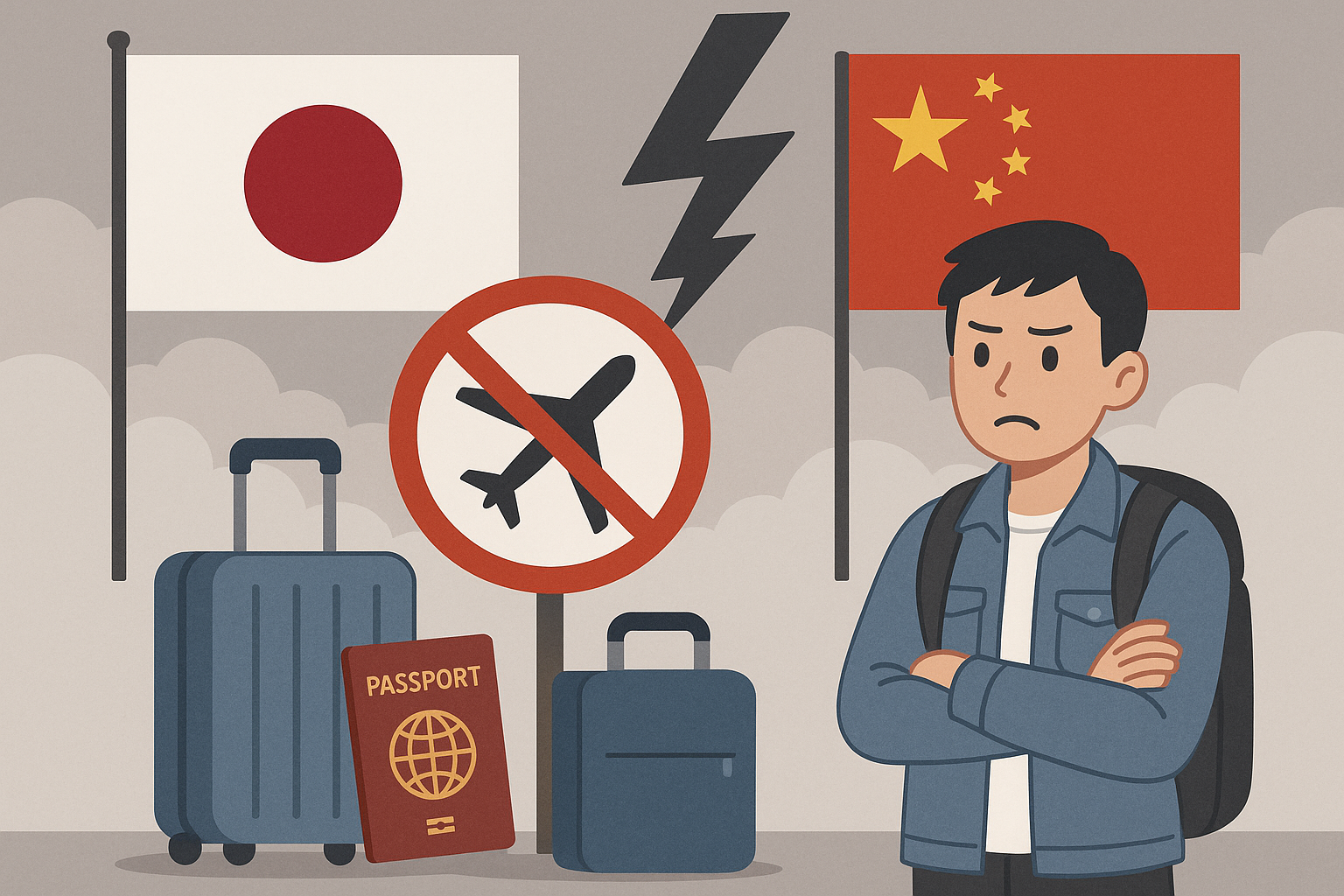

Recently, remarks by Japanese Prime Minister Sanae Takaichi have pushed diplomatic tensions between China and Japan to their peak.
The issue is that this diplomatic conflict is not limited to the government and diplomatic arenas,
but is also disrupting the private travel plans of ordinary office workers.
Among employees of Chinese state-owned enterprises and public sector organizations, sudden instructions to "cancel trips to Japan" have been issued,
leading to situations where companies are even controlling employees' personal schedules.
China-Japan Diplomatic Conflict Unexpectedly Shakes Up Office Workers' Vacations

This situation began on the 7th, when Prime Minister Takaichi stated at the Japanese House of Representatives Budget Committee
"If China uses military force, it could be considered a situation that threatens Japan's existence."
This implies that, in the event of a Taiwan contingency, Japan could exercise its collective self-defense rights and intervene.
China's Ministry of Foreign Affairs immediately issued a strong protest, and the Chinese government subsequently began issuing a series of advisories urging people to refrain from traveling or studying in Japan.
On the 16th, China's Ministry of Culture and Tourism officially announced a travel advisory against visiting Japan, citing "safety concerns."
On Chinese social networking services, posts declaring "I'm canceling my trip to Japan" are appearing one after another,
and airlines are being inundated with requests to cancel tickets to Japan.
Some Chinese airlines are even allowing full refunds for tickets to Japan until the end of the year.
Even Personal Travel Plans Are Being Controlled..."Losing More Than My Salary"

Some Chinese companies are taking a firm stance, issuing instructions to their employees to cancel trips to Japan.
According to the South China Morning Post (SCMP), there have been numerous reports among employees of Chinese state-owned enterprises and public institutions
"Recently, the company ordered us to cancel our trips to Japan."
An engineer, Mr. A, who works at a state-owned enterprise in Wuhan, received a call from the company's administrative department
instructing him to "cancel his planned vacation to Osaka, Japan next month."
He said, "I had already received approval for the vacation last month and booked both the flight and hotel,"
"but due to the recent escalation in tensions, I now have to cancel the entire trip."
In Mr. A's case, he was fortunately able to receive a full refund for his flight and accommodation, except for the visa fee, but there are many cases where people are losing their money entirely.
A male nurse, Mr. B, working at a national hospital in Beijing, applied to his company for a weekend trip to Japan earlier this month.
After the Chinese government issued a travel warning for Japan, his supervisor denied the request, citing the need to refrain from travel.
Because the travel date was approaching, Mr. B is now unable to get a refund for most of the 6,000 yuan (about 840,000 won) he spent on flight and accommodation reservations.
He lamented, "My monthly salary is just over 4,000 yuan (about 780,000 won), so this is a huge loss for me."
500,000 Flight Cancellations... Japanese Tourism Industry on High Alert

SCMP reported that at least seven Chinese airlines are offering full refunds for tickets to Japan.
As of the 17th, the number of canceled flights to Japan was about 491,000.
This accounts for about 32% of all reservations for flights to Japan held by Chinese airlines.
This year, Japan enjoyed a tourism boom due to the weak yen, but has now been hit by an unexpected blow.
What About Korea? Unexpected 'Side Benefit'

Interestingly, the number of Chinese tourists choosing Korea instead of Japan is increasing.
"I'm going to Seoul instead of Osaka"-such posts are appearing on social media,
and the travel industry expects that Chinese demand for overseas travel
is likely to shift from Japan to Korea.
From the perspective of the Korean airline industry, this could actually be a positive development.
The travel industry is now closely watching how tourism demand among China, Japan, and Korea will change going forward.
-

Reporter Seo Jiyeong zo2zo2zo2@asiae.co.kr
-
Edit Kong Sumin hyunhj@asiae.co.kr
© The Asia Business Daily(www.asiae.co.kr). All rights reserved.
!['WHO Declares International Public Health Emergency' Why the Untreatable 'Variant Ebola' Is More Deadly Than COVID-19 [Reading Science]](https://cwcontent.asiae.co.kr/asiaresize/323/2026052110164072055_1779326201.png)
!["Please Help Us": How Much Do Those Bowing 90 Degrees These Days Actually Earn? [Data Pick]](https://cwcontent.asiae.co.kr/asiaresize/323/2026052010120870131_1779239528.png)