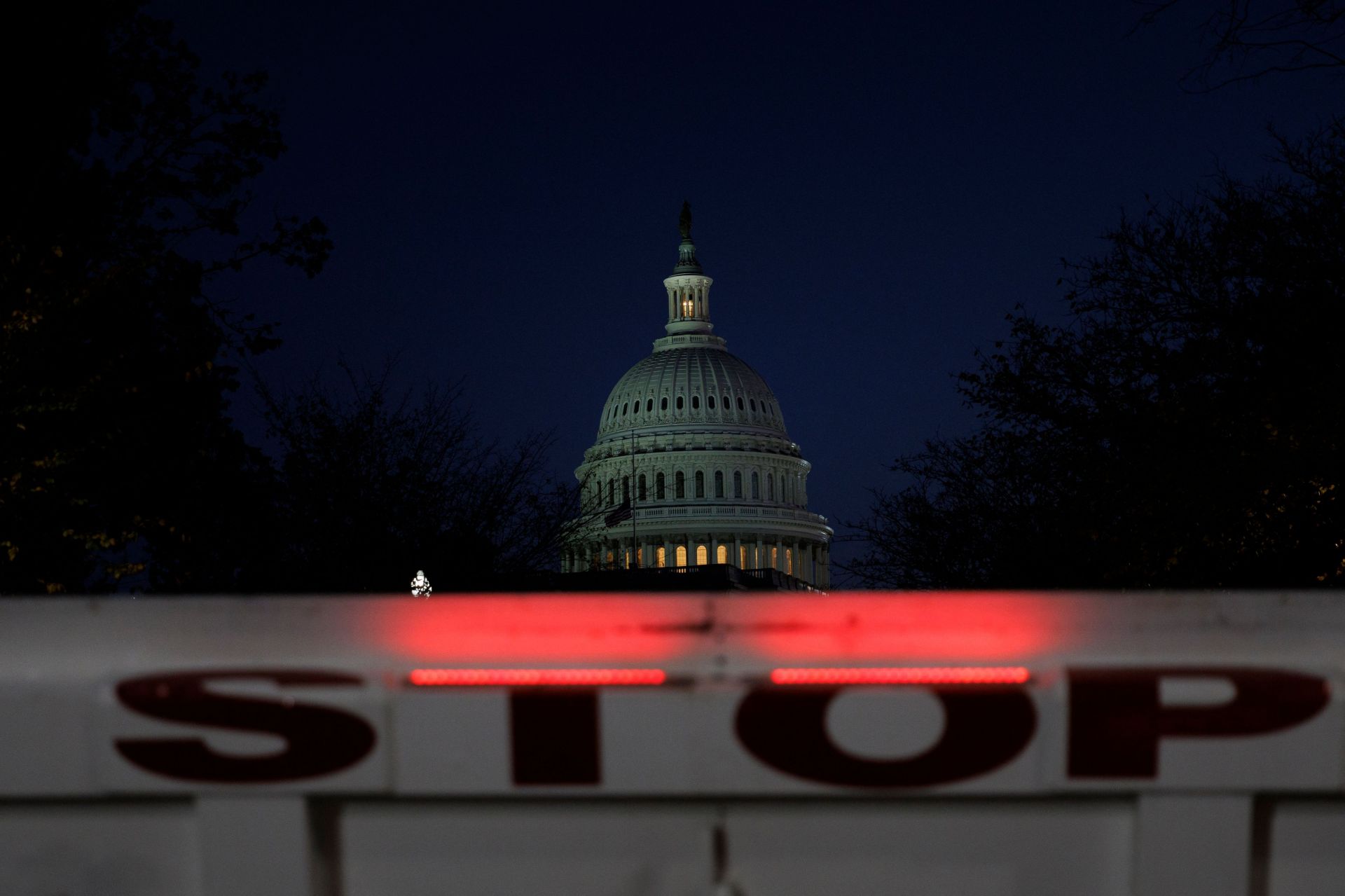
The United States federal government shutdown (temporary suspension of government operations) is on the verge of breaking its all-time record. The longest shutdown previously set during the first term of President Donald Trump is now being surpassed by Trump himself. As the situation becomes more urgent, President Trump has demanded that the Republican Party employ the so-called 'nuclear option.' However, it remains uncertain whether the Republican Party will comply, making a prolonged shutdown inevitable. The extended shutdown has resulted in continued unpaid leave for federal employees, and the suspension of food assistance and welfare services is spreading hardship throughout the daily lives of ordinary citizens.

Shutdown Sets New Record at 36 Days as of the 5th... Both Longest Shutdowns Occurred During Trump Administration
According to CNBC on the 4th (local time), the 14th temporary budget bill proposed by the Republican Party was once again rejected in a full Senate vote. As a result, the shutdown has reached its 36th day as of the 5th, with Trump now breaking his own record from his first term (December 2018), when the shutdown lasted 35 days.
In an effort to end the near-record-breaking shutdown, President Trump urged the Republican Party to invoke the so-called 'nuclear option,' allowing them to pass the budget bill in the Senate on their own.
This means lowering the quorum required to end a filibuster (a legal obstruction of proceedings) from 60 votes to 51 votes and thereby ending the shutdown.
The nuclear option refers to a political maneuver in the U.S. Congress that forcibly changes procedural rules to pass specific legislation. It is called the 'nuclear option' because it destroys the culture of bipartisan cooperation in the Senate and its political impact is as explosive as a nuclear blast.
On this day, President Trump emphasized via his own social networking service, Truth Social, "If the filibuster is not ended, no legislation will pass for the next three years, and the results of elections, including next year’s midterms, will be disastrous."
He also warned that the Supplemental Nutrition Assistance Program (SNAP), which supports 42 million low-income Americans as mandated by the courts, would not be distributed unless the Democratic Party agrees to resume government operations.
The Republican Party is also blaming the Democratic Party for the shutdown, but remains opposed to the 'nuclear option,' which would undermine Senate cooperation.
Polls show that a majority of voters hold President Trump and the Republican Party responsible for the shutdown. According to an NBC News poll, 52% of registered voters blamed Trump or the Republican Party, while 42% blamed the Democratic Party. The Financial Times (FT) reported that President Trump’s current approval rating stands at 43%, down 4 percentage points from March.
Some Republican lawmakers expressed optimism that the shutdown could end within this week. Republican Senator Mike Rounds of South Dakota told reporters, "Once the Democratic Party surpasses the record for the longest shutdown and Tuesday’s election is over, they will show a more open attitude toward compromise. Democratic lawmakers will be able to tell voters, 'We are fighting the President,' and I believe that is one of the key factors behind this situation."
However, the Democratic Party poured cold water on such optimism. Democratic Senator Richard Blumenthal of Connecticut stated, "It is positive that some conversations have begun, but there is no immediate solution in sight," and criticized, "So far, the Republican Party has shown no clear commitment to guaranteeing health insurance for the American people."

Prolonged Shutdown Causes $7-14 Billion in Permanent Losses to U.S. Economy... Exceeds Losses from First Shutdown
The longer the shutdown continues, the greater the shock to the overall U.S. economy. The Congressional Budget Office (CBO) predicts that some of the economic damage will be irreversible even after the shutdown ends. The CBO estimates that already $7-14 billion in losses will remain as permanent damage, which will lower the real gross domestic product (GDP) growth rate for the fourth quarter by an annualized 1.0-2.0 percentage points. This exceeds the economic losses estimated by the CBO during the first Trump administration shutdown, which were calculated at 0.02% of GDP, or about $3 billion.
There are also concerns that the entire U.S. aviation system could come to a halt. On the 3rd, U.S. Secretary of Transportation Sean Duffy said in a CNBC interview, "If we determine it is not safe, we will close all airspace and will not allow people to travel."


It is also weighing on global financial markets. On this day, the New York Stock Exchange closed sharply lower as risk aversion spread. The Dow Jones Industrial Average fell by 0.53% from the previous trading day, while the S&P 500 Index and Nasdaq Composite Index dropped by 1.17% and 2.04%, respectively. The Dollar Index (DXY), which reflects the value of the dollar against six major currencies, regained the 100 mark for the first time in about three months amid increased demand for safe-haven assets.
-

Reporter Kim Minyoung argus@asiae.co.kr
-
Edit Kim Hyunhee faith100@asiae.co.kr
© The Asia Business Daily(www.asiae.co.kr). All rights reserved.






![A Biopic That Locks the "King of Pop" Inside a Jukebox [Slate]](https://cwcontent.asiae.co.kr/asiaresize/304/2026051822483667824_1779112116.png)