Why Is the Democratic Party Attacking the Judiciary?
Democratic Party's Distrust Has Grown This Year
Pressure Mounts, Including Calls to Exclude Judge Ji Guiyeon

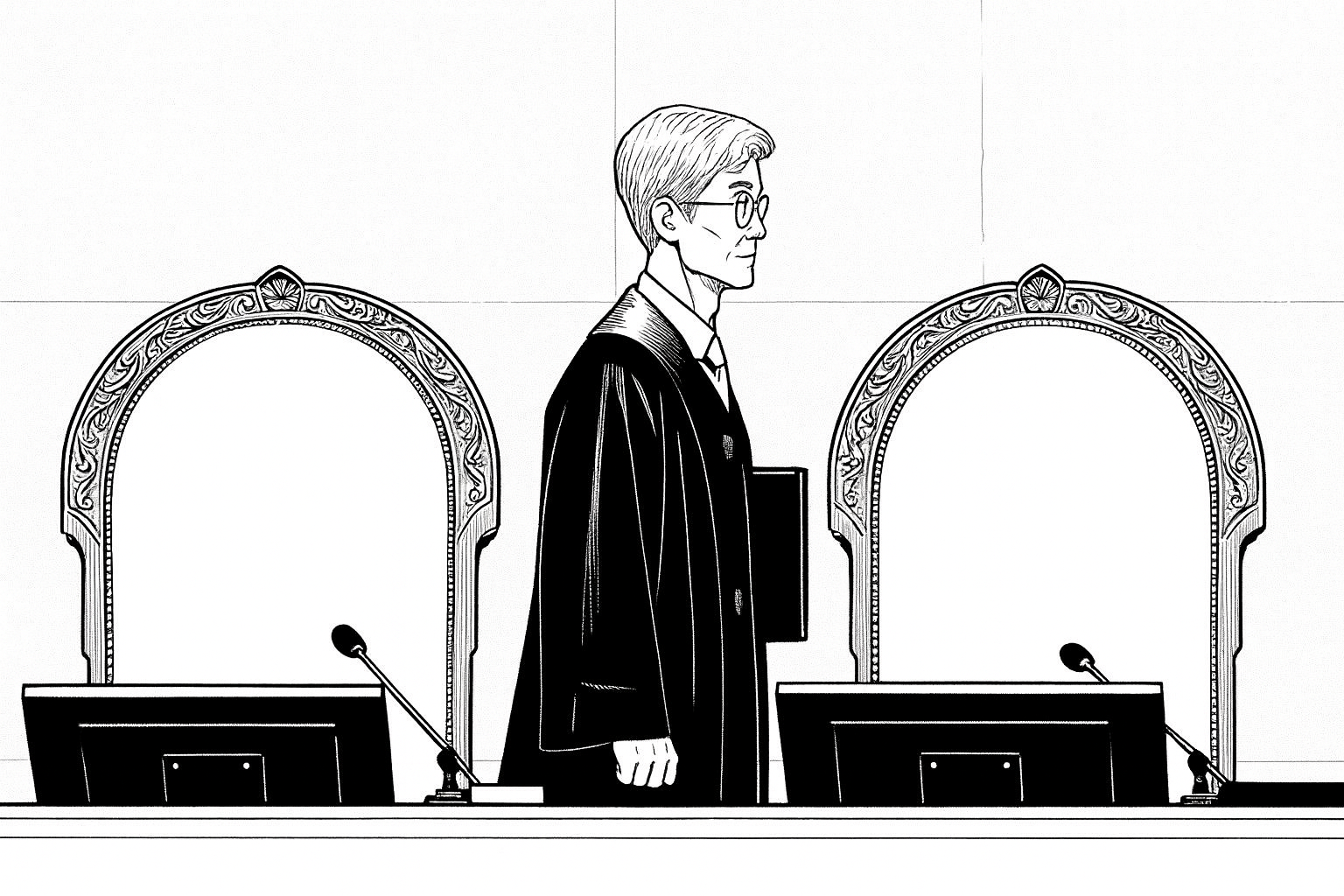
On the afternoon of May 1, Chief Justice Cho Hee-dae entered the Supreme Court courtroom in Seocho-gu, Seoul, heading to his seat for the full bench ruling on the public official election law case involving Lee Jae-myung, the presidential candidate of the Democratic Party of Korea. 2025.05.01 Photo by Joint Press Corps
원본보기 아이콘Attacking Cho Hee-dae While Excluding Ji Guiyeon from the Rebellion Trial: A Diversion Tactic
The Democratic Party of Korea has escalated its offensive to the point of demanding the resignation of Chief Justice Cho Hee-dae, closely tied to its distrust of the panel led by Judge Ji Guiyeon, who is presiding over the trial related to former President Yoon Seokyeol. The party's decision to confront the judiciary, despite the political risks, is seen as part of a so-called "diversion tactic," aiming to distract while applying pressure to remove Judge Ji from the rebellion trial.
Choo Mi-ae, chairperson of the National Assembly's Legislation and Judiciary Committee and a member of the Democratic Party, posted on social media on the 16th, "Rebellion criminal Yoon Seokyeol and Cho Hee-dae, whom he supports, are colluding to disrupt the rebellion trial," adding, "Chief Justice Cho should step down." Jeong Cheongrae, leader of the Democratic Party, also stated at the Supreme Council meeting the previous day, "Is it not Chief Justice Cho himself who has violated judicial independence and the political neutrality of the court?" and added, "I believe he should resign." It is highly unusual for not only the chairperson of the National Assembly's Legislation and Judiciary Committee, which oversees the Supreme Court, but also the leader of the ruling party, to call for the chief justice's resignation.

Jeong Cheongrae, leader of the Democratic Party of Korea, and Kim Byunggi, floor leader, are attending the Supreme Council meeting held at the National Assembly on September 12, 2025. Photo by Kim Hyunmin
원본보기 아이콘Yoon's Release, Lee's Case Sent Back: "Will Yoon Be Acquitted?" Ruling Party's Suspicion of the Judiciary
The ruling party's distrust of the judiciary has grown even stronger this year. On March 7, Judge Ji Guiyeon's panel decided to cancel the detention of former President Yoon Seokyeol. Then, on May 1, the Supreme Court's full bench sent back the public official election law case involving President Lee Jae-myung (then the Democratic Party leader) just nine days after it was referred, marking a turning point.
The Democratic Party's dissatisfaction with Chief Justice Cho is not new, but recent developments are deeply rooted in concerns over the rebellion trial. Within the party, there is a widespread perception that removing Judge Ji from the rebellion trial is of utmost priority.
Park Honggeun, a Democratic Party lawmaker, stated on social media, "Unless the court demonstrates its commitment to properly conducting the rebellion trial, including the exclusion of Judge Ji, discussions about establishing a dedicated panel for rebellion cases cannot be stopped." Park Sanghyuk, the Democratic Party's deputy floor leader for communications, said on a radio broadcast that if the court replaces Judge Ji, there would be no need for Chief Justice Cho to resign or to set up a dedicated rebellion trial panel, adding, "It is more important for the judiciary to first address public concerns through self-correction."

Chief Judge Ji Guiyeon is speaking at the second criminal trial hearing for former President Yoon Seokyeol on charges of leading a rebellion, held at the Seoul Central District Court in Seocho-gu, Seoul, last April. 2025.4.21 Photo by Yonhap News
원본보기 아이콘Diverse Opinions Within and Outside the Legal Community... Presidential Office Draws a Line
There are a variety of opinions within and outside the legal community regarding the Democratic Party's confrontational stance toward the judiciary. Moon Jae-wan, a professor at Hankuk University of Foreign Studies Law School, criticized it as "a political act that undermines the independence of the judiciary." He particularly pointed out that claims of a hierarchy among the branches of government, based on the legislative branch being an elected power, amount to political pressure on other institutions and are undesirable. In contrast, Han Sanghee, a professor at Konkuk University Law School, said, "The Democratic Party's actions can be seen as a form of checks and balances against the judiciary, which is a normal part of the political process." However, Professor Han also noted that politicians expressing such opinions should "bear the corresponding political responsibility."
The People Power Party held an emergency caucus on the morning of the 16th, holding placards reading "Collapse of the Judiciary, Birth of Dictatorship" and chanting, "Let's protect democracy." Song Eonseok, the party's floor leader, said, "After taking control of the legislative and executive branches, they have now opened the door to one-party dictatorship by trying to seize control of the judiciary as well."
Meanwhile, Woo Sangho, Senior Secretary for Political Affairs at the Presidential Office, held an unscheduled press briefing that day, stating, "The Presidential Office has not reviewed or formed any position regarding Chief Justice Cho's future," and emphasized, "We have no intention of commenting on his tenure."
-
Reporter Na Juseok gonggam@asiae.co.kr
-
Reporter Choi Yuri yrchoi@asiae.co.kr
-
Reporter Hwang Seoyul chestnut@asiae.co.kr
-

Reporter Lim Chulyoung cylim@asiae.co.kr
-
Edit Sung Kiho kihoyeyo@asiae.co.kr
© The Asia Business Daily(www.asiae.co.kr). All rights reserved.
!["Please Help Us": How Much Do Those Bowing 90 Degrees These Days Actually Earn? [Data Pick]](https://cwcontent.asiae.co.kr/asiaresize/323/2026052010120870131_1779239528.png)