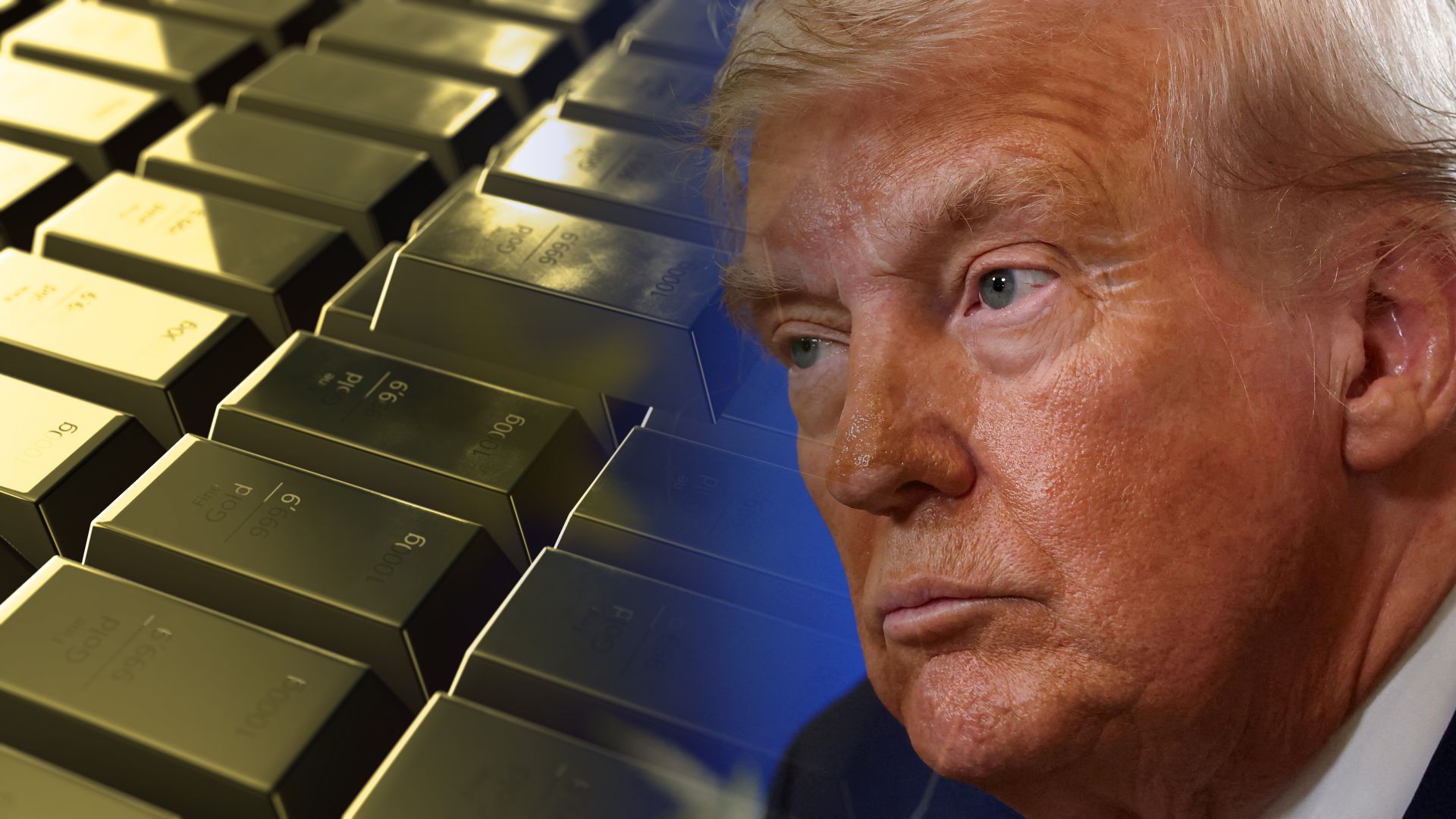
The United States has decided to impose a high tariff of 39% on Swiss gold bars as well. Switzerland's economy is expected to suffer a significant blow, and the global gold spot market is likely to experience turmoil.

On August 8 (local time), the Financial Times (FT) reported that in a customs ruling dated July 31, the U.S. Customs and Border Protection (CBP) announced that 1kg and 100-ounce (approximately 3.1kg) gold bars fall under the tariff-imposed code.
This CBP decision directly contradicts industry expectations that gold bars would be classified under a different code exempted from President Donald Trump's tariff policy. The document obtained by FT is an official record used by the U.S. government to clarify its trade policy. In response to an official inquiry from a Swiss refinery, the document explicitly stated that these gold bars are not included in the tariff-exempt code.
The 1kg gold bar is the standard form traded on the New York Mercantile Exchange (COMEX), the world's largest gold futures market, and accounts for the majority of Swiss gold exports to the United States. Over the 12 months through June, Switzerland exported $61.5 billion (about 85.2083 trillion won) worth of gold to the U.S. If the 39% reciprocal tariff rate applied to Switzerland is imposed on the same volume, an additional $24 billion in tariffs could be levied.

Global gold trading involves gold refined in Switzerland and traded in London and New York. Earlier this year, after President Trump announced reciprocal tariffs, traders rushed to bring gold into the U.S., leading to record-high inventories in New York and a temporary gold shortage in London. However, at that time, some exemptions were included in the announced tariff list, and the industry believed that gold bars were covered by these exemptions.
Due to concerns over inflation, a surge in national debt, and a weaker dollar, gold prices soared to record highs this year, rising 27% compared to the end of 2024.
Several Swiss refineries have spent months consulting with lawyers to determine which gold products qualify for tariff exemptions. According to FT, two of these companies have now temporarily halted or reduced gold exports to the United States due to ongoing uncertainty.
Christoph Wild, chairman of the Swiss Precious Metals Manufacturers and Traders Association, stated that this measure is "another blow to Switzerland's gold exports to the U.S." and added, "This tariff will make it difficult to meet gold demand within the United States."
-

Reporter Oh Suyon syoh@asiae.co.kr
-
Edit Kim Boram kbram6457@asiae.co.kr
© The Asia Business Daily(www.asiae.co.kr). All rights reserved.
!["Please Help Us": How Much Do Those Bowing 90 Degrees These Days Actually Earn? [Data Pick]](https://cwcontent.asiae.co.kr/asiaresize/323/2026052010120870131_1779239528.png)