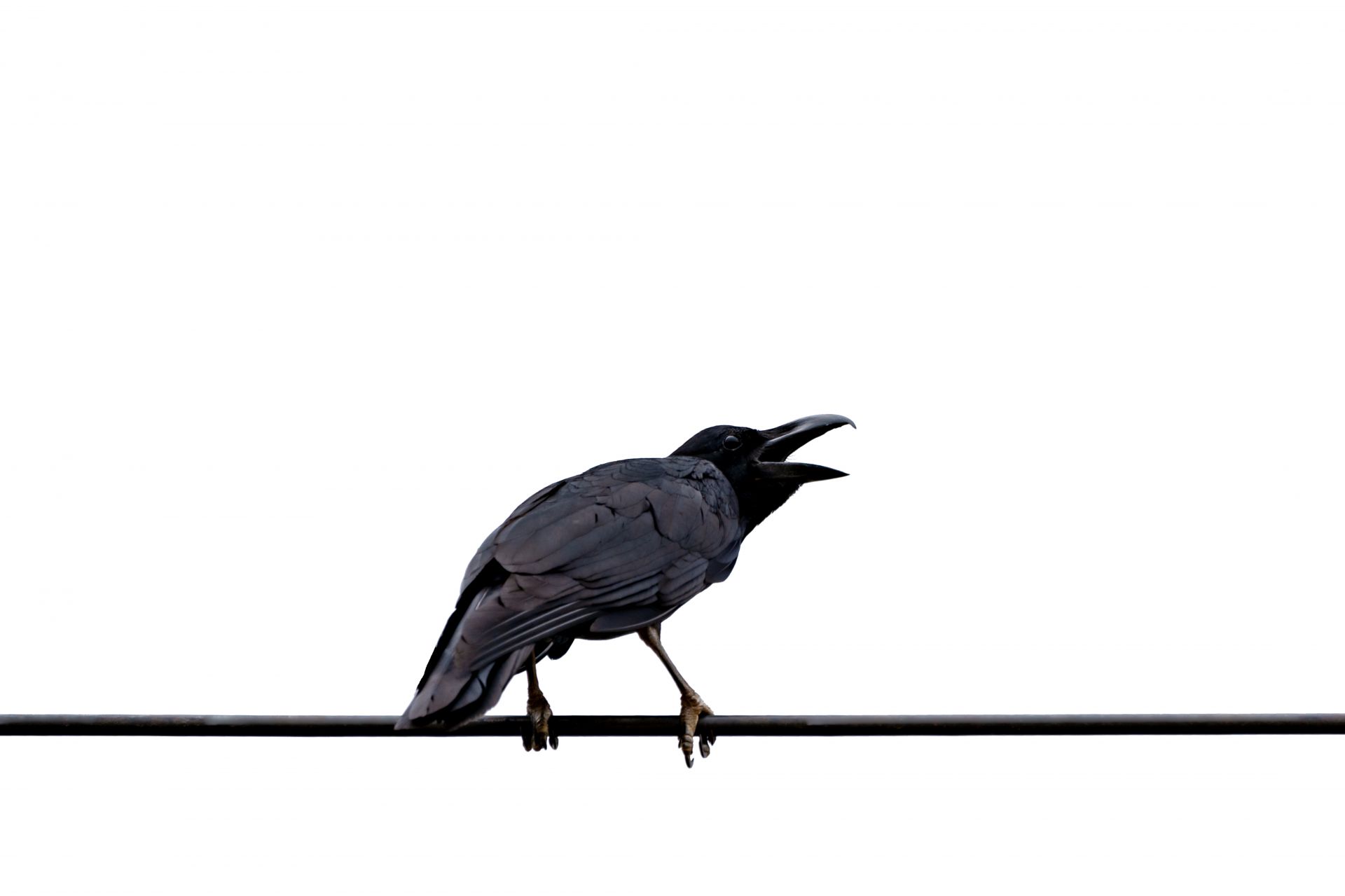

No natural predators and abundant food supply enable urban adaptation
On May 25, at a large apartment complex in Geumho-dong, Seongdong-gu, Seoul, a crow flew in and attacked a young boy's head with its talons. The child, chased by two crows, fell and sustained injuries to his leg. Kim, a 65-year-old resident, said, "I was already uneasy when I saw crows lingering near the apartment's recycling area recently, but I never imagined they would attack a young child." The apartment manager commented, "It seems that a crow that had recently hatched chicks mistook people for a threat and attacked."
Recently, there have been ongoing reports of crows attacking people during their breeding season in urban areas. This phenomenon is occurring as crows, which originally lived in nature, adapt to city environments and their population rapidly increases.
According to the Seoul Metropolitan Government and several district offices on May 29, a complaint was filed on May 23 regarding a child being attacked by a crow at an apartment complex in Samseong-dong, Gangnam-gu. Residents of an apartment complex in Jamsil-dong, Songpa-gu also filed complaints, stating that they had been attacked by crows inhabiting the apartment complex.
Shin, a 50-year-old resident of Gangnam-gu, said, "This is not the first time a crow has attacked a child. If an adult had been attacked, it would have left a significant trauma, so I can only imagine how much worse it must be for a child." Park Jungyoon, a 41-year-old resident of Songpa-gu, stated, "The crows are as big as pelicans, which is terrifying just to look at. I was shocked when I heard in our apartment group chat that crows were attacking residents. I tell my child never to go anywhere they hear 'caw caw' sounds."
Dozens of crows lined up on power lines... Noise and droppings cause headaches
There have also been multiple eyewitness accounts of large flocks of crows. On a parenting forum in Busan, several posts reported, "Every evening, flocks of crows gather on power lines," and "Crow droppings are piling up at bus stops and other locations." Park, a 52-year-old resident of Suwon, Gyeonggi Province, said, "The other day, I saw what looked like at least 100 birds gathered on a power line. I thought they were pigeons, but I was surprised to find out up close that they were crows."
The crows living in the city are large-billed crows, which have become resident birds. As adults, they measure 55 to 60 cm, making them the largest crow species found in Korea. Originally, crows lived in forests and farmlands, but their numbers have increased as they adapted to urban environments, where there are no natural predators like hawks or eagles and where food sources such as food waste are abundant. An official from Gangnam District Office remarked, "Food left out for stray cats is also one of the reasons for the increase in crows."
Highly sensitive and alert during breeding season... Active children are often perceived as threats and attacked
The breeding season for crows is from March to June, during which they build nests in high places such as building crevices and tree branches and incubate their eggs for about two weeks. Crows become particularly sensitive and vigilant when raising their chicks. Their tendency to attack children is thought to be because they interpret the innocent and lively behavior of children as hostile or threatening signals.
Crows not only attack people but also rip open garbage bags and cause various problems such as noise and droppings, creating a range of inconveniences in urban life. For this reason, some have argued that the large-billed crow should be designated as a harmful wild animal, but local governments are reluctant to do so. This is because crows also serve beneficial roles, such as cleaning up animal carcasses and controlling pests.

Sensitive and highly alert during breeding season from March to June
Frequent cases of attacks on children in apartment complexes
Defend against crow attacks by opening umbrellas and other measures
Park Byungkwon, director of the Urban Ecology Research Institute, said, "The urban crow population will continue to rise. It is necessary to establish an urban ecological monitoring system and consider designating areas with frequent crow appearances and significant resident damage as 'capture-permitted zones' for exceptional management."
An official from the Seoul Metropolitan Government stated, "In areas where crows frequently appear, we are posting notices to alert citizens and recommending that they defend themselves against crow attacks by opening umbrellas or parasols."
-

Reporter Byun Seonjin sj@asiae.co.kr
-
Edit Heo Seoyeon lala22@asiae.co.kr
© The Asia Business Daily(www.asiae.co.kr). All rights reserved.
!["Please Help Us": How Much Do Those Bowing 90 Degrees These Days Actually Earn? [Data Pick]](https://cwcontent.asiae.co.kr/asiaresize/323/2026052010120870131_1779239528.png)