①The Growing Importance of Foreign Workers, Yet the 'Communication Barrier' Remains High
Conflicts arise from lack of language skills and cultural understanding
Increase in workplace accidents due to misunderstanding of instructions

130,000 E-9 Entrants Expected This Year... Rising Proportion of Foreign Workers in Industrial Complexes Nationwide
Mr. Han (48), who has been running a secondary battery manufacturing company in Ansan, Gyeonggi Province for 13 years, often feels a sense of relief when he looks at his foreign workers. This is because those who are not proficient in Korean sometimes ignore the safety regulations posted at the workplace and proceed with tasks, which could have led to major accidents. Although Mr. Han provides safety training, many workers do not understand the content, often getting distracted or dozing off. He said, "All machine operation instructions, safety rules, and safety training at the workplace are conducted in Korean, making it difficult for foreign workers unfamiliar with the language to understand," and added, "There have been numerous instances where workers misunderstood supervisors' instructions, handled tasks incorrectly, or failed to follow safety rules, nearly resulting in serious accidents."

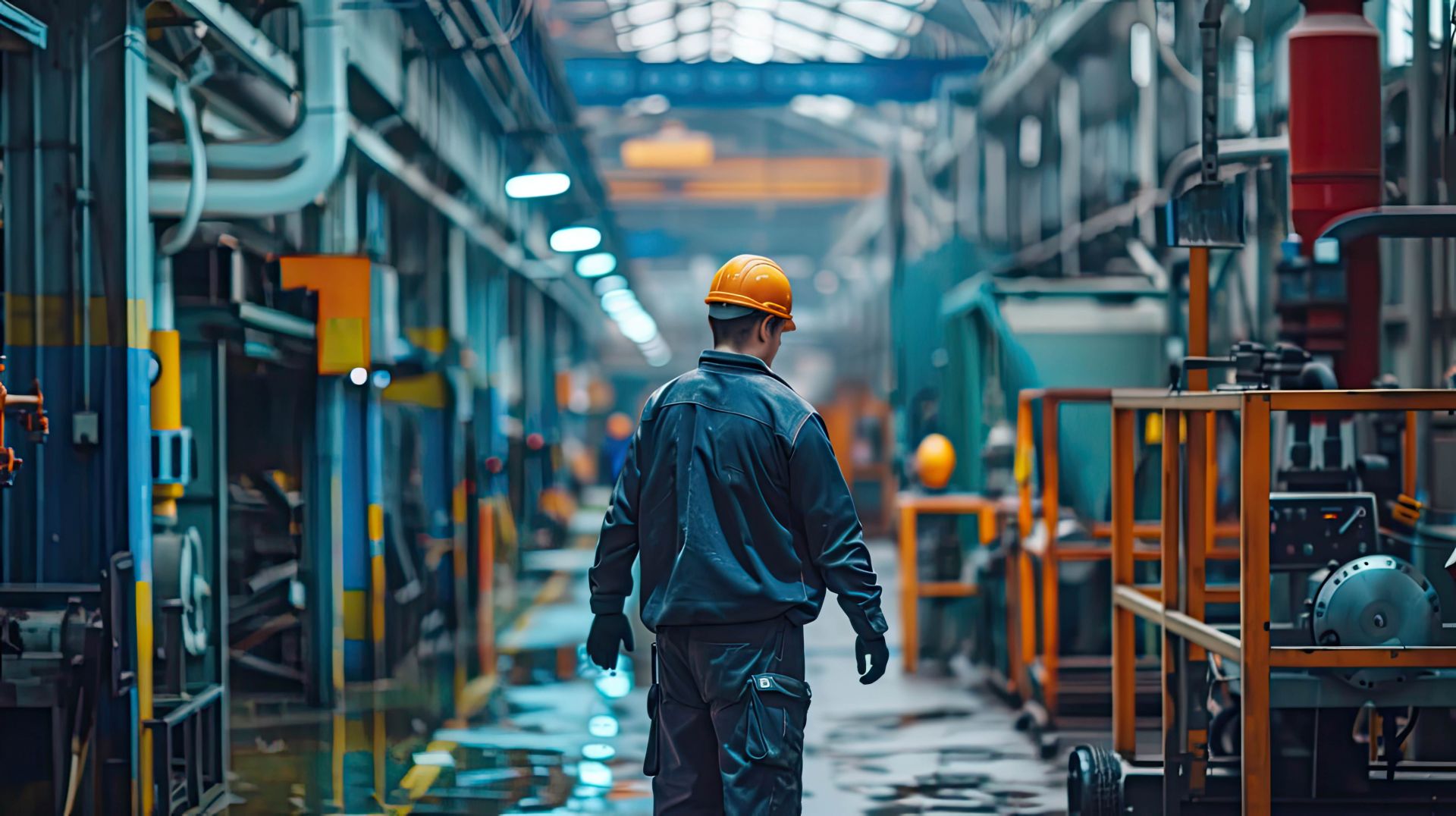
Conflicts between domestic and foreign workers, safety accidents, and declines in productivity?unprecedented new pains?are emerging throughout the workplace. Getty Images
원본보기 아이콘Mr. Kang (52), who operates a pharmaceutical manufacturing company in Hwaseong, Gyeonggi Province, has recently been struggling with conflicts between middle-aged Korean workers and 20-30-something foreign workers at his workplace. These workers, unable to understand each other's cultures and generational backgrounds, constantly clash over work methods and attitudes. As a result, foreign workers who fail to adapt to the corporate culture often request to resign just a few months into their contracts, causing Mr. Kang frustration. He said, "The factory cannot operate without foreign workers, so we even provide dormitories and food for them, but when they ask to transfer after only a few months, it is disheartening," and added, "If we do not allow them to transfer, some intentionally underperform or feign illness as a group to disrupt work."
According to the government and industry as of the 31st, there are 2.5 million foreigners residing in Korea, with 920,000 employed. The dependence of domestic industries on foreign labor is expected to continue increasing. The Ministry of Employment and Labor expanded the quota for non-professional employment visas (E-9), which had typically been maintained at around 50,000, to 69,000 in 2022, and further to 165,000 last year. This year, 130,000 foreign workers are expected to enter Korea with E-9 visas.
As a result, new challenges such as conflicts between Korean and foreign workers, workplace accidents, and decreased productivity are emerging at various worksites. Kim Hyungwoo, Deputy Director of the Foreign Workforce Support Office at the Korea Federation of SMEs, explained, "Most foreign workers are so-called MZ generation (Millennial + Z generation), so conflicts arising from cultural and generational differences prevent them from uniting," and added, "Since foreign workers are not proficient in Korean, it is also difficult to educate them about Korean culture."

Serious Accidents Due to Lack of Korean Skills... Dangerous Workplaces

Owners of manufacturing and shipbuilding businesses, where foreign workers now make up more than half the workforce, cite communication as their biggest challenge. Foreign workers' lack of Korean proficiency leads to misunderstandings of instructions from employers, causing disruptions in work and even conflicts between labor and management or among workers. Especially in manufacturing, where there are many hazardous and dangerous factors, failure to understand safety rules and training can result in major accidents.
According to data received by National Assembly member Kim Wisang from the Ministry of Employment and Labor, as of June last year, 47 out of 399 total workplace fatality victims were foreign workers, accounting for 11.8%. Considering that the number of foreign workers employed in Korea during the same period was 1.01 million, about 2.4% of the total workforce, this rate is nearly five times higher. Deputy Director Kim said, "Among Korean business owners, there are complaints about whether foreign workers really passed the Korean language test," and added, "To blend into Korean culture and build teamwork at the workplace, workers must basically acquire the language, but since this is not happening, many leave after just a month or two or fail to integrate as part of the company."

Currently, foreign workers must achieve a certain score on the Test of Proficiency in Korean (TOPIK) to obtain an E-9 visa. However, there are criticisms that the test only verifies minimal everyday Korean skills and does not cover the practical terms used in workplaces, making it difficult to assess real language ability.
Participation rates in Korean language classes provided by the government or companies after entry are also low. When classes are held during working hours, employer opposition makes it difficult for workers to attend, and when classes are held outside of working hours, there are no legal requirements for mandatory education time, so foreign workers cannot devote enough time.
According to a Ministry of Justice survey, only 8.0% of foreigners residing in Korea last year learned Korean through government social integration programs such as Multicultural Family Support Centers or Immigration Support Centers, while 25.3% responded that they had "never learned Korean." Lee Gyuyong, Senior Research Fellow at the Korea Labor Institute, said, "TOPIK only verifies the minimum language ability, and even among those who pass, there is a wide range of proficiency," adding, "Once in Korea, it becomes even more difficult to learn advanced vocabulary beyond everyday Korean."
Nothing Can Be Done About Illegal Residents... 9.02% Increase in Two Years
The increasing proportion of foreigners becoming illegal residents due to failure to adapt to life in Korea is also a problem. According to the Ministry of Justice, the number of illegal residents among registered foreigners increased by 9.02% in two years, from 388,000 in 2021 to 423,000 in 2023. In particular, the number of illegal residents with E-9 visas, which the Ministry of Justice has greatly expanded and relaxed requirements for due to aging and labor shortages, has been rising rapidly. The number of illegal residents who entered with E-9 visas increased by 10.82% in two years, from 50,800 in 2021 to 56,300 in 2023.

Experts point out that the government's focus on simply expanding the E-9 quota without comprehensively considering language skills and cultural understanding is problematic. Senior Research Fellow Lee said, "Foreign workers become illegal residents for various reasons, such as failing to extend their visas after their stay expires or leaving their designated workplaces, but maladjustment due to lack of language skills and cultural differences is a major factor," and advised, "It is necessary to raise the language proficiency standards at the selection stage and make Korean language learning and cultural education mandatory even after entry."
'Industrial Complexes Embracing Foreign Workers' Series Order
①The Growing Importance of Foreign Workers, Yet the 'Communication Barrier' Remains High
②Multicultural Centers Become 'Hot Places' After Work... Daebul Industrial Complex Is Changing
③"Coexistence Is Destiny... A Long-Term Approach Is Needed"
IndexIndustrial Clusters Favored by Foreigners
- Communication 'Errors' Lead to Work 'Drifting'...
-

Reporter Lee Seohee dawn@asiae.co.kr
-
Edit Heo Seoyeon lala22@asiae.co.kr
© The Asia Business Daily(www.asiae.co.kr). All rights reserved.
!["Please Help Us": How Much Do Those Bowing 90 Degrees These Days Actually Earn? [Data Pick]](https://cwcontent.asiae.co.kr/asiaresize/323/2026052010120870131_1779239528.png)