Statistics Korea 'Wage Employment Job Trends for Q3 Last Year'
Up by 240,600 year-on-year... Smallest increase since Q2 2020
Jobs for people in their 20s: -146,000, for those in their 40s: -67,000
Record-high decrease for both age groups for the second consecutive quarter
Job decline continues due to sluggish construction and real estate sectors
"For people in their 20s, jobs decreased more than the population decline"


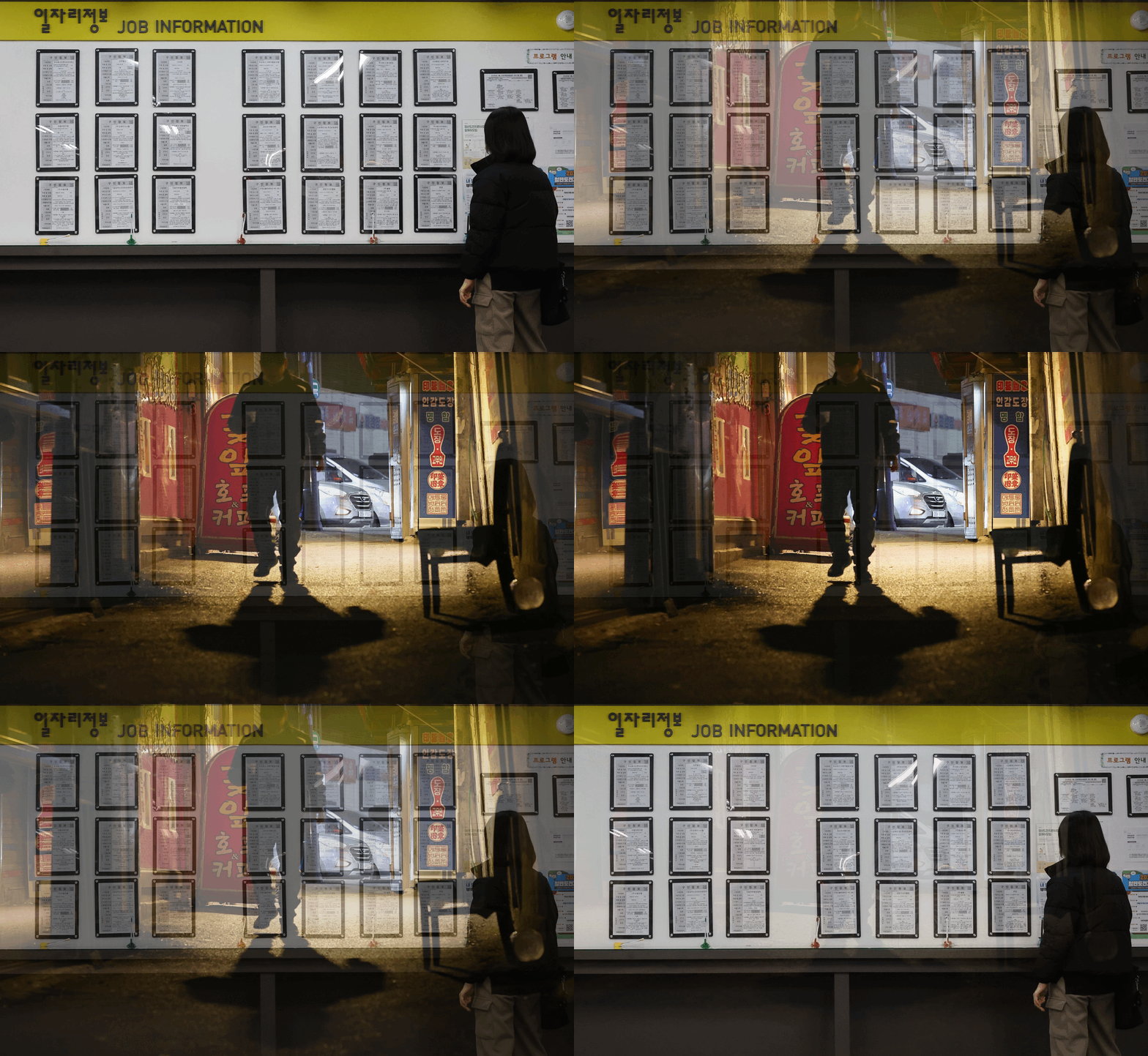
In the third quarter of last year, the increase in wage employment jobs remained at its lowest since Q2 2020. With sluggish domestic demand and poor performance in the construction and real estate sectors, job losses in related fields were significant. Jobs for people in their 20s and 40s recorded the largest decrease on record for the second consecutive quarter.
According to the 'Wage Employment Job Trends for Q3 2024' released by Statistics Korea on the 19th, the total number of wage employment jobs in Q3 last year was 20,788,000, an increase of 240,600 compared to the same period the previous year. This is the smallest increase since Q2 2020 (211,000). The pace of job growth has continued to slow since Q1 2022.
In Q3 last year, 14,959,000 jobs (72.0%) were held by the same workers as the previous year. Jobs replaced due to retirement or job changes accounted for 3,354,000 (16.1%). New jobs created by company establishment or business expansion totaled 2,475,000 (11.9%), while 2,229,000 jobs disappeared due to company closures or business downsizing.
By industry, compared to the same period the previous year, jobs increased in ▲health and social welfare (138,000), ▲associations, repair, and personal services (32,000), ▲transportation and warehousing (31,000), and ▲business leasing (30,000). On the other hand, jobs decreased in ▲construction (-47,000), ▲real estate (-8,000), and ▲information and communications (-1,000). In the case of construction and real estate, the continued economic downturn is leading to ongoing job losses.
By age group, jobs increased among those aged 60 and over (274,000), those in their 50s (119,000), and those in their 30s (66,000), reflecting the aging population. In contrast, jobs for those in their 20s and under (-146,000) and those in their 40s (-67,000) decreased. For both the 20s and 40s age groups, the magnitude of job loss set a new record for the second consecutive quarter, with decreases of 134,000 and 56,000, respectively, in Q2 last year.
A Statistics Korea official explained, "For people in their 20s, jobs decreased more than the population decline," adding, "This means that jobs available for people in their 20s are not being created." The official continued, "Looking at the sectors driving job growth, they are mainly care services in health and social welfare, day labor, and transportation and warehousing," noting, "The proportion of people in their 20s in these sectors is relatively low."
Jobs refer to employment positions occupied by workers and are different from the number of employed persons. For example, if one person works at a company during the week and teaches at an academy on weekends, the number of employed persons is one, but the number of jobs is counted as more than one.
-

Reporter Kim Pyeonghwa peace@asiae.co.kr
-
Edit Choo Myeonghoon chox2mh@asiae.co.kr
© The Asia Business Daily(www.asiae.co.kr). All rights reserved.
!["Please Help Us": How Much Do Those Bowing 90 Degrees These Days Actually Earn? [Data Pick]](https://cwcontent.asiae.co.kr/asiaresize/323/2026052010120870131_1779239528.png)