The business environment faced by the distribution industry last year was an unprecedented domestic market slump. With soaring prices and a worsening economy, consumers firmly closed their wallets. The rise in costs such as raw materials and labor put a double burden not only on manufacturers but also on sales channels. This uncertainty has continued into the new year.
Triple Hardship of High Exchange Rates, Domestic Slump, and Political Instability... Agile Response to Consumer Trends


Distribution companies quickly adapted to changing consumer trends and sought new pathways. Department stores, hypermarkets, convenience stores, and fashion and beauty offline channels focused on diversifying the shopping experience and increasing dwell time to drive purchases by strengthening consumer touchpoints. They targeted consumers with specialized products that maximize the strengths of offline stores, such as fresh foods and ultra-low-price promotions, and introduced representative examples of 'converged' spaces that combine department stores with shopping malls or shopping malls with hypermarkets. In addition, by utilizing proprietary applications (apps) and pop-up stores, they are strengthening the 'O4O (Online for Offline)' strategy to secure loyal customers.


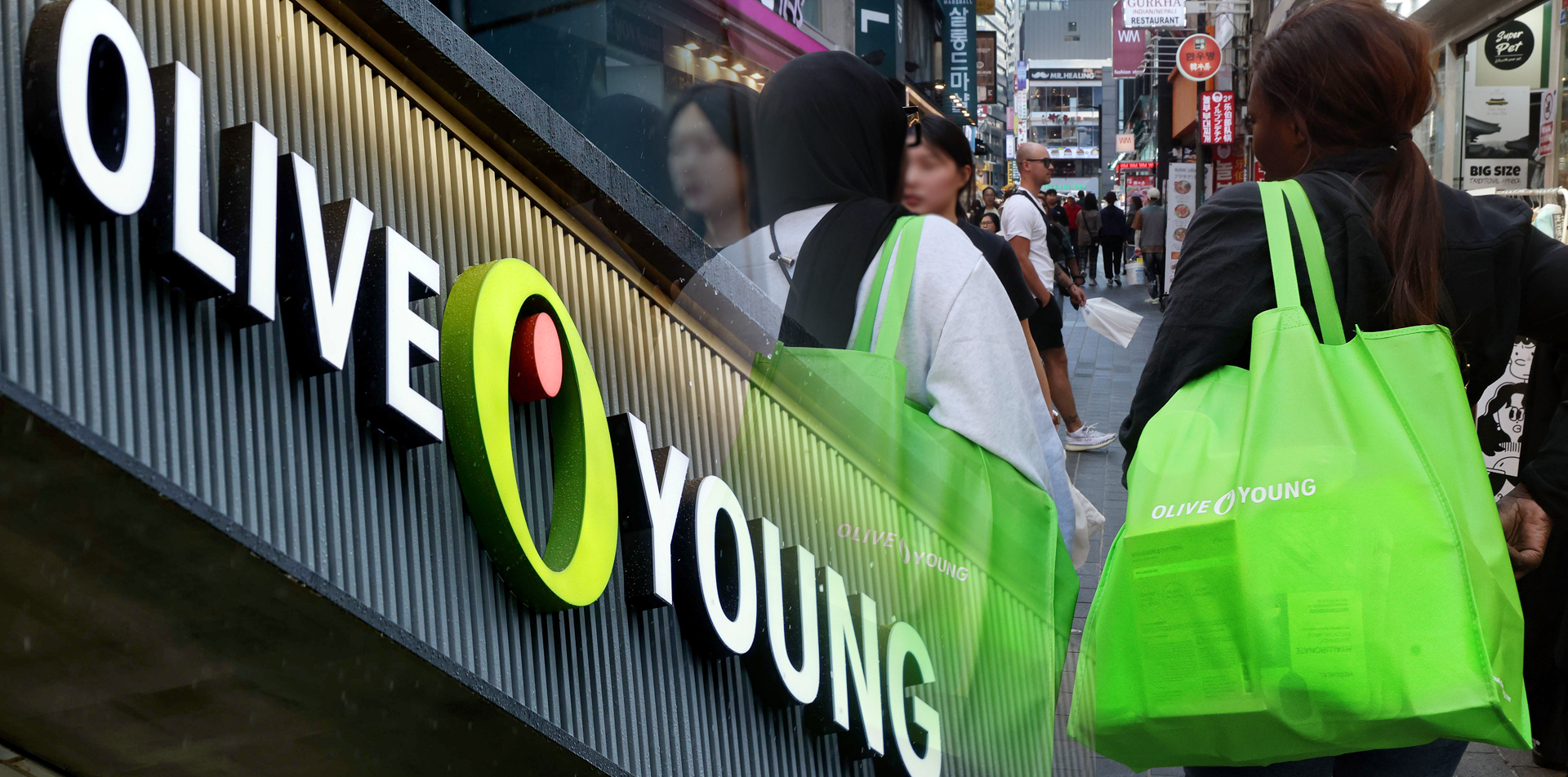
There has also been a significant increase in cases of strengthening collaboration with small and medium-sized manufacturers in line with the value consumption culture spreading among younger generations at home and abroad. For example, CJ Olive Young, which has emerged as a distribution powerhouse with annual sales of around 4 trillion KRW, now fills over 80% of its brands with domestic small and medium-sized companies.
Online platforms are expanding their reach by leveraging reasonable prices, delivery convenience, and dramatic discount benefits. After innovating their distribution networks to enable same-day or next-day delivery from order to arrival, they are now strengthening 'quick commerce' services that allow consumers to receive goods within one hour in their residential or activity areas.


Food and beverage manufacturers are also making significant strides overseas to overcome the limitations of the domestic market. A wide range of products, including ready-to-eat meals, snacks, desserts, and alcoholic beverages, have become popular flagship items in overseas markets such as North America, Europe, and Southeast Asia. Some companies have already seen their overseas sales nearly double their domestic sales. There are also examples of establishing complex shopping malls in local markets, particularly in Southeast Asia, such as Lotte Mall West Lake Hanoi, which has become a landmark in Hanoi, Vietnam.

The 2025 Asia Consumer Awards, now in its 19th year, highlights the achievements of distribution companies that have turned crisis into opportunity. It is not limited to sales performance or transaction results. The focus was on the dedication poured into customer satisfaction and the continuous innovation driven by ongoing research and development (R&D) and investment. Just as the marketing adage goes, "To induce purchases, you must move the hearts of consumers," the spotlight was on companies that respected diverse consumer preferences and realized their desires through products and services, thereby earning empathy.
Index2025 Asia Consumer Awards
- Unprecedented Domestic Market Slump... The 'Distribution Throne' That Turned Crisis into Opportunity
Grand Prize
- Hite Jinro, a 100-Year-Old Company... Terra Reaches 5 Billion Cumulative Sales
- Orion Shines Globally... The Secret Is 'Touching Consumers'
- For a Clear and Pure World... Lotte Chilsung Beverage
- 'Price Freeze' Thaws Frozen Wallets... Ashley Queens, Nonghyup Distribution
- A Must-Visit in Korea: Olive Young, the Starting Point of the K-Beauty Craze
-

Reporter Kim Heungsoon sport@asiae.co.kr
-
Edit Hong Jayeon hongzaa@asiae.co.kr
© The Asia Business Daily(www.asiae.co.kr). All rights reserved.
!['Record-High Net Profit' TSMC to Invest KRW 82 Trillion in Facilities This Year [Taiwan Chip Communication]](https://cwcontent.asiae.co.kr/asiaresize/304/2026011515434793142_1768459427.jpg)