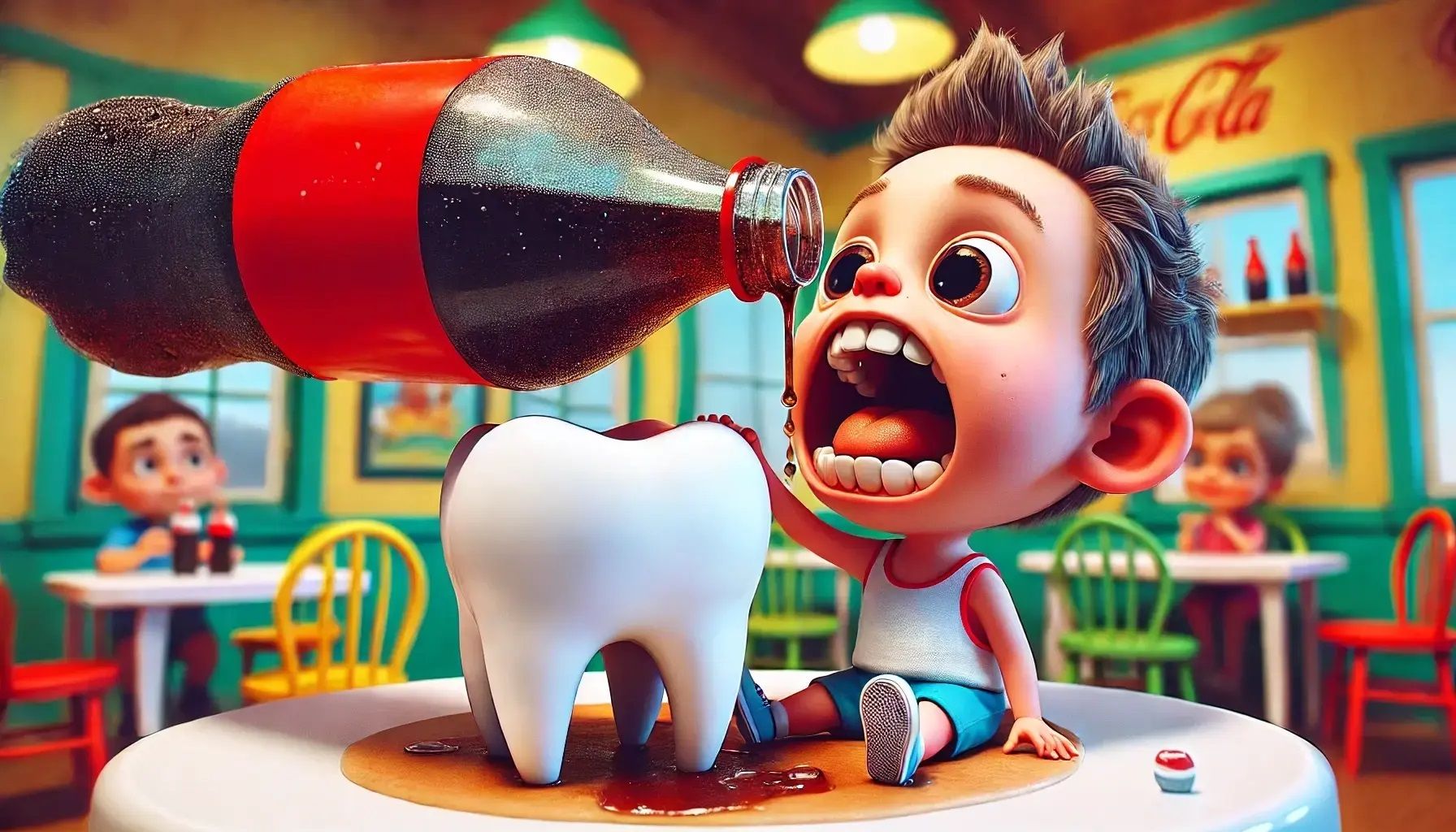
Carbonated drinks like cola are beverages loved by many. However, carbonated drinks have long been criticized for threatening not only obesity but also dental health. It is known that cola, which combines acidity and sugar, corrodes tooth enamel, leading to cavities and tooth damage.

There are ways to protect your teeth while drinking cola. Using a straw can reduce the time cola directly contacts your teeth. Rinsing your mouth with water after drinking cola can neutralize some of the acidity. However, these methods alone are insufficient.
Recently, sugar-free 'Zero Cola' has gained popularity, but concerns about tooth damage remain. However, researchers from KAIST and Seoul National University have scientifically demonstrated a method to effectively prevent tooth erosion caused by cola using nanotechnology, attracting attention.
KAIST Discovers Method to Prevent Tooth Erosion Caused by Carbonated Drinks
KAIST announced on the 5th that a research team led by Professor Hong Seungbeom from the Department of Materials Science and Engineering, in collaboration with the Seoul National University School of Dentistry, has discovered that Silver Diamine Fluoride(SDF), a widely used dental treatment for cavities, forms a protective layer on the tooth surface that prevents tooth erosion. This study not only demonstrated the effectiveness of SDF but also analyzed the process at the nanoscale, providing a more detailed mechanism of action.

Professor Seungbeom Hong of KAIST Department of Materials Science and Engineering, PhD candidate Aditi Saha, Professor Hyeryeong Byeon of the Department of Chemistry, and Professor Gakgyun Kim of Seoul National University School of Dentistry (from left). Provided by KAIST
원본보기 아이콘SDF is a dental agent used for the prevention and treatment of cavities. It forms a thin protective layer on the tooth surface, shielding teeth from acidic environments and bacteria. SDF is effective in strengthening affected areas, inhibiting bacterial growth, and halting the progression of cavities.
The research team revealed that SDF forms a protective layer called fluoroapatite on the tooth surface. Fluoroapatite is an inorganic compound similar to the component of tooth enamel and effectively protects teeth in acidic conditions. Using atomic force microscopy (AFM) and X-ray photoelectron spectroscopy (XPS), the team closely observed the chemical and physical changes on the tooth surface before and after SDF application.
Experimental results showed that teeth treated with SDF exhibited almost no change in surface roughness and maintained stable elasticity even after exposure to cola. In contrast, untreated teeth showed a more than threefold increase in surface roughness and a fivefold decrease in elasticity, clearly indicating the effects of erosion. This is attributed to the protective layer formed by SDF on the tooth surface, effectively defending against the acidity of cola.

Changes in Surface Roughness and Elastic Modulus of Teeth According to Cola Exposure Time. Provided by KAIST
원본보기 아이콘
A schematic diagram of a study showing that Silver Diamine Fluoride (SDF) forms a protective layer on the tooth surface to prevent tooth decay. Provided by KAIST
원본보기 아이콘Strengthening Teeth with Just SDF Application
The achievement by the KAIST and Seoul National University research teams is considered a significant turning point in the field of tooth erosion prevention. While conventional dental treatments have mostly relied on surgical methods to address cavities and erosion, SDF demonstrates that a non-invasive approach can also be effective. The application of SDF is a simple procedure that can greatly reduce pain and cost while effectively strengthening teeth.
The KAIST research team emphasized, "Oral health is closely linked not only to aesthetics but also to overall quality of life," adding, "This research is likely to be widely utilized in the field of dental treatment." The study was supported by the National Research Foundation of Korea and published in the international journal Biomaterials Research.
Professor Hong stated, "Oral health is a crucial factor directly related to quality of life," and explained, "This study demonstrates the potential to prevent early tooth erosion through a non-invasive method." Professor Kim Youngjae from the Department of Pediatric Dentistry at Seoul National University evaluated, "This technique using SDF will be an effective and accessible dental treatment for both children and adults."
The negative effects of cola on teeth are not merely anecdotal. Highly acidic cola erodes tooth enamel, promoting the proliferation of cavity-causing bacteria. The pH of a glass of cola is about 2.5, which is more than 1,000 times more acidic than water with a pH of 7. In such an environment, it takes only a few minutes for the tooth surface to be damaged. In the KAIST team's experiment, a rapid increase in the surface roughness of teeth exposed to cola was observed within just 10 minutes.

Along with achievements by domestic researchers, studies to protect oral health are also actively underway overseas. A study in the United Kingdom reported that milk proteins play a key role in preventing tooth erosion. Proteins found in dairy products such as milk and cheese neutralize acids that cause cavities, thereby protecting teeth. Additionally, a study in the United States highlighted that fruit juice can also cause tooth erosion and warned against excessive consumption.
Acidic drinks like cola or fruit juice should be consumed in moderation to reduce their negative impact on oral health. Experts recommend avoiding brushing your teeth for at least 30 minutes after drinking such beverages, rinsing your mouth with water instead, and brushing later. This allows time for the weakened tooth surface to recover from the acidic environment.
-

Reporter Paek Jongmin cinqange@asiae.co.kr
-
Edit Kim Boram kbram6457@asiae.co.kr
© The Asia Business Daily(www.asiae.co.kr). All rights reserved.
!["Please Help Us": How Much Do Those Bowing Deeply for Your Vote Really Earn? [Data Pick]](https://cwcontent.asiae.co.kr/asiaresize/323/2026052010120870131_1779239528.png)