In Depth
Forgotten Children
-
26.04.24 11:51
- "Adopted to America... My Mother Never Even Dreamed of It"
-
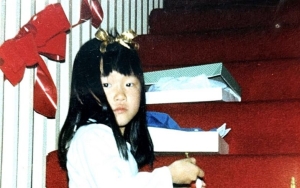
"My mother spent over 20 years believing that I was living well in Korea. She never imagined that I could be thousands of kilometers away in the United States, not even in her dreams." March 25, 1982, was the day Jina Lee arrived at John F. Kennedy Airport in the United States, just 10 months after her birth. She still has a photo taken at the airport that day. Including Lee, a total of five babies were held in the arms of their respective American adoptive mothers. The adoptive mothers held the babies gently, their faces full of excited smiles. Lee spent her childhood in Massachusetts, where she enjoyed happy times?going to the beach in the summer and skiing and skating in the winter. Her adoptive mother, who worked at a hospital, was described as compassionate, independent, and someone who never judged others by appearances alone.Lee was about five years old when her adoptive mother told her that she had been adopted. At that time, she found it hard to understand why her adoptive mot
-
26.04.06 12:10
- The Meaning of Family, the Birth of a Family
-
On April 3, the final installment of the Asia Economy’s overseas adoption series "Forgotten Children" featured the story of a domestic adoptive family, "Siwoo’s Family," which resonated with many readers. Comments such as "I was moved to tears by this strong family," and "You can feel a bond even stronger than blood," poured in. The tone of the responses was similar: admiration. It seemed people were touched by the family’s decision to adopt in the face of social prejudice, and their positive acceptance of the child’s disability, which they discovered after the adoption. Upon reflection, it felt strange. When a child is born, people naturally say, "Congratulations." But when a child is adopted and becomes part of a family, we still tend to say, "That’s amazing." Rather than simply congratulating the birth of a family, there remains a tendency to view it as someone’s special decision or good deed. Does family really have to be formed by blood ties alone? For a long time, we have explain
-
26.04.03 07:00
![An Average of 300 Children Wait for Adoption Each Year... The Solution for 'Zero Overseas Adoptions'[Forgotten Children]¨ð](https://cwcontent.asiae.co.kr/asiaresize/319/2026040315265113437_1775197612.png)
- An Average of 300 Children Wait for Adoption Each Year... The Solution for 'Zero Overseas Adoptions'[Forgotten Children]⑩
-
<Editor's Note> The history of international adoption has continued for more than 70 years and is still not over. Beginning in the aftermath of the Korean War as a means to reduce the number of orphans, international adoption has persisted to this day, under the perception that it saves welfare budgets and even earns foreign currency. However, the lives and rights of those adopted overseas have been largely neglected. Decades of records related to international adoption reveal the uncomfortable and shameful reality of our society and expose how deeply rooted this structural indifference is. The voices of over 200 international adoptees now speak directly to the nation, confronting us with the problems and challenges of international adoption. The Asia Business Daily seeks to take an in-depth look at the realities of international adoption and explore possible solutions. Revisiting the wounds of international adoption does not end with exposing the wrongdoing of the government and
-
26.04.03 07:00
- Jung Ikjung: "There Is No Difference Between Domestic Adoption and Birth" [Forgotten Children] ⑪
-
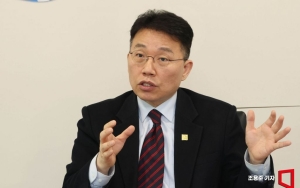
The government has set the goal of achieving "zero overseas adoptions by 2029" in order to shed the stigma of being an "exporter of children" and to strengthen the state's responsibility for domestic children. To this end, the government launched a "public adoption system" last year, shifting the adoption process?previously handled mainly by private adoption agencies?to the responsibility of the state and local governments. However, even after eight months, there have been no domestic adoptions processed through the new system. Jung Ikjung, Director of the Child Rights Protection Agency, explained, "We are currently in the process of following procedures to find the most suitable family for each child under the new state responsibility system." The following is a Q&A with Director Jung. -Do you think achieving "zero overseas adoptions by 2029" is realistically possible?▲I believe that domestic adoption must be revitalized so that there will be no need to send our children abroad for a
-
26.04.03 07:00

- "Spending Two Million Won a Month, But It's Not a Terminal Illness"... Adoptive Family Says 'We're Lucky We Met' ⑫
-
'Zero overseas adoptions' is not just about reducing the numbers; it is about creating families and protection systems in which children can grow up safely within the country. In this process, domestic adoption remains an important and practical alternative, but society’s perspective has yet to catch up. Adoptive families say they would rather hear “Congratulations on your new family” than being told they are “amazing.” This is because the moment a child and a family come together, everyone’s lives change. On March 17 in Gangbuk-gu, Seoul, we met Siu's family, a domestic adoptive family. We asked them about the meaning of family. May 2017.A newborn, barely able to open their eyes, struggled to lift their eyelids and make eye contact with the couple. Just past 50 days old, Siu (10, pseudonym) was welcomed into the arms of the Kim Jeongsuk and Lee Seokhwan couple (pseudonyms) that spring. Before meeting Siu, the couple had lost two children. Their first was lost at 26 weeks, and the sec
-
26.04.02 07:00
- ⑨"Overseas Adoption Is Not Child Welfare"
-
"Although the government is aiming for 'zero overseas adoptions' by 2029, as long as the relevant policies and legal protections remain in place, overseas adoptions will continue." Kwon Heejung, Director of the Single Mothers Archiving and Rights Advocacy Institute, expressed regret over the prevailing social perception that continues to see overseas adoption as a form of child welfare. She strongly refuted the logic that 'family' is more important than 'nationality.' According to her, adoption is a separation from the birth family and an act that causes children to lose their identity and roots. We met with her on March 23 in Seoul, where she has long advocated for the protection of the rights of overseas adoptees and the end of overseas adoption. She called for an immediate halt to overseas adoptions, not a phased reduction. She argued that even though the current government is pursuing zero overseas adoptions by 2029, as long as related policies and legal grounds remain in effect, o
-
26.04.02 07:00
- ⑧"No State Responsibility"... Unquestioned Illegal Overseas Adoptions
-
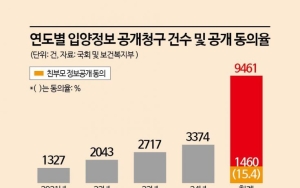
Editor's Note The history of overseas adoption has continued for over 70 years and still has not ended. Overseas adoption, which began in the aftermath of the Korean War to reduce the number of orphans, has continued to this day under the perception that it both saves welfare budgets and earns foreign currency. However, the lives and rights of those adopted overseas have been neglected. Decades of records related to overseas adoption reveal the shameful reality of our society and show just how deeply rooted this structural indifference has been. Through the voices of around 200 overseas adoptees addressing the state, we face the problems and challenges of overseas adoption. The Asia Business Daily aims to provide an in-depth diagnosis of the realities of overseas adoption and explore possible solutions. In South Korea, the state cannot currently be held legally responsible for past illegal overseas adoptions. In 2023, an overseas adoptee filed a lawsuit against the South Korean gover
-
26.04.01 07:12
- "Send More Babies": The Cold Reality of Adoption as a Secret Political Bargain Revealed in Diplomatic Documents
-
Editor's NoteThe history of overseas adoption has not ended, even after more than 70 years. Overseas adoption, which began after the Korean War as a way to reduce the number of orphans, has continued until today under the perception that it would save welfare budgets and even earn foreign currency. However, the lives and rights of those adopted overseas have been neglected. Decades of records related to overseas adoption reveal the uncomfortable truths of our society and how deeply rooted this structural indifference is. Through the voices of more than 200 overseas adoptees addressing the nation, the problems and challenges of overseas adoption come to light. The Asia Business Daily seeks to provide an in-depth diagnosis of the reality of overseas adoption and to search for solutions. From 1968 to 1974, Korea sent a total of more than 2,000 children for adoption to Denmark. In particular, in 1973 and 1974, over 500 children were sent to Denmark each year, making up a significant propor
-
26.04.01 07:12
- ⑦"Illegal Overseas Adoptions Are 'Enforced Disappearance' Crimes... If Korea Fails to Act, the UN Will Intervene"
-
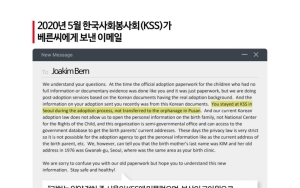
"The Korean government has stated that it will stop overseas adoptions by 2029, but from our perspective, this sounds like they intend to continue committing human rights violations until the end of 2028. If a decision has been made to stop, it must be stopped immediately. This is because as long as overseas adoptions continue, more cases of human rights violations will occur."Peter Mueller, Co-CEO of Ppurie House, emphasized this point in an interview with The Asia Business Daily on the 23rd of last month, stating, "The history of overseas adoptions that has continued for over 70 years since the Korean War must be ended immediately." Ppurie House, a non-profit organization, has been carrying out projects for more than 20 years, including family searches for overseas adoptees, protection of their rights and interests, and international solidarity activities. Mr. Mueller, who is also a lawyer and the head of the Danish Korean Rights Group (DKRG), has handled more than 4,000 overseas ado
-
26.03.31 07:12
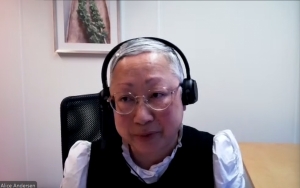
- Adopted at Five Months, Battling a Rare Disease for a Decade: "I Will Survive and Fight to Find My Birth Mother" ⑤
-
"I don't think I'm going to die tomorrow, but you never know what might happen. What is clear is that the problem is not just with one or two organs, but with my entire body." Alice Anderson (Korean name Kang Buja), who was born on July 5, 1972, was adopted to Norway when she was five months old. She only learned as an adult that she had been born with a single kidney. This fact was not recorded in her adoption paperwork prepared by Holt Children’s Services.In an interview with this publication on the 24th, Anderson said that after being diagnosed with Sjogren's syndrome, a rare autoimmune disease, in 2016, she began experiencing abnormal symptoms in several organs. She stated, "I have no way of knowing whether these diseases are because I was born prematurely, or because my biological mother attempted an abortion and ingested toxic substances during pregnancy." Norwegian doctors say it is difficult to begin medication without her genetic information, especially as she may require an o