In Depth
Productive Finance·Great Transition
-
26.05.21 10:39
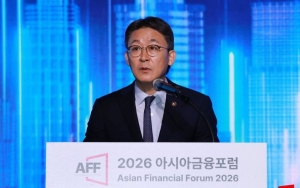
- Kwon Daeyoung, Vice Chairman of the Financial Services Commission: "Korean Finance Must Evolve into Strategic Capital to Safeguard Technological Sovereignty"
-
Hello, I am Kwon Daeyoung, Vice Chairman of the Financial Services Commission. I would like to sincerely congratulate you on the hosting of the 2026 Asia Financial Forum today. I would like to thank President Jang Beomsik, Chairman Hiroshi Nakaso, Professor Sayuri Shirai, CEO Sohn Byungdoo, and Economist Sonal Varma. The Korean economy is currently facing three challenges. First, there are geopolitical conflicts. The trade order and energy supply chains are becoming unstable. Second, there is the competition for technological supremacy. In the fields of AI, semiconductors, robotics, and biotechnology, a single technological edge can determine a nation's future. Third, there is the AI transformation. AI is fundamentally transforming all industries. Competition for AI technology sovereignty is the most intense. Therefore, at the core of these challenges are technological sovereignty and investment. The United States is engaging in an investment war through Silicon Valley and Wall Street.
-
26.03.13 15:10
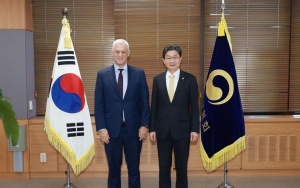
- Chairman Lee Eogwon Meets with Standard Chartered Group Chairman, Urges Expanded Corporate Finance Support
-
Lee Eogwon, Chairman of the Financial Services Commission, met with Bill Winters, Chairman of the UK-based Standard Chartered Group, on the 13th to share the Korean government's financial policy direction and requested that Standard Chartered Bank Korea expand its corporate finance support. On this day, Chairman Lee met with Chairman Winters at the Government Complex Seoul and discussed opinions on the recent escalation of global crises, including geopolitical conflicts in the Middle East. Chairman Winters noted that, given the possibility of a prolonged crisis in the Middle East and uncertainties such as oil supply and demand fluctuations, it is a critical time for the government to conduct comprehensive reviews and responses. He expressed great interest in the Korean government's swift response system in recent times. In response, Chairman Lee explained that the Korean government has activated a joint financial market monitoring system with relevant agencies concerning the Middle Ea
-
25.12.29 11:30
- Dreaming of a Soaring 2026 Like the "Red Horse": The Venture Ecosystem's Race Ahead
-
A tumultuous year is coming to an end. This year, both Korea and the United States saw the inauguration of new administrations, causing domestic and international environments to fluctuate more than ever before. The venture investment industry also experienced a hectic period amid macroeconomic uncertainties. Fortunately, the government's commitment to revitalizing the venture ecosystem was stronger than ever. In particular, the "Productive Finance Transformation" policy served as much-needed relief during the investment winter. The signal to create a private sector-led capital flow and ensure smooth funding for innovative companies raised expectations in the market. However, as the year comes to a close, it is regrettable that many long-standing issues in the industry remain unresolved. Among these, the most disappointing is the budget cut for the Fund of Funds. The government initially presented an ambitious plan to foster a 40 trillion won annual venture investment market and ignite
-
25.12.08 08:00
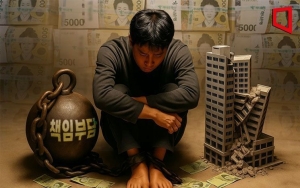
- 'Productive Finance' in Name Only Undermines Entrepreneurial Spirit
-
Ultimately, the core issue lies in the details.The Lee Jaemyung administration has proclaimed a "productive financial transformation," and it is expected that a large amount of capital will flow into the venture investment market starting next year. However, various unreasonable practices still persist, making it difficult for entrepreneurs to enter the market and preventing startup and venture CEOs from focusing on their businesses. One of the most representative examples is the presence of contract clauses that are unilaterally disadvantageous to startups and ventures.'Joint Guarantee Ban' in Venture Contracts: A Half-Measure ReformIn reality, startups and ventures inevitably find themselves in a subordinate position when seeking investment. Even if unfavorable contract clauses are included, they often have no choice but to sign in order to secure funding. In the past, it was common for contracts to require founders to provide joint guarantees. Fortunately, investment institutions un
-
25.11.29 09:40
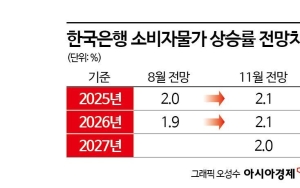
- Focus on November Price Surge Amid High Exchange Rate... Series of Economic Indicators on Households, Growth Rate, and Balance to Be Released
-
Next week (December 1?5), a series of major economic indicators that will provide insights into recent price trends and external trade conditions are scheduled for release. Results from surveys on the income, expenditure, and asset status of Korean households, as well as the preliminary third-quarter economic growth rate, are also set to be announced. The National Data Office will release the "November Consumer Price Trends" on December 2. In October, the consumer price inflation rate reached 2.4%, the highest level in 15 months. With the won-dollar exchange rate recently surging to the upper 1,400 won range, there is keen interest in how the high exchange rate may have affected inflation through import prices. On December 3, the "2024 Life Table," including national life expectancy, will be released. The life table is a statistical estimate of how long a person of a specific age can expect to live, assuming current age-specific mortality rates remain unchanged. The results of the "202
-
25.11.10 11:11
- Office of the President Hints at Lowering Separate Tax Rate on Dividend Income
-
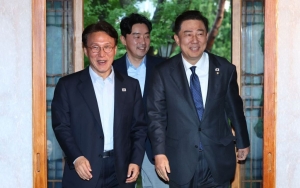
The Office of the President has stated that a united stance among the ruling party, government, and presidential office is necessary to effectively enhance shareholder value through expanded dividends and other measures, reflecting public opinion. This is being interpreted as support for lowering the top tax rate on separately taxed dividend income. Since President Lee Jaemyung has consistently emphasized a "productive financial transformation," there is strong consideration of easing the top tax rate on separately taxed dividend income from 35% (as proposed by the government) to 25%, a reduction of 10 percentage points, to sustain the stock market stimulus. At a high-level party-government meeting held at the Prime Minister’s official residence in Samcheong-dong, Seoul, on the 9th, Senior Presidential Secretary Kang stated, "Over the past two months, a variety of opinions have been presented and discussed in the public, corporate, and financial markets, including the tax rate applied
-
25.11.03 06:05
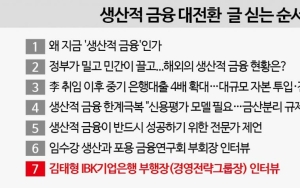
- ⑦"Addressing Corporate Non-Performing Loan Issues... Responding with Early Warning Systems"
-
Editor's Note Public dissatisfaction is growing due to the sharp rise in real estate prices. While incomes have stagnated, housing prices have soared, significantly undermining residential stability. The root cause of this instability in the real estate market is cited as the excessive real estate financing by financial institutions. Critics point out that financial companies are not supplying funds to productive sectors such as businesses or high-tech industries, but are instead focusing on non-productive areas like real estate-backed loans, resulting in an oversupply of credit in the market and fueling the rise in real estate prices. The Lee Jaemyung administration has set the "Great Transition to Productive Finance" as a core economic policy goal based on this understanding of the problem. Overseas, following the 2008 global financial crisis, financial institutions have reflected on their practices and are seeking a shift toward productive finance. In Korea as well, there are growin
-
25.10.31 06:05
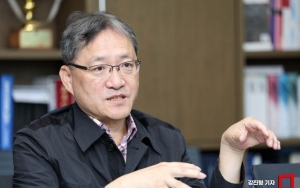
- ⑥Im Sugang: "For Financial Reform to Succeed Where Moon Administration Failed, Real Estate Lending Must Be Further Tightened"
-
Editor's NotePublic dissatisfaction is mounting due to the sharp rise in real estate prices. While incomes have stagnated, housing prices have soared, significantly undermining residential stability. The root cause of this instability in the real estate market has been identified as the excessive real estate financing by financial institutions. Critics point out that financial companies are not supplying funds to productive sectors such as businesses or high-tech industries, but are instead focusing on non-productive areas like real estate-backed loans, thereby flooding the market with excessive credit and fueling real estate price hikes. The Lee Jaemyung administration has made the 'Great Transformation to Productive Finance' a core goal of its economic policy based on this awareness of the issue. Overseas, following the 2008 global financial crisis, financial institutions have reflected on their practices and are pushing for a shift toward productive finance. In Korea as well, there
-
25.10.30 06:05

- ⑤"Banks Must Shift from Easy Real Estate Loans to Investment-Driven Operations"
-
Editor's NotePublic dissatisfaction is growing due to the sharp rise in real estate prices. While incomes remain stagnant, housing prices are soaring, significantly undermining residential stability. The root cause of this instability in the real estate market is attributed to excessive real estate financing by financial institutions. Critics point out that financial companies are not supplying funds to productive sectors such as businesses or high-tech industries, but are instead focusing on non-productive areas like real estate-backed loans, thereby injecting excessive credit into the market and fueling the rise in real estate prices. The Lee Jaemyung administration has set the 'Great Transition to Productive Finance' as a core economic policy goal based on this awareness of the problem. Overseas, following the 2008 global financial crisis, financial companies have reflected on their practices and are promoting a shift toward productive finance. In Korea as well, there is a growing c
-
25.10.29 06:05

- ④The Key to Overcoming Limitations Lies in 'Credit Assessment Models'... Easing Separation of Banking and Commerce Regulations Also Urgently Needed
-
Editor's NotePublic dissatisfaction is growing due to the sharp rise in real estate prices. While incomes have stagnated, housing prices have soared, greatly undermining residential stability. The fundamental cause of this instability in the real estate market is said to be the excessive real estate financing by the financial sector. Financial institutions are criticized for focusing funds on unproductive areas such as real estate-backed loans, rather than supplying capital to productive sectors like businesses or high-tech industries. This has led to an oversupply of credit in the market, fueling the rise in real estate prices. The Lee Jaemyung administration has made the 'great transition to productive finance' a core goal of its economic policy based on this awareness of the problem. Overseas, since the 2008 global financial crisis, financial institutions have been moving toward a shift to productive finance, reflecting on their previous practices. In Korea as well, there are growin