In Depth
University Transformation
-
25.10.02 10:37
- Securing Competitiveness for Domestic Universities, Financial Support Is Most Essential (21)
-
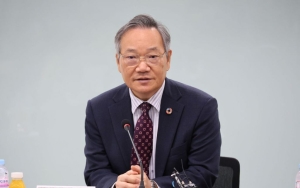
Jeong Dae-hwa, former Standing Member of the National Education Commission and former President of Sangji University, emphasized in an interview with Asia Economy on October 2, 2025, that "the most essential factor for domestic universities to enhance their competitiveness is financial support." Former Standing Member Jeong stated, "There is no innovation in any area of national administration without financial investment," adding, "To achieve innovation in higher education (universities), the financial resources allocated to higher education must at least reach the average level of the Organisation for Economic Co-operation and Development (OECD)." He pointed out, "The higher education enrollment rate in Korea is 75%, compared to the OECD average of 45%. Even by enrollment rate alone, Korea should be investing more in higher education than the OECD average, but the reality is far from it." Previously, the Higher Education Innovation Team of the National Education Commission included
-
25.10.02 07:03
- Lee Deoknan, President of the Korean Association of Educational Law: "Equity and Excellence in Education Must Be Harmonized as Constitutional Values" (20)
-
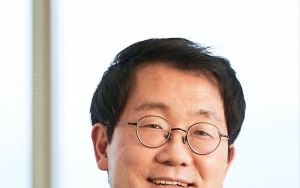
Article 31 of the Constitution of the Republic of Korea stipulates that "all citizens have the right to receive an equal education according to their abilities." This provision embodies both the value of "equity," in that educational opportunities must be open to everyone, and the value of "excellence," in that individuals must have the right to receive an education that allows them to maximize their abilities. However, in reality, these two values are not being harmoniously realized. Experts in the education sector advise that "achieving a balanced realization of equity and excellence within the constitutional framework is a core task for a major transformation of education in Korea." Lee Deoknan, President of the Korean Association of Educational Law and Head of the Education and Culture Team at the National Assembly Research Service, emphasized in an interview with Asia Economy that "the Constitution’s preamble calling for harmony between equity and excellence in education means not
-
25.10.02 07:02

- Unlike Korea, Even a Perfect Harvard Graduate Can Be Rejected from Medical School for Lacking This (19)
-
Unlike in South Korea, where admission to medical schools is determined by College Scholastic Ability Test (CSAT) scores, grades do not determine everything in the U.S. medical school admissions process. U.S. medical schools, which operate under a graduate medical education system, select students through a holistic review that considers undergraduate GPA, Medical College Admission Test (MCAT) scores, and the applicant's ability to practice altruistic medicine. Applicants submit an application through the American Medical College Application Service (AMCAS) and complete secondary applications sent by each medical school. Through these, they demonstrate not only volunteer work, research projects, and leadership experience, but also their family background, financial situation, ethnicity, and other aspects of their life environment. This admissions process stems from the professional understanding that being a doctor is not simply a job, but an attitude of life devoted to patients. The
-
25.10.02 07:01
- Assemblyman Kim Junhyeok: "Private Universities Must Restore Public Trust Through Self-Purification of Corruption" (18)
-
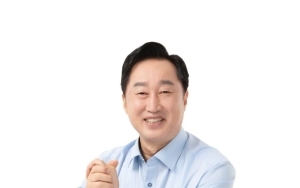
"In order to become a 'world-class university,' structural reform of private universities is necessary." On October 2, in a written interview with Asia Economy, Assemblyman Kim Junhyeok of the Democratic Party of Korea, who is a member of the National Assembly's Education Committee, stated, "The more reckless groups seek power and personal gain through the management of private universities, the harder it becomes for universities to fulfill their proper roles." He emphasized, "Since it is impossible for the government to endlessly increase support, private universities must develop their own educational and research capabilities." This year, an audit by the Ministry of Education exposed the realities on university campuses. One private university was criticized as a 'department store of corruption,' with incidents such as hiring family members and inflating travel expenses, while at another national university, underpayment of research funds was discovered, resulting in the recovery of
-
25.10.02 07:00
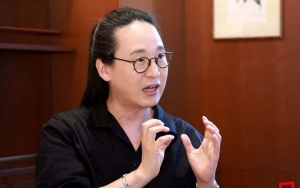
- Song Kilyoung Says "Rote Learning No Longer Works... We Must Nurture Talent for the AI Era" (17)
-
"We must accept that evaluations for the sake of evaluation, and tests designed solely for differentiation, are no longer valid." Big data expert Song Kilyoung stated in an interview with Asia Economy on October 2, "In reality, the studies undertaken for selection purposes often do not align with the studies needed to live in the real world." He identified the root of this issue as the limitations of the Korean education system, which has developed with a focus on 'selection.' He pointed out that studying for differentiation and for exams, rather than for general knowledge and cultural literacy, has resulted in universities failing to select the talent they actually need. Song emphasized, "Education in the future should be closer to nurturing rather than teaching." As artificial intelligence (AI) becomes widespread and society transforms into one where knowledge is instantly accessible, universities must cultivate talent that meets these new demands. He also commented on the mismatch
-
25.10.01 07:00

- "In the Age of AI, the Key Challenge for Universities Is Cultivating 'Master Learners'" 15
-
"Students at Arizona State University (ASU) do not graduate with just one or two majors. Some students have as many as five majors and even receive scholarships. Our goal is to cultivate 'master learners'?people who can learn anything?who are essential in the age of artificial intelligence (AI)." Michael Crow, President of ASU, stated in an interview with Asia Economy at the Four Seasons Hotel in Gwanghwamun, Seoul, on September 29, "AI enables people to learn more, faster, broader, and deeper," adding, "So why should universities require students to major in only one subject?" He emphasized, "Universities should not be arenas for scholars to compete with each other, but institutions that move toward social outcomes," and insisted that, "To keep pace with the rapid industrial changes in the AI era, universities must drive rapid innovation in all areas, including educational and instructional innovation, performance innovation, and research innovation." Since President Crow took office
-
25.10.01 07:00
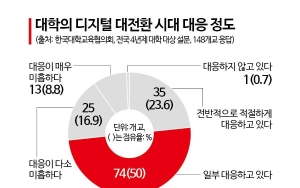
- Even Oxford Embraces ChatGPT... Korean Universities Lag Behind in AI (16)
-
Oxford University has become the first institution in the UK to grant full access to generative artificial intelligence (AI) ChatGPT to all students and staff. Oxford students will use 'ChatGPT Edu,' a version of ChatGPT developed by OpenAI specifically for educational purposes. In March, Oxford University entered into a partnership with OpenAI and began a pilot program. ChatGPT Edu is university-exclusive software that offers enhanced privacy and security services, allowing the university to store its own data. Students will also receive training on how to use ChatGPT Edu and other generative AI tools. Ann Trefethen, Oxford University's Pro-Vice-Chancellor for Digital, said in an interview with local media, "This is an exciting step in our ongoing digital transformation," adding, "If used well, it can accelerate curiosity-driven research and innovation and lead to groundbreaking achievements in solving major global challenges." The use of AI in learning, lectures, and other activities
-
25.09.30 11:22
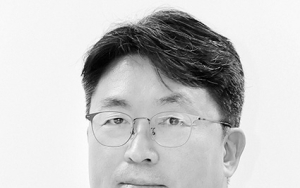
- Why Is a 'Great University Transformation' Necessary?
-
Each year, 43,000 students graduate from artificial intelligence (AI) departments at universities in China. This is twice the total student population of Seoul National University. By 2023, 585 universities in China had established AI departments. Prestigious institutions such as Tsinghua University and Peking University have also set up AI departments, attracting gifted students to study there. Leading universities in the United States?including MIT, Stanford, Carnegie Mellon, and UC Berkeley?are also establishing AI-focused colleges, making large-scale investments, and actively pursuing industry-academia collaboration. Universities are at the forefront of the US-China power competition. Meanwhile, South Korea remains gripped by the medical school craze. The trend of top-performing students flocking to medical schools is nothing new. The main concern is how much stable income one can earn after graduation. Even if students pursue science and engineering, it is difficult to earn as muc
-
25.09.30 07:02
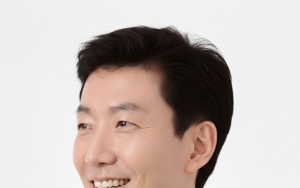
- "Major Transformation Urgently Needed for Universities... Ease Regulations, Open Competition, and Embrace Failure" ⑭
-
"Korean universities are now at a critical juncture that demands a major transformation. The nation must stake its future and establish short-, medium-, and long-term plans," he said. On September 30, Oh Chulho, Professor Emeritus of Public Administration at Soongsil University, stated in an interview with Asia Economy that "there is a growing sense of crisis that domestic universities are falling behind in global competition in the AI era." He then systematically pointed out the structural issues facing Korean universities, including Ministry of Education regulations, tuition freezes, constraints on the research environment, the outflow of STEM talent, lack of collaboration, and the tenure system. Professor Oh identified "excessive regulation centered on the Ministry of Education" as the biggest problem for Korean universities. He said, "Universities are also part of the education industry, so competition should be fundamental, but the government only allows competition within its gui
-
25.09.30 07:00

- While Korean Universities Lose Direction, Overseas Institutions Build Unique Strengths 12
-
When examining Korean universities, it is difficult to identify the unique strengths of each institution. Domestically, Seoul National University is regarded as the top university, with Yonsei University and Korea University following as second-tier schools, and other leading universities in Seoul are generally perceived as "good universities." Among them, KAIST (Korea Advanced Institute of Science and Technology) and POSTECH (Pohang University of Science and Technology), both specialized in science and engineering, have established themselves as universities with distinctive strengths. Looking at overseas universities, there are comprehensive universities with strong overall competitiveness, as well as institutions that have achieved global recognition through the reputation of specific colleges or departments. In addition, governments are encouraging universities to secure international competitiveness through structural reforms. For local universities in Korea, whose competitiveness