Siheung City Accelerates Preparation for Second Cycle of International Safe City Accreditation... Implementation Review and Performance Evaluation Completed
Final Report Meeting Held for International Safe City Project Research Service
Discussion on Re-accreditation Strategies and Development Plans
On May 12, Siheung City in Gyeonggi Province held the final report meeting for the "International Safe City Project Implementation Diagnosis and Performance Evaluation Research Service" at the City Hall Disaster and Safety Situation Room, where directions for developing a safer city toward the second cycle of International Safe City accreditation were discussed.

Siheung City held the final report meeting for the "International Safe City Project Implementation Diagnosis and Performance Evaluation Research Service" on the 12th at the City Hall Disaster and Safety Situation Room. Provided by Siheung City.
View original imageThe International Safe City program is a global accreditation system based on the Stockholm Declaration of 1989 in Sweden, which states that "everyone has an equal right to a healthy and safe life." Cities must undergo a rigorous review by the International Safe Community Certifying Center (ISCCC) and be re-accredited every five years.
Siheung City was first accredited as the 26th International Safe City in Korea and the 433rd in the world in February 2022. Since then, the city has continuously promoted safety enhancement initiatives in accordance with the six official accreditation criteria, including governance, injury surveillance, and protection of vulnerable groups. Ahead of the upcoming second cycle accreditation scheduled for this year, the city launched this research project to comprehensively review its achievements to date.
At the report meeting, Professor Park Namsu of Hyupsung University's Community Health and Safety Research Institute presented a comprehensive summary of the results of safety initiatives implemented since the first accreditation, including the operation of injury prevention programs, the establishment of injury surveillance systems, activities to protect vulnerable groups, and participation in both domestic and international networks.
This research service focused on the following main areas: follow-up implementation diagnosis of the first accreditation review results; performance evaluation of projects by each of the six International Safe City accreditation criteria; identification of supplementary tasks required for the second cycle accreditation; and the establishment of future development plans. The results of the research will serve as important data in this year’s re-accreditation review.
Hot Picks Today
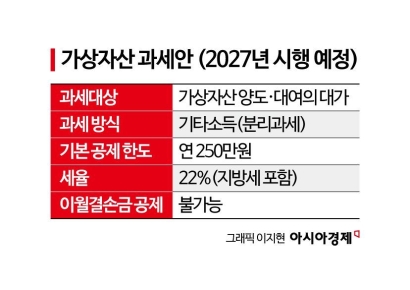 "Stocks Are Not Taxed, but Annual Crypto Gains Over 2.5 Million Won to Be Taxed Next Year... Investors Push Back"
- "Not Jealous of Winning the Lottery"... Entire Village Stunned as 200 Million Won Jackpot of Wild Ginseng Cluster Discovered at Jirisan
- "Even With a 90 Million Won Salary and Bonuses, It Doesn’t Feel Like Much"... A Latecomer Rookie Who Beat 70 to 1 Odds [Scientists Are Disappearing] ③
- "Rather Than Endure a 1.5 Million KRW Stipend, I'd Rather Earn 500 Million in the U.S." Top Talent from SNU and KAIST Are Leaving [Scientists Are Disappearing] ①
- "How Did an Employee Who Loved Samsung End Up Like This?"... Past Video of Samsung Electronics Union Chairman Resurfaces
Park Youngdeok, Director of Safety and Transportation, stated, "The second cycle of accreditation is not an end in itself, but rather a starting point toward making Siheung even safer. We will ensure re-accreditation through the joint efforts of the public and private sectors."
© The Asia Business Daily(www.asiae.co.kr). All rights reserved.







