[Reporter’s Notebook] SPACs Losing Merger Success and Popularity... Still Worth Saving
Merger Success Rate Drops to 38.5% Amid Accumulated Supply
VC Exits Increasingly Rely on IPOs... Discussion Needed on SPAC Improvements
![[Reporter’s Notebook] SPACs Losing Merger Success and Popularity... Still Worth Saving](http://www.asiae.co.kr/news/img_view.htm?img=2025112814141336220_1764306853.jpg)
"There is a sentiment among companies that they do not see much merit in SPACs (Special Purpose Acquisition Companies). If their business performance is strong, they opt for a direct listing, questioning the need to go through a SPAC."
A domestic venture capital (VC) CEO I recently met expressed concern over the gradual decline of SPACs. A SPAC is a paper company that first lists on the stock exchange with the purpose of acquiring an unlisted company; if it does not find a merger target within three years, it is dissolved. As the stock market enjoys a boom, high-quality companies are flocking to direct listings, and naturally, the pool of companies available for SPAC mergers is shrinking. He noted, "For high-quality unlisted companies where the majority shareholder holds nearly 100% of the shares, the actual benefits of listing are limited, given the burdens of audit and governance restructuring."
According to the Financial Supervisory Service, the SPAC merger success rate, which was between 65% and 69% from 2021 to 2024, dropped by half to 38.5% last year. Over the same period, the number of SPACs delisted rose threefold from 8 to 24, and new SPAC listings fell by 37.5% to 25. The proportion of IPO funds raised via SPACs also fell from 13.4% in 2023 to 5.7%. The large number of new listings in 2022, which peaked at 45, resulted in a wave of SPACs reaching maturity and being dissolved.
The United States has already experienced turmoil. Nikola, which was listed via a SPAC, went bankrupt after fraud allegations, and Lucid's stock price plunged by more than 80% from its peak. The U.S. Securities and Exchange Commission (SEC) responded by tightening disclosure requirements and limiting safe harbors for forward-looking statements. Korea's Financial Supervisory Service also cited these examples and announced plans to overhaul regulations.
However, in Korea, many industry insiders point to structural issues rather than lack of regulation. While the U.S. responded to overheating and failures with stricter regulations, Korea is considering similar measures while the market is already contracting. Although it is valid to point out that SPAC mergers are subject to less stringent due diligence and forward-looking information requirements than regular IPOs, it is inappropriate to apply the same remedies to markets where the underlying dynamics differ.
Another VC CEO, whose firm has a high proportion of early-stage investments, said, "In Korea, the exit market is virtually blocked except for listings," adding, "Most statistics showing an increase in M&A are actually secondary share sales, simply the result of shareholders selling off when an IPO is not possible." At present, the popularity of IPOs means the shrinking SPAC market does not seem like a major problem, but when the cycle turns, all exit routes will be blocked at once. In a structure where exits have effectively converged to IPOs alone, even SPACs, which should serve as alternatives, are crumbling.
Hot Picks Today
!["What If the KOSPI Plummets?... Record Funds Flow into 'Target Maturity Funds' [Investment Trends]"](https://cwcontent.asiae.co.kr/asiaresize/93/2026043008433546440_1777506215.jpg) "What If the KOSPI Plummets?... Record Funds Fl...
"What If the KOSPI Plummets?... Record Funds Fl...
- "Parents Deposited 10 Million Won for Me"... Securities Accounts Surge 272% Amid...
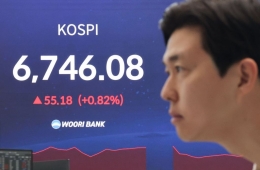
- [Breaking] KOSPI Hits Record High During Trading, Surpasses 6,740 Mark
- "Major Crash Is Coming... Buy Even If You Have to Skip a Meal" 'Rich Dad' Shares...
- Did Her Wealthy Husband Quash the Investigation? Yang Jungwon Appears Before Pol...
The solution is not simply to strengthen regulations. The system must be redesigned so that SPACs function as a genuine exit route without stifling the market. Issues that have been under discussion since the early days of the system—such as extending the period of existence, permitting triangular mergers, and promoting PIPE (Private Investment in Public Equity)—are once again on the table. Now is the time to re-examine the entire spectrum of exit routes.
© The Asia Business Daily(www.asiae.co.kr). All rights reserved.