

The Wound That Traverses Generations
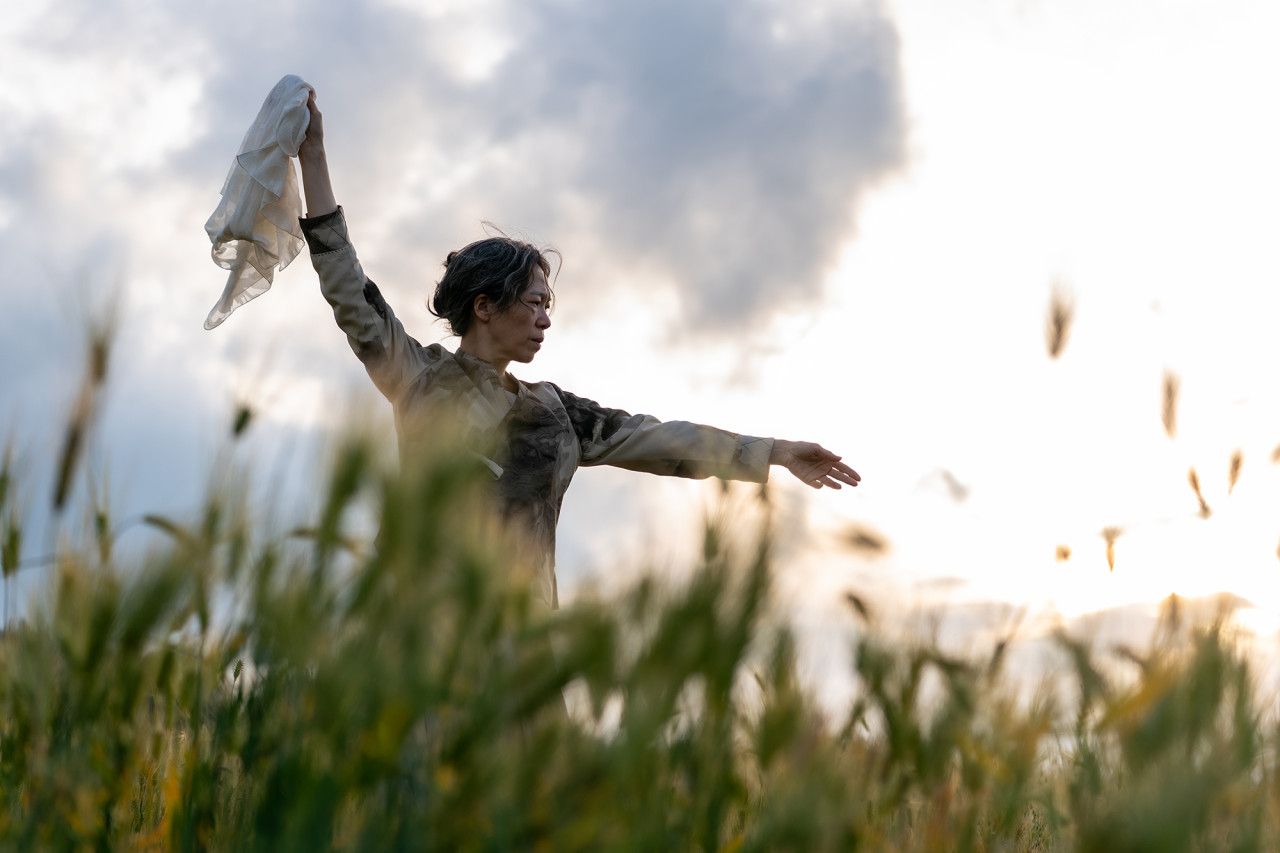
The core is not the historical event itself, but the emotional residue left in its wake. This is intertwined with the desire for self-reinvention felt by the younger generation. Director Jung presents this by crosscutting between Lee Youngok's classroom in 1998 and Jeongsun's process of recovering her memory. Youngok becomes class president but quickly becomes a mere puppet. She is helplessly swept into group violence led by transfer student Kim Kyungtae (Park Jibin). In contrast, Jeongsun undergoes psychiatric treatment and gradually retrieves fragments of her lost memory. The more she traverses Jeju, the clearer her recollections of that day 49 years ago become.
At a certain moment, the emotion that has dominated Jeongsun for so long is revealed as a historical echo. The violence of an era manifests as persistent stubbornness, inexplicable fear, and excessive obsession-feelings that cannot be explained solely by one period's violence. The frustration Youngok experiences also becomes difficult to dismiss as simple adolescent angst. This opens the way to interpret her generation as one living with the consequences of her parents' silence.
Rules imposed without context often feel oppressive to the younger generation. For Youngok, changing her name initially seems like a simple procedure to escape an old-fashioned name. It is an expression of her desire to redefine herself, break free from the mold given by her parents, and live with an identity she has chosen herself. However, the film does not depict this process as a fulfillment, but rather as a journey toward discovering a deeper truth. Upon learning the history behind her name, Youngok changes her mind. Renaming herself comes to feel like an act of erasing the past narrative and writing a new one.


History Communicated Through Silence
The memory of the Jeju 4·3 Incident began to surface in the late 1980s. The film’s time setting of 1998 marks a turning point, when the tragedy shifted from being a regional wound to becoming a national agenda for truth-seeking. Until then, it existed only in the language of literature, art, and civil society. Novelist Hyun Ki-young had to endure arrest and investigation after publishing "Aunt Suni" for this very reason.
Director Jung captures the very moment when personal recovery and historical healing begin simultaneously. In order to show that the Jeju 4·3 Incident is still an ongoing force shaking the lives of survivors, he presents fragments of memory, and uses school violence as a metaphor for the mechanisms of state violence. Unlike films such as "Jiseul" (2013), which vividly depicted the terror of villagers trapped in caves, this movie traces how grand historical discourse ultimately shapes the lives of individuals. The goal is empathy, not reenactment.
Given that Director Jung has long dealt with institutional violence, this marks an intriguing change. In his earlier works-such as "Nambugun" (1990), "White Badge" (1992), "Black Money" (2019), and "The Boys" (2023)-battlefields and courtrooms served as spaces where truth was uncovered. In "My Name Is," the remnants of history are found in everyday life.


The gaze has shifted from public to private spaces, but the sense of urgency has grown deeper. The generation that experienced war and division often raised the next generation in silence. The unspoken past operates within the family in different forms: unexplained sensitivity, unspoken taboos, and excessive anxiety. The children’s generation experiences only the consequences, without knowing the cause. Thus, the way historical tragedies are passed down is not necessarily through textbook knowledge or explicit memories.



![[Exclusive] "Looking Beyond Financial Statements for Future Value"... IBK Injects 170 Billion Won into 72 Innovative Companies](https://cwcontent.asiae.co.kr/asiaresize/304/2026011314545989464_1768283699.jpg)