[Feature] "Nomination Means Victory"... Gwangju and Jeonnam Democratic Party Primaries Leave Only Scars
Slander, Lawsuits, and Allegations of Fraudulent Voting Run Rampant
Mysterious Materials Circulate, Fueling Distrust
Reconciliation Expected to Take Significant Time
The Democratic Party of Korea's primaries for the Jeonnam-Gwangju Special Mayor, five district mayors in Gwangju, and 22 basic local government heads in Jeonnam were all concluded as of April 26. However, citizens and political circles have delivered a harsh verdict, calling it a "primary full of wounds."
Within the regional political structure, where "Democratic Party nomination equals election victory," this year's primaries saw particularly fierce competition among candidates. Amid this intense rivalry, numerous allegations of fraudulent voting and a barrage of negative campaigning have further fueled voter suspicion and distrust toward the overall primary system.
As the vote percentages for each candidate were kept entirely confidential during this primary, there was a growing atmosphere of dissatisfaction with the results. As a result, the process was viewed as having been fraught with complications from start to finish.

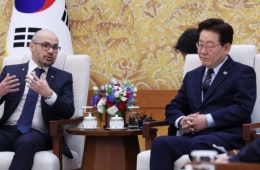
According to the Democratic Party of Korea and the National Election Commission on April 27, after preliminary candidate registration began in February, Min Hyung-bae was ultimately selected as the Jeonnam-Gwangju Unified Special Mayor candidate for the Democratic Party of Korea on April 14. The outlines of the five Gwangju district mayoral candidates also became clear. On April 26, with the nomination of Im Jirak for Hwasun County Governor, the candidates for all 22 basic local governments in Jeonnam were finalized as well.
Locally, the consensus is that this Democratic Party primary—which all but guarantees election victory for the nominees—was more tumultuous than ever.
From the outset, the process of choosing South Korea's first Jeonnam-Gwangju Special Mayor was marred by mudslinging, slander, and a flurry of lawsuits and complaints among the candidates. Initially, there were eight announced candidates for the special mayoral race: Min Hyung-bae, Kim Yung-rok, Kang Ki-jung, Lee Byung-hoon, Lee Gae-ho, Joo Cheol-hyeon, Shin Jung-hoon, and Jung Jun-ho.
Given the prominence of these heavyweight candidates, even the smallest figures became the subject of intense debate. In fact, when materials containing the poll numbers for a particular candidate circulated on social media, fierce battles erupted over whether it was legal or illegal.
As the primary heated up and alliances formed among candidates, each camp began scrutinizing every issue through a legal lens, fueling what could be described as an all-out strategy of character attacks. Each side focused on highlighting their rival's weaknesses, and these negative campaigns quickly shaped public opinion.
The situation was largely the same in the basic local government primaries.

On the morning of the 17th at 11 a.m., Lim Jirak, a preliminary candidate for Hwasun County Governor, and his supporters are seen shaving their heads in front of Hwasun County Office and County Council as a protest against the recent suspension of the primary election. Photo provided by reader.
View original imageAttacks dredging up past personal history, as well as unverified personal issues, entered the campaign fray. In some constituencies, even allegations reminiscent of sex crimes were raised, turning the races into mudslinging contests.
For incumbent heads of local governments, policies they had previously pursued became targets for attack, leading to backlash. In addition, decades-old criminal records were brought up again, and unverified rumors were amplified and recycled, further confusing voters' judgment.
Suspicions of irregularities also followed. In Yeosu, there were allegations of party member list leaks. In Jangseong and Hwasun, suspicions emerged over proxy voting among the elderly. As these suspicions persisted, the line between fact and misinformation grew increasingly blurred.
Delays in the primary schedule and a change in the original vote weighting—from "50% party members, 50% safe-number phone poll" to "20% party members, 80% public opinion poll"—only added to the confusion. With the vote percentages also withheld, debates over the "fairness" and "credibility" of the primary erupted each time results were announced. Each time the so-called "rumor-based analysis" proved incorrect, conflicts among candidates only deepened.
Although the names of the unified special mayor and the Jeonnam basic local government candidates running under the Democratic Party of Korea banner have been finalized, the fractured state of local politics suggests that reconciliation will be difficult in the near future.
Hot Picks Today
 "Prices Triple but Still Unavailable"...Hospita...
- Lingering at the Olive Young Shelf, Then Straight Into the Basket... "Not Cosmet...
- [Breaking] Special Counsel Seeks 20-Year Prison Term for Former Justice Minister...
- "Mom, Did You Buy Stocks in My Name Too?"... 3 Trillion Won Accumulated in Child...
- Once a Leading 'Outdoor Legend'...Is Nepa Headed Down the Same Path as Homeplus?...
A local political source commented, "In this region, once you receive the Democratic Party nomination, the election is essentially over. That is why the primary was so fiercely contested. With the symbolic significance of launching the Jeonnam-Gwangju Unified Special Municipality, the competition between candidates was particularly intense. It is high time to address chronic problems in the primary system, such as proxy voting, that have persisted for years."
© The Asia Business Daily(www.asiae.co.kr). All rights reserved.