Suncheon City Operates Japanese Invasion of Korea in 1597 Battlefield Exploration Program for Special Forces Soldiers
Over 200 Soldiers from the Golden Bat Unit in Damyang Participate
Strengthening Hands-On History Education Programs
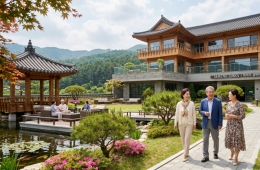
Suncheon City in South Jeolla Province has announced that it will operate a cultural heritage field exploration program for soldiers of the Golden Bat Unit of the Army Special Warfare Command, based in Damyang, at various sites related to the Japanese Invasion of Korea in 1597.
This exploration will be conducted twice, on April 21 and 23, with participation from around 200 soldiers aged 20 to 25. Through utilizing local historical sites, the soldiers will have the opportunity to understand the flow of wartime history and its historical significance on-site.

Guided by national heritage interpreters, the soldiers will explore a course that begins at Suncheon Waeseong Fortress, continues to Chungmusa Shrine, which enshrines Admiral Yi Sun-sin, and ends at the Japanese Invasion of Korea in 1597 Historical Experience Learning Center.
This program is designed to allow participants to observe the historical traces and spatial characteristics remaining at the battle sites and to follow in the footsteps of the actual battlegrounds, thereby deepening their understanding of the development and changes in the course of the war.
Additionally, by visiting sites of fierce battles from the Japanese Invasion of Korea in 1597, the program is expected to provide an opportunity for soldiers to reflect on the meaning of war and to reaffirm their sense of duty and responsibility as defenders of the nation.
An official from Suncheon City stated, "The sites of the Japanese Invasion of Korea in 1597 are important historical assets of the region and places of high educational value," adding, "We will continue to support soldiers in learning history on-site, so they can foster a correct historical awareness and sense of community."
Hot Picks Today
![[Exclusive] "What? I Used It for Fried Eggs and Kimchi Pancakes, but It Wasn't Edible?"... Raw Pork Lard Supplied to Department Stores, Causing Stir](https://cwcontent.asiae.co.kr/asiaresize/93/2026042216151436513_1776842114.png) [Exclusive] "What? I Used It for Fried Eggs and...
[Exclusive] "What? I Used It for Fried Eggs and...
- [Report] "Professionals in Their 30s and 40s With at Least 2 Billion Won in Cash...
- I Was Happy About My Pay Raise, but "Now I Owe 220,000 Won"... What’s Happening...
- JTBC Fails to Reach Deal With MBC, SBS... Only KBS to Co-Broadcast World Cup
- "From 8,000 Won to 730,000 Won: The Toy Everyone Wants but Can't Get"
Meanwhile, Suncheon City plans to expand its hands-on history education programs using local cultural heritage sites, including those related to the Japanese Invasion of Korea in 1597, targeting soldiers, students, and citizens.
© The Asia Business Daily(www.asiae.co.kr). All rights reserved.