Public Property Worth 1,100 Trillion Won Shifts from Simple “Preservation” to “Utilization”… Management Expertise to Be Strengthened
MOIS Launches “Strengthening Expertise of Local Government Public Property Managers”
Enhancing Management Expertise... Expected to Improve Local Fiscal Soundness
The government has decided to manage public property owned by local governments in a more specialized manner. With the recent shift in public property management from simple “preservation” to more active “utilization,” the plan is to strengthen the management system by cultivating core experts and enhancing training for those in charge.
On March 11, the Ministry of the Interior and Safety announced that it will fully implement the “Plan to Strengthen Expertise of Local Government Public Property Managers” to manage public property in a more professional and systematic way.
Currently, the total value of public property nationwide amounts to 1,103 trillion won. Although there is a growing need for advanced management in areas such as law and finance, in reality, 56% of public property managers at local governments have less than one year of experience due to frequent personnel changes. In addition, only 16 local governments have dedicated departments, making it difficult to establish a truly professional management system.
In response, the Ministry of the Interior and Safety will raise the overall standard of the management system based on the needs of the field. It will introduce “Public Property Live Consulting,” offering real-time communication with experts four times a year, and establish a “Public Property Knowledge Lab”—a network bringing together public officials and academic experts to discuss and research key issues, thereby cultivating a core group of specialists.
The Ministry and the Local Finance Association will also cooperate to operate an “On-site Educational Consulting” program. In particular, the annual public property status survey conducted by local governments will shift from a simple budget support approach to a comprehensive consulting format, where experts provide close support throughout all phases—from preparation and on-site investigation to post-management.
The work environment will also be improved. During public property management analysis and evaluation, additional points will be awarded if the person in charge has long-term tenure or if there is a dedicated organization. Penalties will be introduced as well; for example, those who do not meet training completion goals will be excluded from receiving financial incentives.
Hot Picks Today
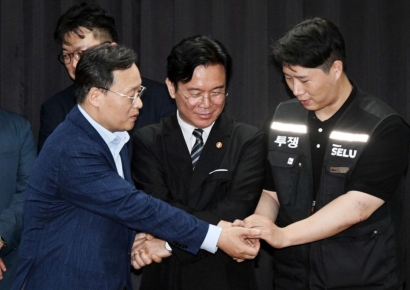 Dramatic Agreement Reached on Eve of Samsung Electronics General Strike... Minister Kim Young-hoon: "Showcased Korea's Strength in Dialogue" (Update)
- "It Has Now Crossed Borders": No Vaccine or Treatment as Bundibugyo Ebola Variant Spreads [Reading Science]
- Japanese Courts Reduce Paperwork, Ushering in Full-Fledged Era of Electronic Civil Litigation
- "Stocks Are Not Taxed, but Annual Crypto Gains Over 2.5 Million Won to Be Taxed Next Year... Investors Push Back"
- "Who Is Visiting Japan These Days?" The Once-Crowded Tourist Spots Empty Out... What's Happening?
Vice Minister Kim Minjae said, “Given the challenging fiscal environment, it is more important than ever to manage public property—the key resource of local governments—wisely and professionally,” adding, “Through robust support that can be directly felt by those on the front lines, we will dramatically enhance public property management capabilities.”
© The Asia Business Daily(www.asiae.co.kr). All rights reserved.