"There Is Clear Rationale for KOSPI 7,000 in the First Half... Iran Conflict Supports Market Rally"
Semiconductor Profit Growth Drives Market Rally
Caution Needed for Increased Volatility as Momentum Slows in the Second Half
For Retirement Pensions, Choose Asset Allocation ETFs Combining Stocks and Bonds
"As long as the semiconductor sector remains strong, the bullish trend in the domestic stock market will continue. It is possible for the KOSPI to reach the 7,000 mark within the first half of the year."

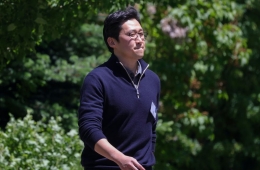
Yook Donghui, Head of ETF Product Marketing Division at KB Asset Management, shared this outlook on the Korean stock market during a recent interview with The Asia Business Daily. He said, "The domestic stock market will stay robust at least until the first half of the year. When companies make strong profits, it naturally leads to economic improvement and rising stock prices. Currently, Korea is generating overwhelming profits from the semiconductor market. The combined market capitalization of Samsung Electronics and SK hynix exceeds 40%, and the operating profit forecasts for these two companies on the KOSPI are continuously being revised upward." He continued, "Semiconductors are traditionally a cyclical industry, but right now, they have broken through the typical cycle. Following high bandwidth memory (HBM), profit increases are evident in DRAM, NAND, as well as in the materials, components, and equipment sectors. As long as the semiconductor industry remains robust, this upward trend is likely to persist for some time."
There are also expectations that the KOSPI could surpass the 7,000 mark within the first half of the year. Yook explained, "There is a clear rationale behind domestic and international securities firms projecting the KOSPI to reach the 7,000 range. This figure is feasible when considering the price-to-earnings ratio (PER), among other factors. If demand in the semiconductor market remains steady and operating profit forecasts are not downgraded, I believe this upward momentum can continue." He further analyzed that the recent sharp decline in the stock market, triggered by the US and Israel's airstrikes on Iran, could actually help sustain the bullish trend. Yook added, "A healthy correction typically involves a decline of about 11%. Even after significant gains, when a crisis occurs, the S&P 500 often drops by around 11%. This time, Korea's market experienced a substantial drop and then rebounded sharply. Unlike past corrections that played out over 15 days to a month, as seen during the COVID-19 pandemic, the adjustment happened rapidly. Given that a correction has already occurred, I think the KOSPI could reach the 7,000 mark within the first half of the year."
However, he also noted that risk management will be crucial in the second half of the year. Yook commented, "The strength of the semiconductor sector is widely known, so expectations have already been priced in and the market has risen rapidly in the short term. In the second half, we may see the momentum taper off as expectations are met to some extent. Therefore, I believe more thorough risk and volatility management will be needed in the latter half."
Along with the sharp rise in the stock market, the domestic exchange-traded fund (ETF) market has also shown rapid growth, with its size approaching 400 trillion won in a short period. Yook expects this growth trend to continue. He explained, "The ETF market has gone through several stages of leveling up. When ETFs were first listed in 2002, they received almost no attention. The first phase of growth came as leveraged ETFs gained popularity around 2010, making ETFs more familiar to investors. The second phase occurred when the COVID-19 pandemic gave rise to individual investors trading foreign stocks. The third phase coincided with the end of the pandemic, as ETFs gained traction in pension accounts. The time it took for ETF net assets to grow from 200 trillion won to 300 trillion won, and now to 400 trillion won, is shortening. This shows that ETFs are now firmly recognized as vehicles for asset management. Therefore, I expect the market to surpass 400 trillion won and reach 500 trillion won in a short time."
This year, the standout theme in the ETF market is expected to be artificial intelligence (AI). Yook said, "Everyone is talking about AI and semiconductors, but the bigger trend is the AI paradigm shift. The buildout of AI infrastructure will continue through 2028 to 2030. This year as well, we will see a steady stream of products that capitalize on AI innovation." He also forecast that active ETFs will become a key market trend. He said, "With changes in regulations and market trends, active ETFs will become much more prevalent. Given how quickly the market environment is changing, situations could arise where investors need to sell one day and buy the next. Launching ETFs in active formats allows for ongoing changes in portfolio holdings, so I anticipate a wave of new active products coming to the market."
Hot Picks Today
 "Parents Deposited 10 Million Won for Me"... Se...
- "White House to Reconsider Use of Anthropic AI After Sanctions Amid Conflict"
- "SK Hynix Stock Windfall"... Teenager With Wads of Cash Turns Thief at Jewelry S...
- "Major Crash Is Coming... Buy Even If You Have to Skip a Meal" 'Rich Dad' Shares...
- "Save 30 Million Won, Grow It to 100 Million": Dramatic Pledge Sparks "Is This a...
As for what to consider when investing in ETFs with retirement pensions, Yook pointed to asset allocation. He explained, "If you are 100% exposed to stocks, you'll inevitably feel anxious whenever stock prices fluctuate. Products designed with asset allocation in mind are good for mitigating this risk in advance. For example, the 'RISE Samsung Electronics SK hynix Bond Mixed 50' ETF, which was listed last week, consists of 50% Samsung Electronics and SK hynix stocks and 50% bonds. As a result, it provided some degree of protection even when Samsung Electronics and SK hynix experienced double-digit declines recently."
© The Asia Business Daily(www.asiae.co.kr). All rights reserved.