Gangwon Province to Invest 500 Billion Won in 15 Universities Over 5 Years... 'Gangwon RISE' in Full Operation
Governor Jin Tae Kim: "We Will Redistribute the Budget Based on Performance Evaluation, Not Simple Allocation"
Revitalizing Gangwon Through Universities... 'Gangwon RISE' to Nurture 10,000 Advanced Talents
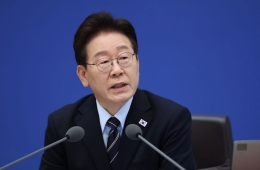
On March 5, Gangwon Special Self-Governing Province (Governor Kim Jin-tae) held the 'Gangwon RISE Operations Meeting' at the provincial government office, together with 15 universities in the province and the Gangwon RISE Center.

Jin-tae Kim, Governor of Gangwon Special Self-Governing Province. Provided by Gangwon Province
View original imageAttendees included Governor Kim Jin-tae, the head of Gangwon Talent Institute, the directors of the RISE project teams from 15 participating universities in the province, and the head of the Gangwon RISE Center. They shared the progress made so far and discussed the direction for 2026 as well as strategies for stable project operations.
RISE (Regional Innovation-led University Support Ecosystem) is a project that shifts university financial support programs—previously operated primarily by the Ministry of Education—to a region-led system starting in 2025, thereby linking regional development strategies with university support to promote the joint growth of both the region and its universities.
Gangwon RISE is a large-scale project involving a total investment of 500 billion won over five years for the 15 universities in the province. The project began in earnest in the second half of the year after establishing the 2025 implementation plan, selecting participating universities, and conducting preliminary consulting.
Currently, 107 projects are underway, with 99.8 billion won to be provided in 2025 and 108.3 billion won in 2026.
The province is focusing on five major projects to build a Gangwon-style regional innovation model: ▲Fostering Gangwon's strategic industries (178.8 billion won), ▲Cultivating local, settlement-oriented talent (141.4 billion won), ▲Establishing the Gangwon Startup Hub (58 billion won), ▲Building the Gangwon vocational and lifelong education system (52.6 billion won), ▲University-led regional issue resolution and collaboration projects (69.2 billion won).
Through these efforts, the province aims to increase advanced industry sales by 1 trillion won, nurture 10,000 skilled professionals in advanced industries, create more jobs, achieve a 20% local settlement rate, and raise the residents' vitality index into the nation's top three, thereby improving quality of life in the region.
Looking ahead, the province plans to establish a performance management system covering planning, operation, evaluation, and feedback, and in 2026 will focus on project performance management, including independent evaluation by the Gangwon RISE Center and inspection and evaluation by the Ministry of Education.
Governor Kim Jin-tae said, "The reason for such a large-scale budget is that the authority for university support is now being transferred to the region," adding, "Including both national and local funding, we will implement projects worth about 100 billion won annually over five years."

He continued, "With the transfer of authority comes responsibility. Rather than distributing the budget from the beginning, we will operate the program by redistributing funds based on thorough performance evaluations to ensure substantial results."
This was the first-ever meeting in the country presided over by a provincial governor with university project team leaders who oversee university-level projects, reflecting the province's strong commitment to making the Gangwon RISE project a core provincial initiative.
During the meeting, various suggestions were made, including early disbursement of project funds, flexible project funding by unit, and creating conditions to help students settle in the region.
Hot Picks Today
 "Stocks Are Not Taxed, but Annual Crypto Gains Over 2.5 Million Won to Be Taxed Next Year... Investors Push Back"
- "Don't Throw Away Coffee Grounds" Transformed into 'High-Grade Fuel' in Just 90 Seconds [Reading Science]
- Signed Without Viewing for 1.6 Billion Won... Jamsil and Seongbuk Jeonse Prices Jump 200 Million Won in a Month [Real Estate AtoZ]
- "Groups of 5 or More Now Restricted"... Unrelenting Running Craze Leaves Citizens and Police Exhausted
- "Even With a 90 Million Won Salary and Bonuses, It Doesn’t Feel Like Much"... A Latecomer Rookie Who Beat 70 to 1 Odds [Scientists Are Disappearing] ③
Governor Kim stated, "We will actively support not only early execution but also flexible budget use within the scope of project objectives to ensure there are no difficulties in utilizing project funds."
© The Asia Business Daily(www.asiae.co.kr). All rights reserved.