Despite Nomination Scandals... Will Metropolitan and Provincial Council Members Reach 900 This Year? National Assembly Moves to Increase Seats
120 Days Before the Election: Attempt to Increase Council Seats
"Local Elections Without Local Input" Amid Kyung Kim Nomination Scandal
Turning Point in the Clash Between Population Representation and Regional Representation
There is growing attention on whether the National Assembly's longstanding practice of increasing the number of metropolitan and provincial assembly seats during each election will be repeated in the June local elections. Despite population decline and the recent nomination bribery scandal involving a Seoul City Council member, both the ruling and opposition parties are focusing on amending the law to increase the number of metropolitan and provincial assembly members. There are also calls to expand proportional representation to enhance regional representation.

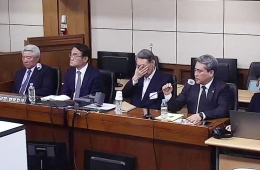
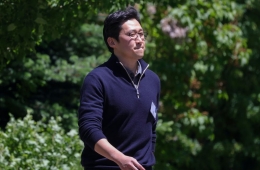
Independent lawmaker Sunwoo Kang, accused of receiving 100 million won from Seoul City Council member Kyung Kim in exchange for nomination ahead of the 2022 local elections. Photo by Yonhap News
View original imageMetropolitan and Provincial Assembly Seats Have Increased with Every Election
According to the National Election Commission on February 3, the number of metropolitan and provincial assembly members has continuously increased since the third local elections in 2002. The number rose from 682 in 2002 to 733 in 2006, 789 in 2014, and reached 872 in 2022. The total number of assembly members is determined by lawmakers from both parties, including those on the Special Committee on Political Reform, which discusses electoral system reforms. Each time, the criteria for determining the number of seats have been changed by amending the Public Official Election Act.
Looking at the amendment history of Article 22 of the Public Official Election Act, ahead of the 2010 local elections, the number of metropolitan and provincial assembly members was set at twice the number of district, city, and county heads, with the option to adjust this within a 10% range. For example, if there are 20 district, city, or county heads, the basic number of assembly members would be 40, but it could be set anywhere between 36 and 44. This adjustment range was gradually increased to 14% in 2014 and to 20% in 2022.
The 22nd National Assembly is also moving forward with legal amendments to increase the number of metropolitan and provincial assembly members. Yoon Junbyung of the Democratic Party and Park Deokheum of the People Power Party, both members of the Special Committee on Political Reform, each submitted bills last month to increase the adjustment range for assembly members in agricultural and fishing regions to 30%, which is 10 percentage points higher than the current standard, in order to enhance regional representation for rural areas.

Over the past 20 years, voter turnout in local elections has remained low at around 50%, but the number of metropolitan council and provincial assembly members, decided by the ruling and opposition parties in the National Assembly, has increased every year.
View original imageAs the National Assembly, rather than the local regions themselves, continues to set the rules of the game, criticism arises every year that local elections are becoming "local elections without localities." Additionally, nomination corruption scandals occur as candidates seek favor with the central political establishment. The more assembly members there are, the more taxpayer money is spent. Kyung Kim, the former Seoul City Council member under investigation for nomination bribery, continued to receive a monthly salary of about 6.4 million won even during the police investigation.
Population Representation vs. Regional Representation: The Debate Intensifies
This year's local elections are expected to be a turning point, with both sides clashing over population representation and regional representation due to urban-rural population imbalances. Population representation is based on the principle that every vote should have equal value, focusing on preventing certain regions from being over- or under-represented according to population.

For now, the Constitutional Court is siding with population representation. In October last year, the court ruled that the votes of residents in Jangsu County, North Jeolla Province, were overrepresented and issued a decision of unconstitutionality, requiring electoral districts to be redrawn by the 19th of this month. On the other hand, regional representation, advocated by politicians, is based on the idea that the characteristics of local communities should be protected and further regional extinction must be prevented.
Hot Picks Today
 "Parents Deposited 10 Million Won for Me"... Se...
- Mayor Shin Sangjin: "Ori Station Fourth Technovalley to Be Promoted by Mayoral A...
- "SK Hynix Stock Windfall"... Teenager With Wads of Cash Turns Thief at Jewelry S...
- "Major Crash Is Coming... Buy Even If You Have to Skip a Meal" 'Rich Dad' Shares...
- "Save 30 Million Won, Grow It to 100 Million": Dramatic Pledge Sparks "Is This a...
There are also calls to expand proportional representation or to allow regional parties in order to reduce the influence of central politics and enhance regional representation. Heeok Jung, a professor of political science and international relations at Myongji University, said, "Expanding proportional representation can reduce the gap between vote share and seat share, better reflecting actual policy preferences and public opinion." Sangung Ha, a professor of political science and international relations at Sogang University, suggested, "To restore the original meaning of local elections, the law should be revised to promote competition, and one way to do this is to allow regional parties that can only field candidates in local elections."
© The Asia Business Daily(www.asiae.co.kr). All rights reserved.