Hallym University Holds Academic Conference on "International Development Cooperation in Africa in the Era of Climate and Digital Transformation"
Hallym University Graduate School of Global Cooperation and Gangwon International Development Cooperation Center
Host the 9th Hallym Global Cooperation Academic Conference
Hallym University (President Choi Yanghee) held the 9th Hallym Global Cooperation Academic Conference on December 3 at the university's international conference room.

Hallym University held the 9th Hallym Global Cooperation Academic Conference on the 3rd at the university's international conference room. Provided by Hallym University
View original imageThis academic conference was jointly organized by the Graduate School of Global Cooperation at Hallym University (Dean Yang Kiwoong) and the Gangwon International Development Cooperation Center (Director Kim Changseop) to commemorate International Development Cooperation Day and the 8th anniversary of the graduate school's founding. The event was attended by around 150 participants, including policy makers in the field of international development cooperation, researchers from domestic and international universities, international cooperation experts, and both graduate and undergraduate students. Under the main theme of "International Development Cooperation with Africa in the Era of Climate and Digital Transformation," the conference aimed to discuss the direction of development cooperation in Africa amid global changes marked by simultaneous climate crises and digital innovation.
Session 1 (Climate and Digital Transformation in Africa and Trends in International Development Cooperation) focused on future strategies at the policy and institutional levels. Presentations included: "Korea's Africa Development Cooperation Strategy" by Namsoon Lee, Director of the Africa Office at the Korea International Cooperation Agency (KOICA); "Trends in Africa's Digital Transformation" by Yoonjin Yoo, Research Fellow at the Korea Information Society Development Institute (KISDI); and "Global Cooperation in Africa's Climate Crisis" by Professor Han Sangmin of Hallym University. The session concluded with a panel discussion featuring Professor Shin Kyoseung of Soonchunhyang University, Professor Kim Eunkyung of Hankuk University of Foreign Studies, and others.
Session 2 ([HK3.0] Exploring the Landscape of Climate and Digital Cooperation in Africa) featured research presentations by the Hallym University HK3.0 Research Group. Moderated by Professor Lee Kyunggu of Hallym University, the session included presentations by: Yang Kiwoong (Mobility and Geopolitics); Baek Yongjun (Generational and Digital Public Sphere in Botswana); Joo Hanna (National AI Strategies of Kenya and Nigeria); Lee Kyeongeun (East Africa's Digital Gender Gap and Financial Inclusion); and Lu Miyao (National and Chinese Technology and Datafication in Ghana's Rural Networks), among other researchers from Korea and abroad.
Session 3 ([HK3.0] Building a Knowledge Ecosystem for Africa Cooperation) was chaired by Professor Lim Gidae of Busan University of Foreign Studies (Head of the HK3.0 Nexus Africa Consortium Research Group). Presentations by Korean researchers included: Byun Woong (Senegal's Y'en a marre: Popular Culture and Political Expression); Kim Byeongchun (Youth Migration and Social Networks in Juba and Bor, South Sudan); Han Sumi (Data-Centered ESP Education Based on the AfDB News Corpus); Park Jaeyeon (Knowledge Decolonization and Ethics of Practice through the "Model Noir" Exhibition); and Choi Hyemin (Urban Innovation and the Role of Youth Based on Living Labs).
In his opening remarks, Yang Kiwoong, Dean of the Graduate School of Global Cooperation at Hallym University, emphasized, "Korea's new role in international development cooperation is becoming increasingly important amid global changes such as the climate crisis and digital transformation," and added, "Hallym University will continue to fulfill its responsibilities as a research and practice platform for cooperation with Africa."
Participants evaluated this academic conference as an opportunity to broadly examine the latest agendas in Africa's development cooperation, while also connecting field-based case studies with policy, technology, and social issues to concretize practical cooperation models. In particular, the event was significant for bringing together perspectives from academia, institutions, and practitioners in one place, confirming its status as a "multi-layered cooperation platform" where research outcomes can be translated into actionable strategies.
Hot Picks Today
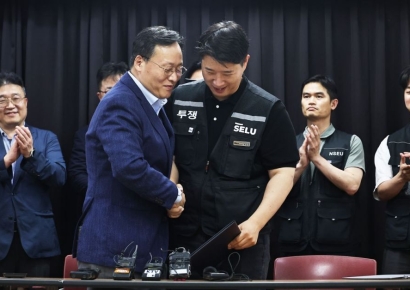 Up to 600 Million Won for Semiconductors, 160 Million Won Bonus for Loss-Making Non-Memory… Samsung Electronics Labor and Management Reach Tentative Deal on Unprecedented Performance Compensation (Comprehensive)
- "Could I Also Receive 370 Billion Won?"... No Limit on 'Stock Manipulation Whistleblower Rewards' Starting the 26th
- "From a 70 Million Won Loss to a 350 Million Won Profit with Samsung and SK hynix"... 'Stock Jackpot' Grandfather Gains Attention
- Opening a Bank Account in Korea Is Too Difficult..."It Costs 150,000 Won Just to Open a Child's Account or Check Card" [Foreigner K-Finance Status]②
- "Who Is Visiting Japan These Days?" The Once-Crowded Tourist Spots Empty Out... What's Happening?
Meanwhile, since 2018, the Graduate School of Global Cooperation at Hallym University and the Gangwon International Development Cooperation Center have jointly hosted international academic conferences, establishing themselves as leading platforms in Korea's international development cooperation sector. Going forward, they plan to continuously expand various research, education, and field projects to further strengthen the foundation for internationalization in the Gangwon region and cooperation with Africa.
© The Asia Business Daily(www.asiae.co.kr). All rights reserved.
!["Please Help": How Much Do Those Bowing 90 Degrees Really Earn? [Data Pick]](https://cwcontent.asiae.co.kr/asiaresize/307/2026052010120870131_1779239528.png)