[Gyeongju APEC] Jang Inhwa: "Multilateral Cooperation Is the Solution for Sustainable Supply Chains"
Introduction of POSCO, Marubeni, and Hancock Cooperation Cases
Jang Inhwa, Chairman of POSCO Holdings, stated at the 2025 Asia-Pacific Economic Cooperation (APEC) CEO Summit, "Let us seek solutions through multilateral cooperation to build sustainable future supply chains."
On the 30th, at the Hwarang Hall of the Gyeongju Arts Center, Chairman Jang introduced that supply chain cooperation between POSCO and Australia is expanding into a multilateral cooperation framework across the Asia-Pacific region, including Japan, during the CEO Summit session themed 'Building Resilient and Sustainable Global Supply Chains.' He explained, "Cooperation between POSCO Group and Australia began with iron ore supply in 1971 and has now evolved into a strategic partnership responsible for 70% of POSCO's raw materials." He cited the following as key areas of cooperation: ▲ low-carbon transition in the steel industry ▲ securing supply chains for secondary battery materials ▲ establishing a clean energy ecosystem.

On the morning of the 30th, Jang Inhwa, Chairman of POSCO, spoke at the 'Building Resilient and Sustainable Global Supply Chains' session of the Asia-Pacific Economic Cooperation (APEC) CEO Summit held at the Gyeongju Arts Center in Gyeongbuk. Photo by Kang Jinhyung
View original imageIn 2010, POSCO participated in the Roy Hill iron ore mine development project in Australia, together with Hancock Prospecting, Marubeni Group of Japan, and China Steel Corporation (CSC). This cooperation has now evolved into the production of 'low-carbon steel raw materials (HBI)' in the Port Hedland region of Australia, a joint effort between POSCO and Marubeni.
Chairman Jang reiterated the importance of 'supply chain sustainability,' stating, "Multilateral cooperation is a process in which major economic players in the Asia-Pacific region seek solutions for shared prosperity and the construction of sustainable future supply chains."
As a panelist, Omoto Masayuki, CEO of Marubeni, identified three key conditions for sustainable supply chains: ▲ securing natural resources ▲ speed and bold execution ▲ private-public cooperation. CEO Masayuki noted, "Australia is an excellent partner for supplying natural resources," and added, "Cooperation between Korea and Japan enabled swift execution by ensuring direct and candid dialogue and transparency in decision-making." He further emphasized, "Lastly, collaboration not only among private companies but also between governments and institutions has made the success of large-scale projects possible."
Garry Korte, CEO of Hancock, discussed the background of successful trilateral cooperation, saying, "POSCO not only provided risk capital at the early stage of the project but also financed dredging operations. In addition, we raised 720 million dollars in debt financing through export credit agencies in Japan and Korea, which remains a world record in project finance." He added, "Through geopolitical events, we have learned how crucial it is to establish independent and self-sufficient supply chains," urging continued cooperation among POSCO, Marubeni, and Hancock.
Hot Picks Today
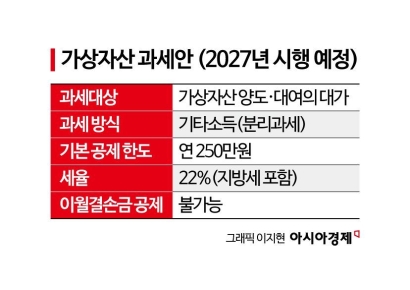 "Stocks Are Not Taxed, but Annual Crypto Gains Over 2.5 Million Won to Be Taxed Next Year... Investors Push Back"
- "Not Jealous of Winning the Lottery"... Entire Village Stunned as 200 Million Won Jackpot of Wild Ginseng Cluster Discovered at Jirisan
- "Rather Than Endure a 1.5 Million KRW Stipend, I'd Rather Earn 500 Million in the U.S." Top Talent from SNU and KAIST Are Leaving [Scientists Are Disappearing] ①
- "How Did an Employee Who Loved Samsung End Up Like This?"... Past Video of Samsung Electronics Union Chairman Resurfaces
- "Even With a 90 Million Won Salary and Bonuses, It Doesn’t Feel Like Much"... A Latecomer Rookie Who Beat 70 to 1 Odds [Scientists Are Disappearing] ③

On the morning of the 30th, Jang Inhwa, Chairman of POSCO, spoke at the 'Building Resilient and Sustainable Global Supply Chains' session of the Asia-Pacific Economic Cooperation (APEC) CEO Summit held at the Gyeongju Arts Center in Gyeongbuk. Photo by Kang Jinhyung
View original imageFinally, in response to the moderator's question about the challenges facing the critical minerals industry, such as environmental friendliness, sustainability, and digital transformation, Chairman Jang emphasized the 'role of government.' He stated, "Many upcoming projects will be more complex and difficult to resolve than ever before," and stressed, "To develop industries in the vast western region of Australia, government-level infrastructure support is essential. That is the most important thing."
© The Asia Business Daily(www.asiae.co.kr). All rights reserved.