"KOSPI Could Reach 3,700 Points by Year-End"
SangSangIn Securities Raises Year-End Target to 3,150-3,700 Points
Easing of Structural Undervaluation and Semiconductor Rally as Key Drivers
There are forecasts in the securities industry that the KOSPI could rise to around 3,700 points by the end of the year. Analysts believe that the easing of structural undervaluation factors and the strong performance of major semiconductor stocks will drive the index upward.

On September 18, Kim Kyungtae, a researcher at SangSangIn Securities, stated regarding the KOSPI, "Due to a surge in demand for artificial intelligence (AI) leading to a semiconductor supply shortage, strengthened shareholder return policies, and improved global liquidity, the index could reach up to 3,700 points by year-end." He raised his target price-to-book ratio (PBR) from 1.2 times to 1.25 times, which corresponds to about 3,720 points.
The primary driver for the KOSPI's rise is the semiconductor sector. Since April, export sectors centered on semiconductors have led the index upward, supported by easing concerns over global trade disputes and improved first-quarter earnings. In particular, Kim projected that the ongoing shortage in semiconductor supply, caused by surging AI-related demand, would continue to boost the sector. Alongside semiconductors, export industries such as IT hardware, shipbuilding, trading companies and capital goods, and machinery are also expected to contribute to the index's rise.
As a short-term catalyst, Kim pointed to the interest rate cut cycle expected to begin with the September meeting of the U.S. Federal Open Market Committee (FOMC). He said, "As the interest rate gap between Korea and the U.S. narrows and the dollar weakens, foreign capital will return, improving market liquidity," adding, "A global interest rate cut cycle lasting more than a year will restore risk appetite and, in particular, provide additional momentum for emerging market equities."
For the medium to long term, Kim cited the new government's active fiscal policies. Support for strategic technologies such as AI through a National Growth Fund worth 150 trillion won, expanded housing supply, and a second round of consumption subsidies are all expected to help restore potential growth rates.
Hot Picks Today
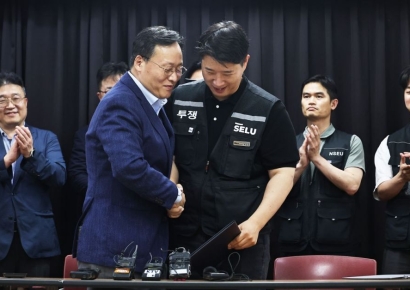 Up to 600 Million Won for Semiconductors, 160 Million Won Bonus for Loss-Making Non-Memory… Samsung Electronics Labor and Management Reach Tentative Deal on Unprecedented Performance Compensation (Comprehensive)
- "Could I Also Receive 370 Billion Won?"... No Limit on 'Stock Manipulation Whistleblower Rewards' Starting the 26th
- "From a 70 Million Won Loss to a 350 Million Won Profit with Samsung and SK hynix"... 'Stock Jackpot' Grandfather Gains Attention
- U.S. Stocks Up 1% on War Negotiation Hopes... Will Korea Recover Recent Losses? [Good Morning Market]
- "Who Is Visiting Japan These Days?" The Once-Crowded Tourist Spots Empty Out... What's Happening?
In terms of institutional reforms, Kim anticipated that shareholder-friendly policies-such as mandating the cancellation of treasury shares after buybacks and revising the dividend income tax-would have a value-up effect. He added, "We expect to see upward momentum, especially among holding companies with a high proportion of treasury shares, such as SK, Doosan, and LS."
© The Asia Business Daily(www.asiae.co.kr). All rights reserved.







