[Supreme Court Ruling] Obscene Communication Established Even If Sexual Harassment via Social Media Mention Was Blocked and Not Notified
[Supreme Court Ruling]
The Supreme Court has ruled that if a person posts sexually insulting messages targeting a specific individual using the mention (@) function on Twitter, the crime of obscene communication under the Act on Special Cases Concerning the Punishment of Sexual Crimes is established, even if the victim blocked the perpetrator and did not receive notifications, as the message is still considered to have "reached" the victim.

On August 14, the Supreme Court Criminal Division 1 (Presiding Justice Shin Sookhee) overturned the acquittal verdict of the lower court in the appeal of Mr. A, who was indicted for violating the Act on the Punishment of Sexual Crimes, and remanded the case to the Suwon District Court for retrial (2025Do986).
[Facts of the Case]
In May 2023, Mr. A got into an argument with the victim on Twitter. After the victim blocked Mr. A's account, Mr. A posted messages such as "Let's do sexual torture," which were sexually offensive and hateful, mentioning the victim's account by using the '@' symbol.
Although the victim had blocked Mr. A's account and did not receive notifications, the victim accessed Mr. A's account using a separate account and saw the posts.
The prosecution indicted Mr. A, stating that he had caused the sexually humiliating messages to reach the victim with the intention of satisfying his own sexual desires.
[Legal Issue]
Whether the act constitutes "reaching" the victim under Article 13 of the Act on Special Cases Concerning the Punishment of Sexual Crimes regarding obscene communication via communication media.
[Lower Court Rulings]
The court of first instance sentenced Mr. A to a fine of 2 million won.
The appellate court overturned the first instance decision and acquitted Mr. A, stating, "Since the victim had blocked the defendant, no notification about the post was delivered. As the victim later searched for and checked the post on their own, it is difficult to say that the post was within the victim's sphere of control and objectively recognizable."
[Supreme Court Decision]
However, the Supreme Court overturned the appellate court's ruling and remanded the case for retrial with the intent to convict.
The Supreme Court interpreted "reaching the other party" under Article 13 of the Act on the Punishment of Sexual Crimes as "not only when the other party directly encounters the sexually humiliating message, but also when it is placed in a state where the other party can objectively recognize it."
The mention function is designed to notify a specific account user about a post.
The court stated that even though the victim did not receive notifications due to blocking, the posts were still easily accessible by searching the account. "The fact that the victim later checked the post through a separate search is merely a circumstance that occurred after the crime was established," the court said. "The lower court's ruling misunderstood the legal principles regarding the meaning and interpretation of 'causing the message to reach the other party' as stipulated in the crime of obscene communication via communication media, which affected the outcome of the judgment."
Hot Picks Today
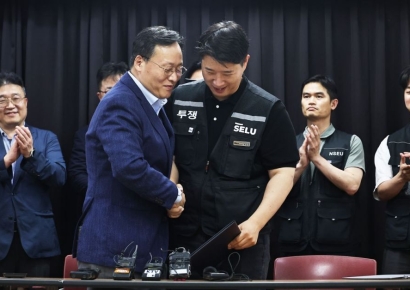 Up to 600 Million Won for Semiconductors, 160 Million Won Bonus for Loss-Making Non-Memory… Samsung Electronics Labor and Management Reach Tentative Deal on Unprecedented Performance Compensation (Comprehensive)
- "Could I Also Receive 370 Billion Won?"... No Limit on 'Stock Manipulation Whistleblower Rewards' Starting the 26th
- "From a 70 Million Won Loss to a 350 Million Won Profit with Samsung and SK hynix"... 'Stock Jackpot' Grandfather Gains Attention
- Opening a Bank Account in Korea Is Too Difficult..."It Costs 150,000 Won Just to Open a Child's Account or Check Card" [Foreigner K-Finance Status]②
- "Who Is Visiting Japan These Days?" The Once-Crowded Tourist Spots Empty Out... What's Happening?
An Jaemyung, Legal Times Reporter
※This article is based on content supplied by Law Times.
© The Asia Business Daily(www.asiae.co.kr). All rights reserved.