New Zealand Warns of National Security Threats from Foreign Espionage, Citing China as Most Proactive
New Zealand Intelligence Service Releases Annual Risk Assessment Report
"Several Countries Attempting to Manipulate New Zealand Society"
"China Expanding Influence Across the Indo-Pacific"
New Zealand intelligence authorities have stated that the country’s national security is under threat due to foreign interference and espionage activities, particularly from China. On August 21 (local time), Yonhap News reported, "According to the annual risk assessment report released by the New Zealand Security Intelligence Service (SIS), several countries are attempting to manipulate the New Zealand government and society, but China remains the most proactive."

According to Yonhap News, the SIS warned that the Indo-Pacific region is at the center of strategic competition among major powers, and that China, in particular, is expanding its influence across the region as an active and powerful actor. The report stated, "China has demonstrated both the willingness and capability to conduct intelligence activities targeting New Zealand’s national interests." It specifically pointed out that the United Front Work Department of the Chinese Communist Party is involved in interfering in domestic affairs to build influence outside of China, describing these actions as deceptive, coercive, corrupt, and posing risks to various organizations.
The report also targeted China, Russia, and Iran, stating, "It is almost certain that some foreign countries are conducting espionage activities such as cyberattacks to steal sensitive information by targeting key institutions, infrastructure, and technology, all while evading detection by New Zealand authorities." It further noted, "Intelligence agencies are not the only ones carrying out such activities. Some governments take a whole-of-nation approach to intelligence gathering, which includes having companies, universities, think tanks, or cyber actors operate on their behalf."
The SIS also warned that several foreign countries routinely engage in transnational repression, such as recruiting individuals to collect information about their nationals living in New Zealand. SIS Director Andrew Hampton stated in a press release, "Our threat environment is deteriorating," and emphasized, "We need to take these threats much more seriously than we do now."
As the first step in strengthening its military in response to the worsening security environment and rising tensions in the Asia-Pacific region, the New Zealand government has decided to introduce new navy helicopters and air force aircraft. On the same day, Minister of Defense Judith Collins and Minister of Foreign Affairs Winston Peters issued a joint statement announcing, "We plan to spend a total of 2.7 billion New Zealand dollars (approximately 2.2 trillion won) to purchase five MH-60R Seahawk naval helicopters from the U.S. company Lockheed Martin and two Airbus A321 aircraft to replace two aging Boeing 757s in the air force."
Hot Picks Today
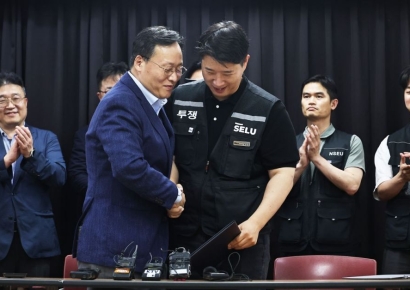 Up to 600 Million Won for Semiconductors, 160 Million Won Bonus for Loss-Making Non-Memory… Samsung Electronics Labor and Management Reach Tentative Deal on Unprecedented Performance Compensation (Comprehensive)
- "Could I Also Receive 370 Billion Won?"... No Limit on 'Stock Manipulation Whistleblower Rewards' Starting the 26th
- "From a 70 Million Won Loss to a 350 Million Won Profit with Samsung and SK hynix"... 'Stock Jackpot' Grandfather Gains Attention
- [Current State of Foreigner K-Finance]③"The Essence Is Ultimately Communication... Lending and Financial Education Must Go Hand-in-Hand"
- "Who Is Visiting Japan These Days?" The Once-Crowded Tourist Spots Empty Out... What's Happening?
Last April, the New Zealand government announced a defense plan to increase defense spending to 2% of GDP over the next eight years, with an investment of 12 billion New Zealand dollars (about 9.8 trillion won). Minister Peters stressed, "This acquisition plan was developed in response to the rapidly deteriorating security environment," adding, "Tensions are rising rapidly around the world, and we must invest in national security to ensure economic prosperity."
© The Asia Business Daily(www.asiae.co.kr). All rights reserved.
!["Please Help": How Much Do Those Bowing 90 Degrees Really Earn? [Data Pick]](https://cwcontent.asiae.co.kr/asiaresize/307/2026052010120870131_1779239528.png)