Minister Kim Jungkwan Visits U.S. Amid Concerns Over Agriculture, Autos, and Alaska Following Japan Precedent
US-Japan Agreement Seen as De Facto Baseline for Negotiations
"2+2 Trade Talks" on July 25 Expected to Be a Pivotal Moment

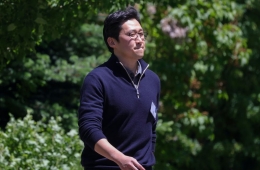
Minister of Trade, Industry and Energy Kim Jung-kwan departed for the United States on July 23 to engage in tariff negotiations. With only ten days remaining until the mutual tariff suspension deadline of August 1, this trip carries particular significance as it comes immediately after U.S. President Donald Trump officially announced a trade agreement with Japan. Japan presented the United States with three major proposals?investment in Alaska LNG, opening of the automotive and agricultural markets, and large-scale investment?setting a precedent by lowering the existing tariff rate from 25% to 15%. As a result, pressure is mounting on South Korea to prepare a similar package.
Speaking with reporters at Incheon Airport that morning, Minister Kim stated that the government is "closely monitoring" the outcome of the U.S.-Japan tariff negotiations. He added, "During this visit to the U.S., I plan to meet with the Secretary of Commerce, the Secretary of Energy, and the Chair of the White House Energy Committee."
Previously, on July 22 (local time), President Trump announced via his social media platform, Truth Social, that he had "just concluded a major trade agreement with Japan." He claimed, "Japan will invest $550 billion in the United States, and 90% of the profits will go to the U.S." He also stated that Japan agreed to open its markets for rice, trucks, automobiles, and agricultural products, and that the U.S. would impose a reciprocal tariff of 15% on Japanese imports?a rate 10 percentage points lower than the previous 25%.

There is a growing view that the U.S.-Japan agreement has become a kind of guideline for South Korea. This is because it signals that the U.S. may be flexible in lowering reciprocal tariffs if conditions such as market opening, investment, and energy cooperation are met. Effectively, Japan has set the baseline for negotiations.
The South Korean government is reportedly adjusting its strategy around three main issues in its ongoing trade negotiations with the U.S. The first is whether to participate in the Alaska LNG project. President Trump specifically mentioned this project when announcing the agreement with Japan and revealed plans to establish a joint venture. It is highly likely that South Korea will be asked to participate in a similar manner.
The opening of the agricultural market is also a major point of contention. With the possibility that sensitive domestic products such as rice and apples could become subjects of negotiation, there has been strong opposition from both the political sphere and the agricultural sector. The automotive industry is another core issue, particularly in connection with electric vehicle subsidy matters?a sector where the Trump administration continues to exert pressure.
It remains uncertain whether the South Korean government will offer conditions equivalent to those agreed upon by Japan. However, if the U.S. comes to regard the Japanese case as a "default," the burden on South Korea in the negotiations could increase significantly.
The government has launched an all-out diplomatic effort. Following National Security Office Director Wi Sung-lac's visit to the U.S. on July 20, Trade Negotiation Head Yeo Han-koo arrived in the U.S. on July 22, and Deputy Prime Minister and Minister of Economy and Finance Koo Yoon-cheol is scheduled to visit on July 24. Foreign Minister Cho Hyun is also expected to depart soon.
In particular, the upcoming "2+2 Trade Talks" scheduled for July 25 are expected to serve as a critical turning point. The South Korean delegation will include Deputy Prime Minister Koo and Negotiation Head Yeo, while the U.S. will be represented by Treasury Secretary Scott Besant and U.S. Trade Representative (USTR) Jamison Greer.
Hot Picks Today
 "Parents Deposited 10 Million Won for Me"... Se...
An official from the Ministry of Trade, Industry and Energy stated, "While we are taking the contents of the Japan agreement into consideration, we are preparing negotiations that reflect our own industrial structure and political sensitivities. We will strive to achieve a practical outcome that protects the national interest as much as possible."
© The Asia Business Daily(www.asiae.co.kr). All rights reserved.