Trade Negotiation Turmoil Amid Economic Leadership Vacuum... Crisis Deepens for Korean Economy
Amid Trump’s Tariff War,
Unprecedented Triple Acting Leadership System
Kim Bumseok Steps Up to Manage the Economy
"All Policy Directions Must Be Secured"
Amid escalating domestic and external crises?driven by the threat of economic contraction and the Trump administration's tariff war?economic uncertainty is deepening further under an unprecedented triple acting leadership system. There are also concerns that national crisis management could be destabilized as the country’s chief economic policymaker position becomes vacant again, even as negotiations continue with the United States over the Trump administration’s tariff measures.

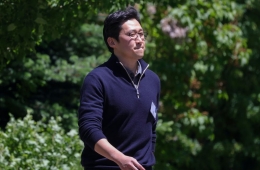
On May 2, the Ministry of Economy and Finance, led by Acting Minister Kim Bumseok, began efforts to prevent political instability from spilling over into economic instability. That morning, Acting Minister Kim convened an emergency macroeconomic and financial issues meeting (F4 meeting) with Bank of Korea Governor Lee Changyong, Financial Services Commission Chairman Kim Byunghwan, and Financial Supervisory Service Governor Lee Bokhyun to review trends in the financial and foreign exchange markets. Kim stated, "To minimize the negative impact of heightened political uncertainty on the financial and foreign exchange markets, we will continue to operate a 24-hour emergency monitoring and response system centered on the F4 meeting." Immediately after the F4 meeting, Kim held back-to-back meetings with top-level and extended senior officials to review major economic issues and to reassure staff, aiming to prevent organizational instability in the wake of the resignation of former Deputy Prime Minister and Minister of Economy and Finance Choi Sangmok.
Other government ministries are also focusing on current issues to safeguard the economy, but there are concerns that confusion in responding to these issues could grow as leadership, which had only just managed to stabilize after the impeachment crisis, is once again shaken. The most urgent matter is the trade negotiations between South Korea and the United States. While working-level teams at the Ministry of Trade, Industry and Energy are maintaining their response systems, the high-level diplomatic channel is effectively vacant because U.S. Treasury Secretary Scott Besant, who oversees the tariff negotiations, had been dealing directly with former Deputy Prime Minister Choi as his counterpart. Even if working-level officials lead the actual negotiations, the prioritization of agenda items and political decisions are made at the senior level, which means South Korea’s negotiating leverage could sharply decline.
South Korea is already subject to a 10% basic tariff and tariffs on automobile products, and starting in July, an additional 15% reciprocal tariff will be imposed, further damaging the export routes of Korean companies. An official from the Ministry of Trade, Industry and Energy commented, "Former Deputy Prime Minister Choi played a relatively stable role as a high-level negotiation channel, thanks to his networks with business circles and U.S. officials, as well as his policy persuasion skills," adding, "If the political vacuum is prolonged, it signals to the U.S. side that the 'official partner' has disappeared, which could weaken our negotiating power." Shadows are also being cast over overall trade policy. Since responses to the new trade order, environmental regulation cooperation, and other multilateral and bilateral trade agendas require coordination among ministries, there are concerns that any disruption in the strategic linkage between the Ministry of Economy and Finance, Ministry of Foreign Affairs, and Ministry of Trade, Industry and Energy could affect subsequent schedules.

The economic outlook is even bleaker. Even before the full impact of the tariff hikes is felt, first-quarter gross domestic product (GDP) contracted by 0.2% compared to the previous quarter and by 0.1% year-on-year. Major domestic and international institutions are also slashing their growth forecasts for this year. Pessimism is mounting that the country may enter a period of low growth in the 0% range. Hyundai Research Institute, in its revised 2025 Korea Economic Outlook report released the previous day, lowered its growth forecast for this year by a full 1.0 percentage point from 1.7% (as projected in December last year) to 0.7%. Some global investment banks, such as JPMorgan (0.5%) and Citi (0.6%), are also predicting growth in the 0% range. On April 22, the International Monetary Fund (IMF) also lowered its forecast for Korea’s economic growth this year by 1.0 percentage point to 1.0%?just three months after its previous forecast. The Bank of Korea (1.5%), Korea Development Institute (KDI, 1.6%), and the Organisation for Economic Co-operation and Development (OECD, 1.5%) are also projecting growth in the mid-1% range.
The government plans to immediately implement a supplementary budget of 13.8 trillion won starting this month, but it remains uncertain whether the supplementary budget will be effective amid political instability. The supplementary budget bill, which passed the National Assembly the previous day, was finalized at 13.8 trillion won?an increase of 1.6 trillion won from the original proposal. Reflecting concerns over the visible economic difficulties such as the first-quarter contraction, the government has significantly expanded support measures for wildfire recovery, small business owners, and the construction industry.
Hot Picks Today
 "Parents Deposited 10 Million Won for Me"... Se...
Experts stress that the government must focus on minimizing risks as the economy’s resilience is being depleted. Yang Junmo, professor of economics at Yonsei University, said, "This is a time when it is especially important to maintain policy consistency," and emphasized that, in particular, the existing negotiation structure and accountability system must be preserved in trade negotiations to prevent economic uncertainty from spilling over into political risk.
© The Asia Business Daily(www.asiae.co.kr). All rights reserved.