10 Years of Biosimilars... Korea Secures Strong 2nd Place in the US Market
Second Highest Number of Approvals After the U.S.: 19 Products
Progressive Changes in FDA Approvals
Market Penetration Expected to Accelerate
Since the first biosimilar (biopharmaceutical generic) was introduced in the United States in 2015, a total of 19 Korean biosimilar products have been approved over the past 10 years. Following the United States, which has approved 26 products, Korea has secured the position as the second-largest country in the world's largest biosimilar market, the U.S.
According to the industry on the 12th, the U.S. Food and Drug Administration (FDA) has approved a total of 69 biosimilars for sale from 2015 to last year. Among them, the U.S. accounts for 26 products, or 37.6%, and Korea accounts for 19 products, or 27.5%. Switzerland (7 products, 10.1%) and Germany and India (6 products each, 8.6%) follow.
In particular, this year, six biosimilars have been approved from January to the present, of which five are Korean products. Celltrion received approval for four, and Samsung Bioepis for one. Korean companies have surpassed last year's four product approvals in about 70 days this year. It is highly likely that Korea will again be the country with the highest number of product approvals this year, following last year.

According to the "10-Year Status and Challenges of U.S. Biosimilar Approvals" released by the Korea Bioindustry Association's Bioeconomy Research Center, the U.S. FDA approved Switzerland's Sandoz's "Zarxio" as the first biosimilar on March 6, 2015. In April 2016, Celltrion's "Inflectra" was named the second biosimilar. The original product with the most biosimilar products launched was the autoimmune disease treatment "Humira." There are currently 10 Humira biosimilars on the market, including Samsung Bioepis's Hadlima.
According to the Association for Accessible Medicines (AAM), the spread of biosimilars saved $12.4 billion (approximately 16.5 trillion KRW) in drug costs in 2023 alone. The cumulative savings since 2015 are estimated to reach $36 billion (52.4 trillion KRW).
Although the biosimilar market is expanding, significant barriers remain to be overcome. According to a report by the pharmaceutical market research firm IQVIA, biosimilar market shares vary greatly by product; some products have market shares exceeding 80%, while others remain below 10%. The biosimilar market accounts for about 23% of the total biopharmaceutical market.
Most biosimilar prescriptions have been for new patients, with high utilization in oncology, where biosimilars are prescribed for short periods. Utilization has been low in new markets such as rheumatology, gastroenterology, ophthalmology, and neurology, where patients with chronic diseases often resist switching medications without medical reasons. Going forward, major challenges in the U.S. are expected to include ▲regulatory barriers ▲market acceptance ▲high investment costs ▲reimbursement issues ▲market uncertainty.
Hot Picks Today
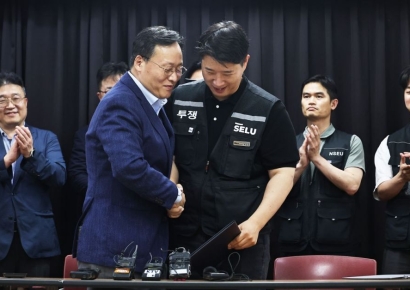 Up to 600 Million Won for Semiconductors, 160 Million Won Bonus for Loss-Making Non-Memory… Samsung Electronics Labor and Management Reach Tentative Deal on Unprecedented Performance Compensation (Comprehensive)
- "Could I Also Receive 370 Billion Won?"... No Limit on 'Stock Manipulation Whistleblower Rewards' Starting the 26th
- "From a 70 Million Won Loss to a 350 Million Won Profit with Samsung and SK hynix"... 'Stock Jackpot' Grandfather Gains Attention
- Hyundai Mobis, Key Supplier for Hyundai’s Atlas, Target Price Raised [Click eStock]
- "Who Is Visiting Japan These Days?" The Once-Crowded Tourist Spots Empty Out... What's Happening?
Nevertheless, the U.S. biosimilar market remains the largest global pharmaceutical market with high growth potential. An industry insider said, "The U.S. has been more conservative toward biosimilars compared to regulatory authorities in Europe and other countries, but in the past one to two years, it has shown a progressive stance on regulatory aspects such as product approvals to reduce drug prices," adding, "We expect domestic companies' efforts to accelerate."
© The Asia Business Daily(www.asiae.co.kr). All rights reserved.







