[SeniorBiz Insight] Senior Tech Trends Highlighted by CES 2025
Strategic Directions for Senior Business Innovation
Unveiled at CES 2025
![[SeniorBiz Insight] Senior Tech Trends Highlighted by CES 2025](http://www.asiae.co.kr/news/img_view.htm?img=2024071714564554996_1721195805.jpg)
As the new year 2025 began, the Consumer Electronics Show (CES) was held in Las Vegas, USA. Numerous new technologies and innovative idea products aimed at solving problems faced by the elderly and showcasing new possibilities were introduced. Today, we will focus on the products that received the Innovation Award to understand the strategic directions that technology-based senior businesses should pursue. Rather than focusing solely on individual ideas or products utilizing technology, we will examine how senior businesses are leveraging technology to address the difficulties and potential issues experienced by the elderly.
The first strategic direction for improving the quality of life in old age through technology is "Aging in Place" rather than moving to facilities. These products use technology to help elderly people live independently at home even if they have physical discomfort or frailty. For example, wearable exoskeleton robots that provide diagnosis and muscle support to elderly people who have difficulty walking alone due to muscle weakness. H-Medi developed by South Korea’s Hurotics, WIM by WIRobotics, and Hypershell Gabon X by China’s Hypershell all received Innovation Awards in the robotics category at CES 2025. H-Medi is the world’s first advanced all-in-one wearable rehabilitation robot for walking disabilities. It uses artificial intelligence (AI) to measure walking status, predict diseases, and provide muscle support to elderly people with sarcopenia. Additionally, South Korea’s Ceragem introduced the "AI Health Concierge," a health management system attached to a bed. Using AI-based biosensors, it monitors the health status of elderly people living alone, in silver towns, or nursing homes 24/7 and connects them to emergency services. Canada’s Myant developed and sells SKIIN, a textile-based electrocardiogram (ECG) monitoring platform that monitors blood pressure, glucose, weight, and temperature 24 hours a day. Myant provides a machine learning-based monitoring system that detects risks early in heart disease patients and links them to medical services.
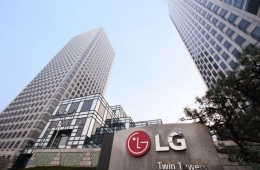
The second strategic direction pursued by technology-based products is "Reducing Loneliness" to help psychological stability in old age. It is already known that loneliness is as harmful to health as smoking 15 cigarettes a day. Especially, loneliness in old age not only causes mental problems such as depression but also negatively affects physical health and social relationships, making it a critical factor. LG showcased an autonomous AI robot that moves on wheels. Through natural voice conversations powered by AI, it understands the user’s emotions and provides emotional support, helping reduce loneliness. It also detects falls through sensors and suggests safe solutions, ensuring the safety of elderly users. Japan’s Mixi developed Romi, an interactive AI robot capable of complex real-time conversations and emotional support. Using deep learning models, Romi quickly comments on what it hears and sees during conversations, making it a highly human-like interactive robot. In Japan, Romi is already used to reduce anxiety and loneliness among elderly people living alone. Furthermore, various care robots using AI were introduced at CES 2025, expanding their roles from simple conversational robots to providing health care and acting as smart home hubs connecting existing electronic devices and users.
Finally, the strategic direction of technology-based senior business shown at CES 2025 is "Maintaining Beauty." "Beauty" is not exclusively for the younger generation but is a form of "self-esteem" that all age groups want to enjoy regardless of age. Therefore, senior business products need to incorporate innovative ideas in this area as well. The leading cosmetics company L'Or?al introduced SYNC, a beauty assistance device. SYNC helps people who have difficulty with upper limb functions or mobility due to stroke or other reasons by solving traditional makeup challenges such as compact opening, twisting lipstick, and removing caps without touch, making makeup easier. Japan’s cosmetics company Shiseido developed the "Skin Visualizer," a device that instantly measures and visualizes skin condition. It enables personalized beauty advice for elderly people who want to maintain their beauty despite skin aging.
From the examples presented above, it is clear that innovative technologies are rapidly linking with senior businesses and providing new ideas to solve various problems caused by population aging. However, to unlock the potential of advanced technology, a clear understanding of the pain points experienced by the elderly and strategic direction setting to solve them are essential. Therefore, the innovation of senior businesses in South Korea, which has entered the era of 10 million elderly people this year, must ultimately be found in the field.
Hot Picks Today
 "Parents Deposited 10 Million Won for Me"... Se...
Professor Kim Jeong-geun, Department of Silver Industry, Gangnam University
© The Asia Business Daily(www.asiae.co.kr). All rights reserved.