Prosecutors Narrow Encirclement, Joint Investigation Team Targets President with 'Two-Pronged Probe'
Gongjobon Secures Kim Yonghyun's Secret Phone
Presidential Office Takes Lead in Direct Investigation
Prosecutors Thoroughly Probe Related Figures
The prosecution and the joint investigation headquarters (police, Corruption Investigation Office for High-ranking Officials, Ministry of National Defense, Joint Investigation Headquarters) investigating the ‘12·3 Emergency Martial Law Incident’ are pointing their blades in different directions. The prosecution, having secured the custody of former Minister of National Defense Kim Yong-hyun, a key figure in the incident, is expanding the scope of investigation to include martial law troops and State Council members, conducting a thorough ‘dragnet-style investigation.’ Meanwhile, the Joint Investigation Headquarters has headed straight to the ‘apex’ by investigating the police leadership and conducting a search and seizure at the Presidential Office. Since the substantive truth requires synthesizing the results of both investigations, the competitive calculations between the two sides are becoming increasingly complex.

The Taegeukgi and prosecution flags are fluttering in the wind in front of the Seoul Central District Prosecutors' Office building. Photo by Heo Young-han
View original imageThe prosecution’s Special Investigation Headquarters for Emergency Martial Law, which succeeded in detaining former Minister Kim, has targeted the martial law troops’ command who deployed forces during the emergency martial law. They appear to be leveraging cooperation with military prosecutors, facilitating direct investigations into military units. On the 12th, the prosecution summoned General Yeo In-hyung, Commander of the Defense Counterintelligence Command, as a suspect for questioning and is reviewing whether to request an arrest warrant. It is reported that the prosecution questioned General Yeo about whether he received direct orders from President Yoon Seok-yeol during the martial law period and the reasons for deploying counterintelligence agents to the Election Commission.
Prior to this, the prosecution summoned and questioned Park An-soo, Army Chief of Staff and martial law commander, and Kwak Jong-geun, Special Warfare Commander, while also conducting search and seizure operations on key units such as the Defense Counterintelligence Command, Special Warfare Command, and Capital Defense Command. Additionally, on the 3rd, the prosecution summoned Cho Kyu-hong, Minister of Health and Welfare and one of the 11 State Council members who attended the problematic ‘Emergency Martial Law State Council Meeting,’ marking the first such summons among the council members. This is interpreted as the prosecution’s characteristic investigative approach of thoroughly examining related individuals while narrowing the encirclement around key suspects.

Afternoon of the 10th, National Police Agency's National Investigation Headquarters. Photo by Jo Yong-jun
View original imageIn contrast, the Joint Investigation Headquarters launched an investigation targeting the police leadership, including the Commissioner of the National Police Agency and the Commissioner of the Seoul Metropolitan Police Agency, and immediately began an investigation aimed at President Yoon Seok-yeol. They obtained a search warrant for the Presidential Office earlier than the prosecution and secured the so-called ‘smoking gun’?former Minister Kim’s burner phone. The burner phone is a secure mobile phone equipped with anti-tapping and call recording prevention programs, and it is known that President Yoon and former Minister Kim used it several times to issue orders to field commanders after the declaration of martial law, making it a key piece of evidence. They also reportedly obtained 3 to 4 days of CCTV footage from the underground command and control room of the Joint Chiefs of Staff, which was used as the situation room by the martial law command, through voluntary submission. Given that the court does not allow overlapping warrants, the Joint Investigation Headquarters is considered to have taken the lead in direct investigations of the Presidential Office.
Hot Picks Today
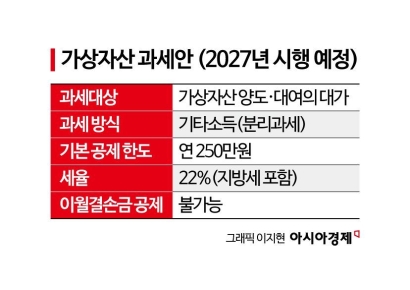 "Stocks Are Not Taxed, but Annual Crypto Gains Over 2.5 Million Won to Be Taxed Next Year... Investors Push Back"
- "Not Jealous of Winning the Lottery"... Entire Village Stunned as 200 Million Won Jackpot of Wild Ginseng Cluster Discovered at Jirisan
- "Even With a 90 Million Won Salary and Bonuses, It Doesn’t Feel Like Much"... A Latecomer Rookie Who Beat 70 to 1 Odds [Scientists Are Disappearing] ③
- "Rather Than Endure a 1.5 Million KRW Stipend, I'd Rather Earn 500 Million in the U.S." Top Talent from SNU and KAIST Are Leaving [Scientists Are Disappearing] ①
- "How Did an Employee Who Loved Samsung End Up Like This?"... Past Video of Samsung Electronics Union Chairman Resurfaces
The problem is that the current two-pronged investigation has limitations in uncovering substantive charges. Even if the burner phone is secured, the actual user’s testimony must support it, and even if the testimony of the martial law commanders is obtained, securing direct physical evidence to verify it is essential. This means that at the final stage of proving charges, the results of both investigations must be combined. Although the special prosecutor law was passed at the National Assembly plenary session on the 12th, competition between investigations is inevitable until the special prosecutor is formally launched. Professor Han In-seop of Seoul National University Law School said via social media (SNS), “Time is of the essence to secure evidence. The Park Geun-hye and Choi Soon-sil special prosecutor was able to accelerate based on evidence diligently collected by investigative agencies beforehand, so the public expects even more diligent investigations.”
© The Asia Business Daily(www.asiae.co.kr). All rights reserved.







