Hanwha Makes Big August Greeting... Will Kim Dong-kwan Boost Hydrogen New Business?
On the 29th, 7 affiliates and 8 presidents replaced through personnel changes

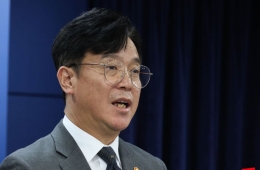
Hanwha announced the appointment of eight CEOs across seven affiliates through its personnel reshuffle at the end of August. The most notable appointment is Vice Chairman Kim Dong-kwan concurrently serving as CEO and President of Hanwha Impact's Investment Division.
Vice Chairman Kim is concurrently serving as CEO of Hanwha Impact, becoming the fourth company he leads after Hanwha Corporation, the holding company of Hanwha Group, Hanwha Aerospace, and Hanwha Solutions. While he oversees the Strategy Division at the other three companies, he is responsible for the Investment Division at Hanwha Impact.
Hanwha Impact Drives Hydrogen Business
Hanwha Impact originated from Samsung General Chemicals, acquired during the 'big deal' with Samsung Group in 2014. Initially, it had a strong chemical company character, but over the past three to four years, it has shifted focus more toward new business investments. In August 2021, the company changed its name from Hanwha General Chemicals to Hanwha Impact, signaling its intention to become an investment company rather than a chemical company. Hanwha Impact's Investment Division is pursuing three main areas: energy transition (hydrogen), bio, and digital tech. It is accelerating efforts in eco-friendly gas turbine retrofitting and hydrogen turbine development (as the major shareholder of Hanwha Engine), while bio and digital tech are still in the early stages of investment.
Vice Chairman Kim's appointment as head of Hanwha Impact's Investment Division is interpreted as a move to strengthen the hydrogen energy new business, similar to his previous push in the solar power business. Previously, CEO Kim Hee-chul concurrently led both investment and business divisions. With Kim Dong-kwan taking charge of the investment division, greater emphasis is expected.
Currently, innovative businesses including hydrogen account for 54% of Hanwha Impact's operations, the highest proportion, with the remainder being chemical business. As eco-friendly businesses centered on hydrogen ramp up, the share of foundational businesses is expected to decline further. Due to oversupply in China leading to weakened price competitiveness and ongoing downturn in the chemical sector, diversification into new businesses has become essential.
Hanwha Impact chose hydrogen early on as an alternative to fill the gap left by underperforming businesses. In 2022, through its U.S. subsidiary 'Hanwha H2 Energy USA,' it acquired American PSM, which holds hydrogen co-firing retrofit technology and gas turbine life and performance enhancement technology, and the Dutch company Thomassen Energy. In the same year, it made an equity investment worth approximately 470 billion KRW in Korea Zinc and pledged cooperation on overseas hydrogen projects including in Australia.
Hanwha Group is envisioning large-scale production of 'green hydrogen' (hydrogen produced from renewable energy) by linking renewable energy generated from solar panels produced by Hanwha Solutions Q CELLS division with water electrolysis technology from the chemical division. Hanwha Power Systems is preparing to supply hydrogen refueling systems composed of hydrogen compressors, high-pressure vessels, and cooling devices, based on its expertise in manufacturing industrial compressors. Additionally, the group is expanding its hydrogen-utilizing business portfolio, including hydrogen co-firing power generation and marine fuel (Hanwha Engine). Future investments by Hanwha Impact are expected to focus on expanding this portfolio.

From the left in the photo: Kim Hee-chul, CEO of Hanwha Ocean; Son Jae-il, CEO of Hanwha Systems; Lee Jae-gyu, CEO of Hanwha Energy; Moon Kyung-won, CEO of Hanwha Impact/Business Division; Lee Gu-young, CEO of Hanwha Power Systems; Ryu Yang-sik, CEO of Hanwha Momentum; Kim Jong-ho, CEO of Hanwha Asset Management. Photo by Hanwha
View original imageHanwha stated, "Vice Chairman Kim plans to actively overcome the crisis facing the petrochemical business amid challenging market conditions and to discover future growth engines and new investment opportunities. In particular, he will focus on proactive investments in strategic businesses such as future innovative technologies and strengthen overseas market penetration through global networks."
Additionally, Hanwha Impact is 52.1% owned by Hanwha Energy, which is 100% owned by the three brothers of Hanwha Chairman Kim Seung-yeon. The increase in Hanwha Impact's value is expected to aid the three brothers in strengthening their control over the group during the succession process.
Hanwha's Large August Reshuffle... Will Kim Dong-kwan's 'Renewal Drive' Continue?
Over the past four to five years, Hanwha has tended to appoint affiliate CEOs in August or September and conduct executive personnel changes in October. A Hanwha official said, "We do not set specific timing or scale conditions but respond swiftly and proactively to rapidly changing management environments."
Hot Picks Today
 "Stocks Are Not Taxed, but Annual Crypto Gains Over 2.5 Million Won to Be Taxed Next Year... Investors Push Back"
- "Don't Throw Away Coffee Grounds" Transformed into 'High-Grade Fuel' in Just 90 Seconds [Reading Science]
- Signed Without Viewing for 1.6 Billion Won... Jamsil and Seongbuk Jeonse Prices Jump 200 Million Won in a Month [Real Estate AtoZ]
- "Groups of 5 or More Now Restricted"... Unrelenting Running Craze Leaves Citizens and Police Exhausted
- "Even With a 90 Million Won Salary and Bonuses, It Doesn’t Feel Like Much"... A Latecomer Rookie Who Beat 70 to 1 Odds [Scientists Are Disappearing] ③
While this year's reshuffle was announced around the usual time, its scale has grown significantly. Last year, the reshuffle was minor, involving only CEO changes at Hanwha Galleria and Hanwha Life Insurance, but this time, there were major changes in the management of key group affiliates in shipbuilding, chemicals, and energy. Accordingly, the executive reshuffle expected in October is also likely to be larger. In 2022 and last year, Hanwha promoted executives born in the 1980s, injecting young talent and tension into the organization. With Vice Chairman Kim Dong-kwan, born in 1983, gaining influence within the group, the pace of generational change at Hanwha is expected to accelerate.
© The Asia Business Daily(www.asiae.co.kr). All rights reserved.