Yellen Refutes Trump's Claims: "Strong Dollar Results from US Boom... Manufacturing Employment Rising"
"Strong Dollar Hurts US Manufacturing" Trump Claim Refuted
"Manufacturing Employment Increased Under Bidenomics"
Inflation and Employment Risks "Balanced," Evaluation Says
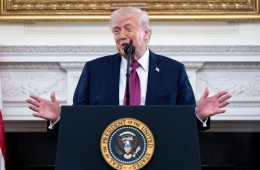
U.S. Treasury Secretary Janet Yellen dismissed former President Donald Trump, the Republican presidential candidate's claim that a strong dollar is hurting U.S. manufacturing. She argued that manufacturing has revived under the Joe Biden administration and that the recent dollar strength is also a result of the U.S. economic boom.
![[Image source=Yonhap News]](http://www.asiae.co.kr/news/img_view.htm?img=2023040101042774825_1680278667.jpg)
In an interview with Bloomberg News on the 28th (local time), Secretary Yellen said, "A very strong dollar suppresses exports but can contribute to imports," emphasizing that the impact of a strong dollar should be evaluated in a broad context. She explained that while the strong dollar may reduce the export competitiveness of American products, it lowers import prices.
She also refuted former President Trump's claim that strong dollar has damaged U.S. manufacturing.
Secretary Yellen stated, "Through legislation led by President Joe Biden, including the Inflation Reduction Act (IRA), we have supported manufacturing by strengthening infrastructure, semiconductors, clean energy, and electric vehicles," adding, "Programs like the IRA that we have implemented are creating many manufacturing jobs." She further said, "Although U.S. factory jobs have steadily declined over decades, the share of manufacturing in the Gross Domestic Product (GDP) has remained stable," and argued, "(The decline in manufacturing employment) is largely due to productivity improvements rather than trade."
She also emphasized that the background of the strong dollar lies in the inflow of foreign capital due to the U.S. economic boom.
Secretary Yellen explained, "We have a very strong economy, and consumer spending and investment spending are robust," noting that the Federal Reserve's high interest rate policy to curb inflation has attracted foreign capital, which has increased the value of the dollar.
In fact, the U.S. economy has avoided recession forecasts and continues to maintain solid growth. The U.S. real GDP in the second quarter grew at an annualized rate of 2.8% compared to the previous quarter, doubling the 1.4% growth rate of the first quarter.
Secretary Yellen expressed concerns about China's manufacturing support policies. Earlier, China held the "Third Plenary Session of the 20th Central Committee of the Communist Party of China" from the 15th to 18th, presenting an economic blueprint that includes fostering advanced technology manufacturing.
Regarding this, she evaluated, "There was no visible effort to resolve structural imbalances or expand consumer spending," and said, "There was a strong emphasis on advanced technology manufacturing rather than expanding service spending."
Regarding the U.S. labor market, which has recently shown signs of cooling, she diagnosed it as "strong and resilient without overheating," and said, "I believe the risks of inflation and employment are balanced."
Hot Picks Today
![[Exclusive] "What? I Used It for Fried Eggs and Kimchi Pancakes, but It Wasn't Edible?"... Raw Pork Lard Supplied to Department Stores, Causing Stir](https://cwcontent.asiae.co.kr/asiaresize/93/2026042216151436513_1776842114.png) [Exclusive] "What? I Used It for Fried Eggs and...
[Exclusive] "What? I Used It for Fried Eggs and...
- "Chairman Chey Tae-won's Warning Comes True"... Laptop Prices Already Up 1 Milli...
- SK hynix to Pay 265.8 Billion Won Cash Dividend... 375 Won Per Share
- Samsung Biologics Union Holds First Rally: "Strike Set for May 1 if Disputes Per...
- "From 8,000 Won to 730,000 Won: The Toy Everyone Wants but Can't Get"
On Wall Street, there is analysis that with inflation easing and the labor market slowing, the Federal Reserve is laying the groundwork to cut interest rates in September.
© The Asia Business Daily(www.asiae.co.kr). All rights reserved.