[Insight & Opinion] What the Capital Gains Tax Debate Is Overlooking
Designing Systems and Incentives to Enable Profits in the Korean Stock Market
First, Build Trust That Investors Can Make Money
Examine the Reasons Behind the Investor Exodus
![[Insight & Opinion] What the Capital Gains Tax Debate Is Overlooking](http://www.asiae.co.kr/news/img_view.htm?img=2024071210214949483_1720747310.png)
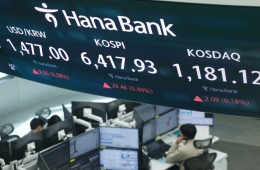
The controversy over the capital gains tax on securities is heating up internet forums. On one side, there are claims that if the capital gains tax is not abolished, the already struggling domestic stock market will face even greater difficulties. On the other side, opponents argue that only a few retail investors earn more than 50 million won annually from stock investments and that unnecessary fearmongering should be avoided. Adding fuel to the fire, there is also the issue that if capital gains exceeding 1 million won occur in accounts under children’s names, those gains will be excluded from personal deductions during year-end tax settlements, sparking further debate about the effectiveness of the capital gains tax.
In fact, at this point, it is impossible to know which side is correct. Since the system has not yet been implemented, its outcomes cannot be predicted in advance. One regrettable aspect is that this controversy is missing the truly important issues due to political framing such as ‘tax cuts for the rich’ and ‘fearmongering.’
Taxes are paid only when money is earned. If no money is made, there is no tax. This is the most important point. More important than deciding the threshold for taxation is that many people should be making money from stocks. But how many people are actually making money in the so-called ‘national stock market’? Looking at the stock markets of major countries over the past decade, China and Korea have performed the worst. Therefore, intelligent(?) investors have left the national stock market for the US or Japan, and only less savvy investors remain in the national market. Because few people make money in the national stock market?in other words, there are not many people earning more than 50 million won?the logic of taxing them seems somewhat strange.
What we need to consider is that before taxation, the national stock market must become a market where money can be made. Taxes should be discussed based on this premise. In a situation where the majority of people do not make money, does collecting taxes from the few who do really help social equality or redistribution? Going a step further, we should also consider who owns the various pension funds such as the National Pension Service. Ultimately, these funds come from the pockets of individual citizens. The pension funds are created from money deducted monthly from salaries and other income. Recently, pension funds with decent returns have been reducing their national stock market allocations and increasing overseas or alternative investments. This is a natural move. To achieve even slightly better returns, they had to distance themselves from the national stock market. The national stock market should be a place where people become wealthy, but it is not.
The focus of the discussion should first be on securing trust that individual investors can make money in the Korean stock market. Controlling shareholders should not take away the profits of individual investors, companies should share the fruits of growth with shareholders, and the government should provide incentives to such companies. Whether this is called value-up or something else does not matter. The point is that systems and incentives must be designed to foster belief that money can be made in the national stock market.
Hot Picks Today
![[Exclusive] "What? I Used It for Fried Eggs and Kimchi Pancakes, but It Wasn't Edible?"... Raw Pork Lard Supplied to Department Stores, Causing Stir](https://cwcontent.asiae.co.kr/asiaresize/93/2026042216151436513_1776842114.png) [Exclusive] "What? I Used It for Fried Eggs and...
[Exclusive] "What? I Used It for Fried Eggs and...
- [Report] "Professionals in Their 30s and 40s With at Least 2 Billion Won in Cash...
- "375 Won Per Share" SK hynix to Pay 26.58 Billion Won Cash Dividend
- No More Updates on 'Star' Wolf Neugoo for Now... Was the Pressure from Fans Over...
- "Chairman Chey Tae-won's Warning Comes True"... Laptop Prices Already Up 1 Milli...
Next, we should consider the perspective of ‘asset competition.’ Assets such as stocks and real estate compete with each other. If one side receives excessive tax benefits or incentives, money flows there. The same applies between countries. We live in an era where investments can be made worldwide without finger-pointing. If better opportunities exist elsewhere, there is no reason to invest in Korea. The Korean stock market now has to compete with other countries’ markets. Unlike in the past, individuals no longer have reasons to invest in countries or assets that lack competitiveness. Does the national stock market have competitiveness? There must be an answer to this question as well.
Lee Sang-geon, Head of Mirae Asset Investment and Pension Center
© The Asia Business Daily(www.asiae.co.kr). All rights reserved.