People Power Party Revises 'Jeondae Rules'... Will Reflecting Public Opinion Favor Han Dong-hoon?
Movement to Reflect Public Opinion at 100% Party Support
South Korea, Tension Over People's Power Party's Participation
"Higher Chance of South Korea Emerging as Yoon's Approval Rating Drops"
The biggest point of interest in the People Power Party's (PPP) party convention scheduled for the end of July is whether former Emergency Response Committee member Han Dong-hoon will run. While the political circles are taking Han's candidacy as a given, the core issue of this convention, the 'rule revision,' is also being reinterpreted in connection with Han.
The PPP's Special Committee on Party Constitution and Rules Amendments held its second meeting on the 5th to discuss revisions to the convention rules. Following the previous day, the committee focused on ▲ the proportion of public opinion reflected ▲ provisions to prevent reverse selection ▲ transition of leadership structure ▲ separation of party leadership and presidential candidacy. No conclusion has been reached easily. After the meeting, Special Committee Chairperson Yeo Sang-gyu told reporters, "We will have intense debates until next Monday (the 10th), and if no conclusion is reached by then, we will hold overnight sessions on the evenings of the 10th and 11th." The committee aims to finalize the amendment proposal by the 12th.

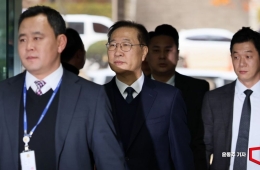
Handonghun, Emergency Response Headquarters Chief of the People Power Party, is entering the People Power Party headquarters in Yeouido, Seoul on the 11th to make a statement regarding the general election defeat. Photo by Jo Yongjun jun21@
View original image① Increasing the Proportion of Public Opinion Reflected + Provisions to Prevent Reverse Selection
According to the PPP's party constitution and rules, the current party leader is elected solely by 100% party member votes. Calls for revising this arose following the party's defeat in the general election. A proposal to reflect up to 50% of public opinion through national surveys during the party leader election has been formed mainly among non-metropolitan area committee heads. This is due to backlash that the PPP is not adequately reflecting public sentiment. Chairperson Yeo also said, "There was no opinion supporting 100% party member voting." The committee has discussed options such as 70% party member votes and 30% public votes, or a 50-50 split, but incumbent lawmakers are reportedly advocating for a 20% public opinion reflection rate. The committee plans to discuss survey results from lawmakers in the future.
If the proportion of public opinion reflected is less than 30%, it is unlikely to significantly affect Han's election outcome. Adding the reverse selection prevention provisions under discussion means that effectively only PPP party members and some moderate-leaning voters will participate in the convention vote.
However, if the proportion approaches 50%, the outcome becomes unpredictable. Public opinion on Han's candidacy for PPP party leader is split evenly between support and opposition. According to a poll conducted by Realmeter on the 3rd at the request of Energy Economy Newspaper, surveying 501 men and women aged 18 and over, 49.1% opposed Han's candidacy, while 42.3% supported it. Among respondents identifying as moderate, opposition was 49.3% and support 44.2%, similar to the overall public opinion. This survey was conducted using automated response methods with 97% wireless RDD and 3% wired RDD. The response rate was 2.7%, with a margin of error of ±4.4 percentage points and a confidence level of 95%. For more details, refer to the Central Election Poll Deliberation Commission website.

Yeosangyu, Special Committee Chairman for the Revision of the Party Rules of the People Power Party, is speaking at the first meeting of the Special Committee for the Revision of the Party Rules held at the party headquarters in Yeouido, Seoul, on the 4th. Photo by Kim Hyunmin kimhyun81@
View original image② From Single to Collective Leadership Structure Reform
The single leadership structure chosen by the PPP separates the election of the party leader and the Supreme Council members. Concentrating power in the party leadership allows for a unified voice during chaotic situations, which is an advantage. Eight years ago, before switching to the single leadership structure, the PPP adopted a collective leadership system where the party leader and Supreme Council members were elected together. The collective leadership system allows relatively heavyweight party leader candidates to become Supreme Council members without burden. Therefore, it is reported that the pro-Yoon (pro-Yoon Seok-yeol) faction advocates for the collective leadership system to check Han, who is centered among the pro-Han faction. The pro-Yoon faction cannot field a party leader-level figure but sees the need for mechanisms to check Han if he wins.
Attorney Shin Pyeong said on YTN Radio the previous day, "The pro-Han faction is realistically taking a cooperative offensive stance with the opposition against President Yoon Seok-yeol and his administration," adding, "Opposing forces to the pro-Han faction will likely unite around the pro-Yoon faction." He further predicted, "The person who can achieve this will run as a party leader candidate against Han Dong-hoon."
![[Image source=Yonhap News]](http://www.asiae.co.kr/news/img_view.htm?img=2024060512191996929_1717557559.jpg)
③ Whether to Separate Party Leadership and Presidential Candidacy
Article 71 of the PPP's party constitution stipulates that to run for the presidency, one must resign from elected party positions 18 months in advance. This is to separate party leadership from presidential candidacy. Therefore, to prepare for the next presidential election, one must relinquish party leadership, which means losing influence over the nomination process for the 2026 local elections.
However, if the resignation deadline is shortened to one year before the presidential election, the party leader preparing for the presidency does not have to resign early. While the party leader can build their profile, they may not be free from responsibility if the party loses the 2026 local elections. In the past, when Hong Joon-pyo was the mayor of Daegu and leader of the Liberty Korea Party (PPP's predecessor), he led the 2018 local elections and resigned as party leader after the defeat.
Hot Picks Today
 "Pay for the Postpartum Care Center with My Car...
- Shaken Again... "Should I Just Cancel My Trip to Japan?" Heightened Tension as E...
- "You Should Throw This Food Out of Your Fridge Immediately"... Eating This 'Zero...
- “Everyone Said You’d Make Money” ? Chinese Investors Rush In and Lose Princip...
- Once a Leading 'Outdoor Legend'...Is Nepa Headed Down the Same Path as Homeplus?...
Political commentator Lee Jong-hoon said, "As President Yoon's approval rating drops, Han Dong-hoon gains justification to run," adding, "If another Emergency Response Committee is formed, it could burden the PPP ahead of the 2027 presidential election, so even if Han becomes party leader, he may not be held responsible for the local elections."
© The Asia Business Daily(www.asiae.co.kr). All rights reserved.