Be Cautious of Fine Dust from This Year's First Yellow Dust... Cold Snap Tomorrow
Yellow dust originating from eastern Mongolia has entered the country for the first time this year, carried by northwesterly winds.

On the morning of the 17th, when the first yellow dust of this spring caused fine dust levels to be poor, the Jongno area in Seoul appeared hazy. / Photo by Yonhap News
View original imageAs of 6:50 a.m. on the 17th, yellow dust was observed starting from Baengnyeongdo, Ongjin-gun, Incheon, and by 11 a.m., it was detected in Seoul and the metropolitan area, as well as Gangwon and Chungnam provinces. The last time yellow dust was observed in Incheon and Seoul was on May 22 and between May 22-23 of last year, respectively. After passing through winter with no yellow dust recently, it has returned after about a year.
Yellow dust increases the concentration of particulate matter (PM10). As of 11 a.m., the one-hour average PM10 concentrations were 196㎍/㎥ and 306㎍/㎥ at Baengnyeongdo and Yeonpyeongdo in Ongjin-gun, Incheon, 219㎍/㎥ in Ganghwa-gun, 162㎍/㎥ in Seoul, 224㎍/㎥ and 120㎍/㎥ at Bukgyeokryeolbido and Anmyeondo in Taean-gun, Chungnam, and 112㎍/㎥ in Sokcho, Gangwon. Among these, Ongjin-gun and Ganghwa-gun in Incheon have PM10 levels far exceeding the 'very bad' threshold (151㎍/㎥ or higher), and a particulate matter advisory has been issued.
The yellow dust is moving southeastward on the northwesterly winds and is expected to cover almost the entire country. Due to the yellow dust, particulate matter levels will be 'bad' in the metropolitan area, Gangwon, Chungcheong, Gwangju, Jeonbuk, Daegu, and Gyeongbuk regions. In particular, Chungcheong, Gwangju, and Jeonbuk are expected to see PM10 concentrations rise to 'very bad' levels in the afternoon. Jeonnam, Busan, Ulsan, Gyeongnam, and Jeju will have 'moderate' particulate matter levels during the day but may experience temporary 'bad' levels in the evening.
Hot Picks Today
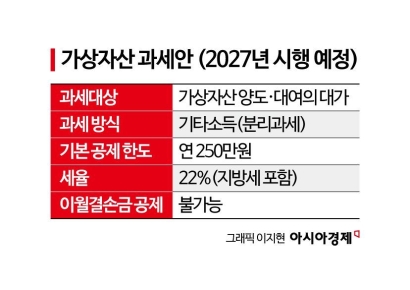 "Stocks Are Not Taxed, but Annual Crypto Gains Over 2.5 Million Won to Be Taxed Next Year... Investors Push Back"
- "Not Jealous of Winning the Lottery"... Entire Village Stunned as 200 Million Won Jackpot of Wild Ginseng Cluster Discovered at Jirisan
- "Rather Than Endure a 1.5 Million KRW Stipend, I'd Rather Earn 500 Million in the U.S." Top Talent from SNU and KAIST Are Leaving [Scientists Are Disappearing] ①
- "How Did an Employee Who Loved Samsung End Up Like This?"... Past Video of Samsung Electronics Union Chairman Resurfaces
- "Even With a 90 Million Won Salary and Bonuses, It Doesn’t Feel Like Much"... A Latecomer Rookie Who Beat 70 to 1 Odds [Scientists Are Disappearing] ③
This yellow dust is not expected to linger long in the country. From night, the atmosphere will disperse well, and air quality will recover to moderate levels on the 18th. Additionally, the northwesterly winds carrying the yellow dust will lower temperatures, and once the dust clears, a cold snap is expected. The forecasted minimum temperatures on the morning of the 18th range from minus 5 degrees to plus 5 degrees Celsius. This is 5 to 10 degrees lower compared to the morning temperatures (7 to 12 degrees Celsius) of the previous day. Due to the sharp drop in temperature, cold wave warnings have been issued for northern Gyeonggi, Daejeon, Daegu, and various inland areas.
© The Asia Business Daily(www.asiae.co.kr). All rights reserved.