US and Europe 'Sanctions on Russia' Snubbed by China... "Opposing Economic Coercion"
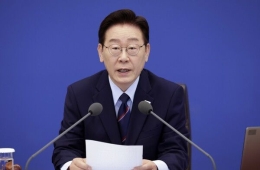
<중상무부, 우크라전 2년 대러 제재관련 입장발표> Ministry of Commerce's Statement on Sanctions Against Russia Two Years into the Ukraine War
The U.S. government included 14 Chinese and Hong Kong companies in its sanctions against Russia in connection with the Ukraine war, which marked its second anniversary, prompting China to clearly oppose the move, accusing the U.S. of "economic coercion."
A spokesperson for China's Ministry of Commerce stated on the 26th in a Q&A format posted on its website, "China is paying close attention to the relevant situation," expressing this position.
The spokesperson defined the U.S. approach as "typical unilateral sanctions and 'extraterritorial jurisdiction' (extending a country's legal reach beyond its borders), economic coercion," adding, "(The U.S.) has damaged the safety and stability of global industrial and supply chains, and China firmly opposes this."
The spokesperson added, "China will take necessary measures to firmly safeguard the legitimate rights and interests of Chinese companies."
Earlier, on the 23rd (local time), the U.S. government announced over 500 new sanction targets, citing reasons such as transporting equipment to Russia or supporting the war with Ukraine.
According to the Hong Kong South China Morning Post (SCMP), the U.S. Treasury Department specifically sanctioned six Chinese manufacturers and exporters, judging that these companies helped Russia evade U.S. sanctions by transporting ultra-small electronic devices to Russia.
Among the six newly sanctioned companies, Guangzhou Aosai Technology, Shenzhen Biguang Trading Corporation, and Irupa Electronics are also included in the European Union (EU)'s list of sanctions against Russia announced on the 21st.
The other three are Jiangxi Liansheng Technology, Guangzhou Hesen Import and Export Corporation, and Guangdong New Idea Technology. Shenzhen Speed Industrial, another mainland company, was also sanctioned.
Additionally, seven Hong Kong companies, including Denex Enterprise, Kairi Industrial, and Sigma Technology, were separately included in the sanctions list.
![Chinese President Xi Jinping is delivering a speech at a symposium commemorating the 130th anniversary of Mao Zedong's (1893?1976) birth, held on December 26 last year at the Great Hall of the People in Beijing. <br>[Photo by Xinhua News Agency]](http://www.asiae.co.kr/news/img_view.htm?img=2024020615414756879_1707201707.jpg)
Chinese President Xi Jinping is delivering a speech at a symposium commemorating the 130th anniversary of Mao Zedong's (1893?1976) birth, held on December 26 last year at the Great Hall of the People in Beijing.
[Photo by Xinhua News Agency]
On the same day, the Ministry of Commerce spokesperson also expressed opposition to the EU and the UK deciding to sanction Chinese companies for the same reasons as the U.S. The EU added four Chinese companies to its sanctions list on the 23rd, and the UK added three Chinese companies on the 22nd.
The spokesperson said, "Despite repeated negotiations and dissuasion from China, the EU stubbornly included four Chinese companies in its sanctions list, which are unilateral sanctions without international legal basis or authorization from the UN Security Council and constitute extraterritorial jurisdiction," adding, "Such actions violate the spirit of consensus from the China-EU summit and will negatively impact China-EU economic and trade relations."
He urged, "The EU should start from the broader framework of a comprehensive partnership with China and unconditionally stop including Chinese companies in the sanctions list," emphasizing, "China will firmly safeguard the legitimate rights and interests of Chinese companies."
The spokesperson also demanded the UK to "unconditionally stop" the sanctions in a statement directed at the UK.
China maintains a stance of neutrality on the surface regarding the Ukraine war, calling for a ceasefire and negotiations to end the conflict, but the West suspects that China is leaning toward Russia.
U.S. Secretary of State Antony Blinken, during the Munich Security Conference on the 16th, met with Wang Yi, director of the Chinese Communist Party Central Foreign Affairs Office (also serving as Foreign Minister), and expressed concerns about China supporting Russia's invasion of Ukraine by aiding Russia's defense industry base.
On the 17th, Wang met with Ukrainian Foreign Minister Dmytro Kuleba at the Munich Security Conference and denied such allegations, stating, "China does not add fuel to the fire nor seek to profit from opportunities," and "China does not sell lethal weapons to conflict zones or parties involved."
However, China significantly increased its trade volume with Russia last year, importing the largest amount of crude oil ever from Russia. This has led to speculation that China is stabilizing its energy imports while undermining Western sanctions against Russia.
Hot Picks Today
 "Stocks Are Not Taxed, but Annual Crypto Gains Over 2.5 Million Won to Be Taxed Next Year... Investors Push Back"
- "Don't Throw Away Coffee Grounds" Transformed into 'High-Grade Fuel' in Just 90 Seconds [Reading Science]
- Signed Without Viewing for 1.6 Billion Won... Jamsil and Seongbuk Jeonse Prices Jump 200 Million Won in a Month [Real Estate AtoZ]
- [Breaking] Lee Targets Samsung Electronics Union: "Collective Bargaining Should Not Be Abused... There Is an Appropriate Limit"
- "Even With a 90 Million Won Salary and Bonuses, It Doesn’t Feel Like Much"... A Latecomer Rookie Who Beat 70 to 1 Odds [Scientists Are Disappearing] ③
Mao Ning, spokesperson for China's Ministry of Foreign Affairs, said at a regular briefing that day, "China has maintained an objective and fair stance on the Ukraine crisis from beginning to end," and "China and Russia's normal economic and trade cooperation is not aimed at any third party, and China firmly opposes interference from third parties."
© The Asia Business Daily(www.asiae.co.kr). All rights reserved.