[Inside Chodong] Performance Bonus Truck Protests and Salary Returns

Many companies that disclosed their performance last year are suffering from 'performance bonus fatigue.' Given the strong results amid US-China conflicts, geopolitical crises, and prolonged inflation, it is only right that the fruits of success be distributed evenly among employees. Unlike in the past, when performance bonuses varied by affiliate or department causing mixed feelings, this year has seen truck protests and collective union memberships, leading to a state of distress.
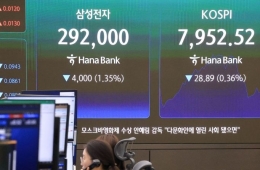
Notably, labor-management tensions within Samsung Group are rising, starting with Samsung Electronics. The membership of the largest Samsung Electronics union, the National Samsung Electronics Labor Union, increased by about 66% in just over a month. It is reported that union membership grew mainly in the DS (Device Solutions) division, which was shocked by a '0% performance bonus' due to the semiconductor downturn. On the 19th, a Samsung Group cross-company labor union was launched, involving four unions including the Samsung Electronics DX (Device Experience) union and Samsung Fire & Marine Insurance Ribbon union.
Following LG Energy Solution, Hanwha Solutions Q CELLS division is also struggling as employees have taken to truck protests at their own expense to demand improvements to the performance bonus system. The management has begun efforts to devise specific improvement plans for the performance bonus system, but it seems difficult to find a sharp solution.
Korea Electric Power Corporation (KEPCO) is in an even worse situation. While pushing for the return of performance bonuses, it has faced strong opposition from employees. The returned money is intended to be used as a fund for voluntary retirements, a touching 'sip-si-il-ban' (sharing among many) for retirees. However, employees view this coldly. Their voices, arguing that they are being forced to sacrifice while electricity rate normalization remains distant, carry persuasive weight.
Until now, returning or receiving reduced performance bonuses has been used by management as a 'trump card' to overcome management crises. In 2021, SK Group Chairman Chey Tae-won declared a salary return after SK Hynix employees expressed dissatisfaction with their performance bonuses. Recently, Lee Seok-hee, SK On CEO and former Hynix president, announced a '20% salary return' as his first statement after taking office, evoking a strange sense of d?j? vu.
While dissatisfaction over performance bonuses is spreading to collective actions, it is noteworthy that the pattern differs from past labor-management conflicts. First, employees are focusing strictly on economic interests, free from political or ideological colors. Also, voices are coming mainly from younger employees below the manager level rather than organized groups. In KEPCO’s case, until last month, the agreement rate for returning bonuses was over 80% among level 1 (head of divisions and department heads) and level 2 (managers), but below 50% among younger employees at level 4 and below.
Another changed aspect is that employees no longer identify the company’s difficulties as their own. The corporate culture is clearly shifting as more workers choose to weigh immediate economic gains rather than endure and expect promotions in a 'lifetime employment' system.
Hot Picks Today
 If They Fail Next Year, Bonus Drops to 97 Million Won... A Closer Look at Samsung Electronics DS Division’s 600M vs 460M vs 160M Performance Bonuses
- Opening a Bank Account in Korea Is Too Difficult..."Over 150,000 Won in Notarization Fees Just for a Child's Account and Debit Card" [Foreigner K-Finance Status]②
- President Lee Orders Thorough Investigation and Safety Inspection of Rebar Omission in GTX-A Samsung Station Section
- Room Prices Soar from 60,000 to 760,000 Won and Sudden Cancellations: "We Won't Even Buy Water in Busan" — BTS Fans Outraged
- "Who Is Visiting Japan These Days?" The Once-Crowded Tourist Spots Empty Out... What's Happening?
Another interesting point is that in Korean corporate history, 'salary returns' became naturally accepted starting from the 1997 Asian financial crisis. That year, large companies such as Seonkyung (now SK), Kia, Hanjin, and Jinro declared emergency management and asked employees to return salaries or froze and cut wages to reduce expenses. Now, it is an era where demanding performance bonuses as a reward for hard work is natural. However, the question remains: how much sacrifice can we prepare for when companies face crises?
© The Asia Business Daily(www.asiae.co.kr). All rights reserved.
!["Please Help Us": How Much Do Those Bowing 90 Degrees These Days Actually Earn? [Data Pick]](https://cwcontent.asiae.co.kr/asiaresize/307/2026052010120870131_1779239528.png)