President Yoon "Expansion of Non-Face-to-Face Medical Care"... Transition of Seal Certificate to Digital Seal (Comprehensive)
'Digital Coexistence' Themed Public Discussion
Amendment to Medical Law for Use During Holidays and Nighttime
Strengthening Digital One-Stop Administrative Services
![President Yoon Suk-yeol is speaking at the "Public Livelihood Discussion with the People - Seventh Session, Coexistence in Digital, Protection of Public Interests" held on the 30th at the Pangyo 2nd Techno Valley Enterprise Support Hub in Seongnam-si, Gyeonggi-do. [Image source=Yonhap News]](http://www.asiae.co.kr/news/img_view.htm?img=2024013011421848116_1706582538.jpg)
President Yoon Suk-yeol is speaking at the "Public Livelihood Discussion with the People - Seventh Session, Coexistence in Digital, Protection of Public Interests" held on the 30th at the Pangyo 2nd Techno Valley Enterprise Support Hub in Seongnam-si, Gyeonggi-do. [Image source=Yonhap News]
View original imageThe door to telemedicine, which had been operated on a limited basis since the COVID-19 pandemic, is now fully opening. Going forward, patients living in emergency medical vulnerable areas or during holidays and nighttime hours such as the Lunar New Year holiday will be able to receive telemedicine services even without prior in-person consultation experience. The government plans to supplement pilot projects and push for institutionalization of telemedicine through amendments to the Medical Service Act. Additionally, by activating data linkage and sharing between ministries, the government aims to implement a 'zero paperwork at government offices' policy by 2026, significantly reducing the hassle of obtaining multiple documents for citizens through the establishment of a 'one-stop service.'
On the morning of the 30th, President Yoon Suk-yeol stated at the seventh 'Public Discussion on Livelihood Issues with the People,' held under the theme 'Digital Coexistence, Protection of People's Rights,' at the Startup Zone of the Enterprise Support Hub in Pangyo Second Techno Valley, Seongnam-si, Gyeonggi-do, that telemedicine had been operated in a limited manner after the pandemic, causing considerable inconvenience and disappointment among the public. He pledged to reflect this in legal amendments and actively expand telemedicine.
This discussion was organized to discuss ways to enhance citizens' freedoms and rights in digital areas of daily life such as digital administration, game content, and digital medical services. In his opening remarks, President Yoon said, "Digital technology is changing our lives, but challenges that need to be addressed are emerging at an equally rapid pace," emphasizing that "the government must become faster and more deeply involved on the ground, focusing on improving service convenience and accessibility to enhance citizens' freedom and welfare."
In particular, President Yoon announced plans to promote telemedicine so that all citizens can access medical services regardless of time and place. He said, "Telemedicine based on digital technology has revolutionized access to medical services," adding, "During the COVID-19 pandemic, both citizens and doctors wisely utilized telemedicine, and digital medical services have been activated, creating a new private market." However, he pointed out that as the pandemic ended, telemedicine became restricted, continuing to cause inconvenience to the public.
Yoon: Digitalization Including Telemedicine is a Global Competitiveness
![President Yoon Suk-yeol is listening to a presentation by Ko Jin, Chairperson of the Presidential Committee on the Digital Platform Government, at the "Public Livelihood Discussion with the People - Seventh Session, Coexistence in Digital, Protection of Public Rights" held on the 30th at the Pangyo 2nd Techno Valley Enterprise Support Hub in Seongnam-si, Gyeonggi-do. <br>[Image source=Yonhap News]](http://www.asiae.co.kr/news/img_view.htm?img=2024013011454048121_1706582739.jpg)
President Yoon Suk-yeol is listening to a presentation by Ko Jin, Chairperson of the Presidential Committee on the Digital Platform Government, at the "Public Livelihood Discussion with the People - Seventh Session, Coexistence in Digital, Protection of Public Rights" held on the 30th at the Pangyo 2nd Techno Valley Enterprise Support Hub in Seongnam-si, Gyeonggi-do.
[Image source=Yonhap News]
President Yoon stated, "Although the government continues telemedicine in the form of pilot projects, inconveniences and regrets remain, such as restrictions on remote drug delivery," and added, "Many citizens criticize that the laws and systems regarding telemedicine are outdated."
Accordingly, President Yoon pledged to improve the system to activate telemedicine so that all citizens can access medical services regardless of time and place. Through amendments to the Medical Service Act, the system will be improved to allow telemedicine use even without prior in-person consultation during Lunar New Year holidays, holidays, and nighttime hours. To this end, the current pilot projects will be supplemented and expanded to enable working parents and patients living in emergency medical vulnerable areas to use telemedicine.
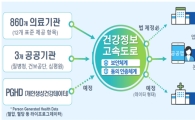
Instead of patients having to submit medical records and imaging information such as computed tomography (CT) scans on paper or CDs when transferring hospitals, the government will expand electronic and rapid sharing methods. The government plans to increase the number of medical institutions linked to the medical information exchange system from 8,600 last year to 9,400 this year to reduce inconvenience for patients and their guardians.

In his closing remarks, President Yoon reiterated his commitment to expanding telemedicine. He said, "Many approach the expansion of telemedicine as a conflict of interest between the medical community and patients or consumers of medical services, but I view this issue in terms of the development of Korea's bio-medical industry," emphasizing, "Telemedicine should be seen as an important aspect of digitalizing medical services and from the perspective of global competitiveness and Korea's medical service global competitiveness."
He reiterated, "We should not approach telemedicine as a conflict of interest issue between the medical community, patients, and consumers of medical services," adding, "Our government repeatedly emphasizes that it is important to grow related industries to achieve administrative goals rather than focusing on regulation."
He continued, "The issue of telemedicine should be approached not only from the perspective of personal information protection but also from the perspective of creating benefits for the entire nation and people, as it involves digitalization of medical services and information use," and stated, "For our medical professionals to enter overseas markets more and for our medical industry to develop further, there must be innovations that surpass leading countries' systems so that digitalization including telemedicine can have global competitiveness. The government will pursue policies in this direction."
Over 1,500 Administrative Service Documents to be Digitized Over 3 Years
Furthermore, President Yoon announced that in the field of digital administration, walls between ministries will be broken down, and scattered information and data will be gathered to provide citizens with convenient 'one-stop customized administrative services.' He said, "Starting with about 420 services by the end of the year, a total of over 1,500 administrative service required documents will be fully digitized over three years," adding, "We will significantly convert the seal certificates, which have been in use for 110 years, into digital seals."
This aims to alleviate the inconvenience citizens have faced in having to obtain many documents to receive administrative services. Over the next three years, all required documents for more than 1,500 administrative services will be fully computerized to create an environment where applications can be made easily without preparing various supporting documents, and unnecessary seal certificates will be largely converted to digital seals.
President Yoon explained, "Citizens will be able to apply for necessary tasks conveniently without running around or preparing various supporting documents," and added, "Even digitizing just 30% of the 700 million required documents issued annually will save trillions of won in budget."
Regarding the gaming industry, which has established itself as a content industry, President Yoon said there is a need to protect game users who purchase digital goods such as items as general consumers. To resolve unfairness and protect consumers in the gaming industry, following the disclosure of information on 'probability-type items,' the government plans to thoroughly respond to small-scale game fraud and so-called 'Mukttwi games' where services end prematurely after generating revenue.
Related Articles
 No More Pacing in Emergency Rooms During Lunar New Year Holidays... Government Promotes 'Non-Face-to-Face Medical Care'
- [Featured Stock] Bitcom, No.1 in Medical Information and Telemedicine... Expected to Benefit from Revised Non-face-to-face Medical Care Regulations
- Yoon: "Expanding Non-Face-to-Face Medical Care... Will Do Our Best to Reflect It in Legal Amendments" (Update)
- Domestic 'Non-face-to-face Medical Service Companies' Aim at Overseas Markets Beyond Services for Overseas Koreans
President Yoon promised, "We will continue to eradicate small-scale game fraud and thoroughly respond to 'Mukttwi games' that generate revenue and then terminate services early to protect the rights and interests of game consumers."
© The Asia Business Daily(www.asiae.co.kr). All rights reserved.







