Lee Cheol-woo, Governor of Gyeongbuk, "Overcoming Low Birthrate, Creating a Success Model in Local Areas"... TF Team Launched
Gyeongbuk Province, which has declared a "war against low birth rates," has officially launched the "Low Birth Rate Overcoming TF" to carry out the mission of overcoming low birth rates, entering an emergency response system by holding a plaque ceremony.
At 10 a.m. on the 25th, the plaque ceremony held at the Gyeongbuk Provincial Government Office was attended by Lee Cheol-woo, Governor of Gyeongbuk Province, Kim Hak-hong, Deputy Governor, other senior officials of Gyeongbuk Province, the head of the Gyeongbuk Research Institute, and employees with multiple children.

Under the direction of Governor Lee Cheol-woo, the TF consists of key aides from the provincial government such as the Director of Planning and Coordination Office and the Policy Planning Officer. The head of the Future Strategy Planning Division concurrently serves as the TF leader. The TF operates with a total of 13 members across four teams: the General Planning Team and three Policy Cooperation Teams.
Gyeongbuk Province diagnosed that previous policy efforts centered on the central government failed to resonate with the public because they lacked understanding of the field.
Accordingly, Gyeongbuk Province plans to shift the paradigm so that the "local" governments, businesses, and civil society take the lead, while the "national" government cooperates and supports. They aim to discover business models desired by the field and create successful models in Gyeongbuk.
To this end, they will prepare step-by-step implementation plans for ultra-short-term, short-term, mid-term, and long-term phases. The ultra-short and short-term tasks will focus on what can be done immediately at the local level. Gyeongbuk Province views the most urgent issues to overcome low birth rates as "housing and childcare," focusing on "parent-safe housing" and "complete childcare for children," while planning to create a "K-Low Birth Rate Overcoming Pilot Model" tailored to regional characteristics.
They will secure funding for the projects at a groundbreaking level, with the province and city/counties reflecting this in the supplementary budget starting this year.
In the mid- to long-term, Gyeongbuk Province plans to present not only active support measures to overcome low birth rates but also structural measures and policy visions such as national balanced development, education reform, and preparation for an era of population decline.
They will also actively discover tasks to propose to the government. Various policy ideas will be concretized and proposed to the central government, including the installation of a K-Low Birth Rate Overcoming Testbed, establishment of a (tentative name) Population Department (at the level of Deputy Prime Minister or higher) in local areas, creation of a children's fund and special accounts, and enactment of special laws.
Starting with the "War Against Low Birth Rates Declaration Ceremony" in February, Gyeongbuk Province plans to sequentially implement national campaigns with civic groups, National Assembly seminars, expert working group operations, public idea contests, relay field discussions, MZ generation and university student talk shows, and prepare a "(tentative name) Local-led K-Low Birth Rate Overcoming Master Plan" within the first half of the year to establish a turning point in overcoming low birth rates.
Hot Picks Today
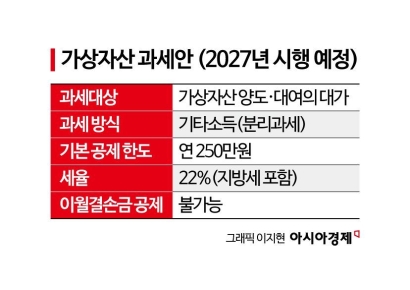 "Stocks Are Not Taxed, but Annual Crypto Gains Over 2.5 Million Won to Be Taxed Next Year... Investors Push Back"
- "Not Jealous of Winning the Lottery"... Entire Village Stunned as 200 Million Won Jackpot of Wild Ginseng Cluster Discovered at Jirisan
- "Jeong Yu-kyung Is a Neighbor"...Itaewon Standalone House with Record 23.2 Billion Won Appraisal Up for Auction [Real Estate AtoZ]
- "How Did an Employee Who Loved Samsung End Up Like This?"... Past Video of Samsung Electronics Union Chairman Resurfaces
- "Even With a 90 Million Won Salary and Bonuses, It Doesn’t Feel Like Much"... A Latecomer Rookie Who Beat 70 to 1 Odds [Scientists Are Disappearing] ③
Governor Lee Cheol-woo of Gyeongbuk Province said, "Responses to low birth rates must be led by local governments that understand the field well, from planning to execution," adding, "We will break the vicious cycle of rapidly declining birth rates in Gyeongbuk, create a successful model to overcome low birth rates, and save the Republic of Korea."
© The Asia Business Daily(www.asiae.co.kr). All rights reserved.