38 Trillion Won Financial Support and Differentiated Electric Vehicle Subsidies... "Establishing a Battery Reuse Ecosystem"
Government Emergency Economic Ministers' Meeting
Announces 'Measures to Strengthen Competitiveness of the Entire Secondary Battery Industry Cycle'

Exterior view of the secondary battery material complex. Photo by POSCO Future M
View original imageThe government has initiated the preparation of legislation to recognize used batteries not as waste but as products and to foster the industry. The patent examination period for secondary batteries will be shortened to 10 months, and tax benefits will be expanded for overseas resource development investments and refining and smelting technologies of key minerals. Financial support of 38 trillion won will be provided over five years across all sectors of the secondary battery industry.
On the 13th, the government announced the "Plan to Strengthen the Competitiveness of the Entire Secondary Battery Industry Cycle" at the Emergency Economic Ministers' Meeting.
First, the government plans to prepare legislation next year to systematically nurture the ecosystem for remanufacturing, reuse, and recycling industries of used batteries. Instead of regulating used batteries as waste, they will be actively fostered from the perspectives of supply chains and industry.
If Used Battery Passes Performance Evaluation, It Is Recognized as a 'Product' Not 'Waste'
The government intends to significantly ease regulations on used batteries. A three-stage safety inspection system will be introduced: performance inspection → pre-distribution safety inspection → post-inspection. First, the Automobile Management Act will be amended to conduct performance evaluations before removing batteries at the electric vehicle scrapping stage. Batteries meeting certain standards will be recognized as 'products' rather than 'waste' from the moment of removal, allowing remanufacturing or reuse. Until the introduction of pre-removal performance evaluation, used batteries will be designated as 'circulating resources' to exempt them from waste regulations.
The recycling industry, which recovers key minerals by disassembling used batteries, will also be promoted. To ensure stable raw material procurement for recycling companies, the storage and processing period for used batteries will be extended from the current 30 days to 180 days. The raw material regeneration industry producing nickel, cobalt, and manganese will be classified as manufacturing, allowing entry into industrial complex factory zones. Local governments' distance regulations on waste disposal and raw material regeneration industries will be removed or relaxed.
The government will also promote recognizing intermediate processed products such as so-called 'black powder' as 'recycled products' rather than 'intermediate processed waste.' Companies using intermediate processed products as raw materials were previously subject to waste recycling regulations but will now be able to operate as manufacturing businesses. Import licensing procedures for intermediate processed products will also be exempted, allowing the import of used batteries from overseas for raw material reprocessing.

LFP Electric Vehicles Receive Less Subsidy... Tax Credit for Investment in Key Mineral Development
The government plans to build an information system that can integrate and manage the entire lifecycle information of electric vehicle batteries from manufacturing to operation and recycling. It will also legislate mandatory information input at each stage by battery users and performance evaluators.
To promote battery recycling, the electric vehicle subsidy system will be reformed. Previously, the mandatory domestic operation period for electric vehicles receiving subsidies was 2 years (for vehicles applying before June 30, 2022) or 5 years (for vehicles applying after June 30, 2022) when sold overseas, but this will be extended to 8 years.
A plan to provide differentiated subsidies based on the recyclability of batteries will also be established. Subsidies will be calculated considering the value of recoverable precious metals through used battery recycling. In this case, electric vehicles equipped with lithium iron phosphate (LFP) batteries, which have lower recycling value, may receive less subsidy than those with ternary batteries such as nickel-cobalt-manganese (NCM) or nickel-cobalt-aluminum.

The government plans to include remanufactured batteries in the 'Remanufactured Product Quality Certification' and prioritize purchasing electric vehicles equipped with them in public procurement. A secondary battery task force (TF) involving relevant ministries and experts will be operated to discuss policies related to used batteries and secondary batteries. The Deputy Minister of Strategy and Finance will lead the TF, with participation from director-level officials from the Ministry of Industry, Environment, and Land, Infrastructure and Transport, as well as private experts.
The patent priority examination system currently applied to semiconductors will also be introduced for secondary batteries. By expanding specialized examiners, the patent examination period for secondary batteries will be drastically shortened from 21 months to 10 months. The definition of electric vehicles under the Enforcement Decree of the "Eco-friendly Vehicle Act" will include 'electric two-wheelers.' This will allow battery swapping services for electric two-wheelers to be recognized as electric vehicle charging businesses under the Electricity Business Act. The government expects this to create new markets such as secondary battery subscription services.
To stabilize the supply of key minerals used in secondary batteries, the government will introduce a tax credit for overseas resource development investments for acquiring mining and operating rights. This will apply from investments and contributions made in 2024, with a tax credit of up to 3% of the investment and contribution amount. The government is also considering designating essential refining and smelting technologies for key minerals such as nickel and lithium as new growth and source technologies under the Restriction of Special Taxation Act. Overseas resource development loan support will be expanded from 30% to 50% of the investment amount.
Stockpiling 100 Days’ Worth of Essential Minerals like Lithium... Establishing a Stockpile Base in Saemangeum
The government plans to stockpile 24 days’ worth of lithium next year to prepare for supply chain crises such as export controls. A dedicated stockpile base for key minerals will be established in the Saemangeum National Industrial Complex, and by 2031, 100 days’ worth of essential secondary battery minerals such as lithium and cobalt will be stockpiled.
The government will provide more than 38 trillion won in policy financing over the next five years (2024?2028) across all sectors of the secondary battery industry, including minerals, materials, and finished products. Six policy financial institutions?Korea Development Bank, Export-Import Bank of Korea, Korea Trade Insurance Corporation, Korea Technology Finance Corporation, Industrial Bank of Korea, and Korea Credit Guarantee Fund?will participate in the support. Additionally, 117.2 billion won will be invested in next-generation secondary battery technology development projects such as sulfide-based all-solid-state batteries, lithium metal, and ultra-lightweight lithium-sulfur batteries.
Meanwhile, domestic electric vehicle adoption has rapidly increased from 35,080 units in 2019 to 164,486 units last year. As used batteries are also expected to surge, there have been concerns that existing regulations are insufficient to cope. Major overseas countries such as the United States, China, and the European Union (EU) are implementing various policies to promote recycling by establishing systems related to used batteries.
Related Articles
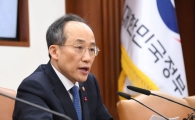 Choo Kyung-ho: "3% Tax Credit for Mining Rights Investment in Secondary Batteries... Institutionalizing Capacity Change Information Disclosure"
The United States is pursuing a plan to increase the collection and recycling rate of secondary batteries to 90% by 2030 (currently about 5%). The EU mandates the use of a certain percentage of recycled raw materials in the manufacture of new secondary batteries.
Terms Related to Used Batteries
Reuse: Utilizing for purposes other than electric vehicles, such as energy storage systems (ESS), through repair and parts replacement
Recycling: Disassembling used batteries to recover valuable metals such as lithium and nickel
© The Asia Business Daily(www.asiae.co.kr). All rights reserved.
!["Please Help Us": How Much Do Those Bowing 90 Degrees These Days Actually Earn? [Data Pick]](https://cwcontent.asiae.co.kr/asiaresize/307/2026052010120870131_1779239528.png)






