[Haruchunja] The 7 True Conditions of Happiness <1>
![[Haruchunja] The 7 True Conditions of Happiness <1>](http://www.asiae.co.kr/news/img_view.htm?img=2023112013275659065_1700454477.png)
We often try to forcefully solve things that are impossible, sad, or painful. Additionally, there is a savior complex toward others, the feeling that 'I must rescue them from there.' This mindset assumes that 'problems must be solved' when viewing oneself and the world. Such thoughts prevent us from seeing things as they truly are and lead to judgment. The moment we become obsessed with the compulsion to solve problems, acceptance becomes distant.
Healthy acceptance is completed through the following three elements. It is a way of actively embracing the given situation without blindly being optimistic or resigned with nihilistic attitudes. The first is 'normalization.' Everyone makes mistakes or errors, so it is recognizing that what I am experiencing is not strange but perfectly normal. For example, no matter how brave a firefighter is, it is normal for a human being to feel fear and retreat when facing fierce flames. In other words, normalization is accepting that all my behaviors are normal and that anyone else could behave the same way.
The second is 'validation.' While others may be different, at least I acknowledge that I can be this way. Validation is a term translated from the English word 'validation.' 'Valid' is also a word stamped on visas that permit entry when traveling abroad. In psychology, the term 'acceptance' is sometimes used to mean acceptance and acknowledgment. Validation means telling oneself that even if one is somewhat inadequate or unsatisfactory, it is okay and valid.
The third is 'self-assurance.' Even if one is lacking, struggling, and nothing goes as planned, it is accepting that oneself is a valuable being as is. Once you acknowledge yourself in this way, you can gain the strength and courage to move toward a good life even in difficult and challenging situations.
Hot Picks Today
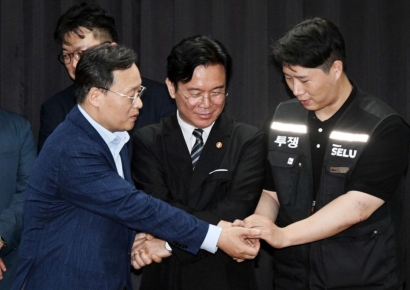 Dramatic Agreement Reached on Eve of Samsung Electronics General Strike... Minister Kim Young-hoon: "Showcased Korea's Strength in Dialogue" (Update)
- "It Has Now Crossed Borders": No Vaccine or Treatment as Bundibugyo Ebola Variant Spreads [Reading Science]
- "From a 70 Million Won Loss to a 350 Million Won Profit with Samsung and SK hynix"... 'Stock Jackpot' Grandfather Gains Attention
- "Stocks Are Not Taxed, but Annual Crypto Gains Over 2.5 Million Won to Be Taxed Next Year... Investors Push Back"
- "Who Is Visiting Japan These Days?" The Once-Crowded Tourist Spots Empty Out... What's Happening?
- Chae Jeong-ho, The 7 True Conditions of Happiness, Influential, 18,800 KRW
![[Haruchunja] The 7 True Conditions of Happiness <1>](http://www.asiae.co.kr/news/img_view.htm?img=2023111715192657287_1700201966.jpg)
© The Asia Business Daily(www.asiae.co.kr). All rights reserved.