SK Ecoplant Internalizes Four Core Technologies for Used Battery... Files Patent Applications
Declaration Ceremony for Used Battery Recycling Technology
Industry-Leading Recovery Rates of Nickel and Cobalt from Used Batteries
SK ecoplant has succeeded in internalizing four core technologies across the entire process of waste battery recycling, including advanced recovery rates of key battery materials such as nickel, cobalt, and lithium, wastewater reduction, fire prevention, and high-speed discharge. SK ecoplant plans to operate a pilot plant using the newly secured technologies and then proceed with commercialization.

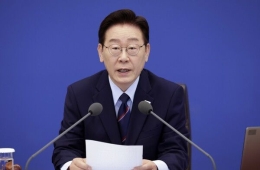
Park Kyung-il, President of SK Ecoplant, is conducting the battery recycling technology development declaration ceremony. (Provided by SK Ecoplant)
View original imageOn the 14th, SK ecoplant held a ‘Battery Recycling Technology Development Declaration Ceremony’ at the Korea Institute of Geoscience and Mineral Resources in Daejeon and announced the achievements in secondary battery recycling technology development and the utilization roadmap.
On this day, SK ecoplant and KIGAM explained that they achieved a 97% recovery rate of rare metals nickel and cobalt extracted from waste batteries using solvent extraction methods. The purity of the recovered nickel and cobalt exceeds 99.9%, which is at the mineral level actually used in battery manufacturing. Nickel and cobalt are raw materials for battery cathode materials, most of which are imported. Since last year, the two organizations have jointly conducted research to improve metal recovery rates through the advancement of solvent extraction technology for waste batteries.
This technology maximizes recovery rates while minimizing the process through optimization of extractants and processes. Achieving industry-leading recovery rates is expected to reduce not only operating costs but also facility investment costs.
The recovery rate of lithium, one of the major rare metals, also reached 90%. Lithium is one of the main materials used in battery cathode materials. Additionally, together with Sungkyunkwan University, they secured technology to solve environmental issues that may arise during the solvent extraction process by developing a high-performance solvent extractant. By improving the performance of the extractant used in the waste battery recycling process, the amount of water used can be reduced.
They also succeeded in advancing safe and effective discharge technology for batteries, which is essential before extracting rare metals from waste batteries. Generally, it takes about a day to fully discharge waste batteries, but SK ecoplant, in collaboration with KAIST, shortened the time required for full discharge to a maximum of 49 minutes.
SK ecoplant has filed patents for these four core technologies. The secured technologies will be used to operate a pilot plant and promote commercialization. Subsequently, through demonstration projects to improve technological completeness, the final goal is to apply them to the SK ecoplant waste battery recycling plant in Gyeongju, Gyeongbuk, expected to be completed in 2025.
Hot Picks Today
 "Stocks Are Not Taxed, but Annual Crypto Gains Over 2.5 Million Won to Be Taxed Next Year... Investors Push Back"
- "Don't Throw Away Coffee Grounds" Transformed into 'High-Grade Fuel' in Just 90 Seconds [Reading Science]
- Signed Without Viewing for 1.6 Billion Won... Jamsil and Seongbuk Jeonse Prices Jump 200 Million Won in a Month [Real Estate AtoZ]
- [Breaking] Bloomberg: "Korean HMM Oil Tanker Attempts Escape from Strait of Hormuz"
- "Even With a 90 Million Won Salary and Bonuses, It Doesn’t Feel Like Much"... A Latecomer Rookie Who Beat 70 to 1 Odds [Scientists Are Disappearing] ③
Park Kyung-il, CEO of SK ecoplant, said, "We have secured both the technological capabilities, which are the most important factors in the waste battery recycling business, and multiple local bases." He added, "Once the ongoing waste battery recycling facilities are established, SK ecoplant’s waste battery recycling value chain capabilities will truly shine in the market."
© The Asia Business Daily(www.asiae.co.kr). All rights reserved.