Next Year's Local Allocation Tax, Providing Thicker Support to Struggling Regions
Ministry of the Interior and Safety Announces 2024 Ordinary Local Tax Grant Improvement Plan
From next year, financial resources for basic local governments facing fiscal difficulties, such as industrial crisis areas and connected islands, will be further reinforced. Additionally, new local finance items will be established to strengthen responses to the population crisis by addressing increased foreign demand and youth demand.
On the 31st, the Ministry of the Interior and Safety held the Local Allocation Tax Committee chaired by Choi Byung-gwan, Director General of the Local Finance and Economy Bureau, and announced the 2024 improvement plan for the ordinary local allocation tax.

The ordinary local allocation tax is a system that supplements financial resources for local governments that cannot cover their budgets solely through local taxes, ensuring that citizens can receive standard administrative services anywhere in the country. It plays a role in improving tax base concentration and fiscal imbalance.
This improvement plan focuses on providing stronger support to financially vulnerable regions to respond to the recent uncertain economic situation and the difficulty of local governments in recovering their revenue conditions, emphasizing ▲ revitalization of the regional economy ▲ agile response to future structural changes such as population and climate crises ▲ sound and efficient fiscal management.
First, the scope of applicable cases was expanded from the current 10 to 13 types to enable regions with stagnant growth due to land use regulations and industrial crises to quickly normalize their regional economies. In addition, connected islands, which were overlooked due to geographic characteristics despite low income levels, are designated as underdeveloped areas to support the respective local governments in making a fresh start. Financial needs of local governments lacking fiscal capacity to support accumulated fishery damage, such as fish farm deaths caused by rising water temperatures, will also be backed.
To respond to population decline, multicultural (foreign) demand is expanded to help members with diverse migration backgrounds settle stably in the region, and youth demand is newly established to create a foundation for local youth to reduce burdens in jobs, housing, welfare, and overall life and to become self-reliant.
For disaster safety and climate crisis response, local governments are encouraged to expand budget allocations for preparing for large-scale and prolonged natural disasters and for safety investments closely related to daily life. The support period for creating safe walking environments for vulnerable groups such as children, disabled persons, and the elderly will be extended by three years each.
Furthermore, to help local governments block fiscal leakage and accelerate fiscal structural improvement, the ratio of incentives and penalties reflecting efforts to reduce local subsidies will be doubled. Penalties on ordinance-based exemptions within the total exemption limit will be boldly abolished to establish a foundation for using ordinance exemptions as a key policy tool for regional economic revitalization. Meanwhile, penalties for exemptions exceeding legal limits will be strengthened to prevent indiscriminate populist exemptions.
This improvement plan will be reflected in the 'Enforcement Rules of the Local Allocation Tax Act' and will be announced for legislative notice until December 12. Once the amendment is enforced, it will be applied nationwide to local governments when calculating the ordinary local allocation tax for 2024.
Hot Picks Today
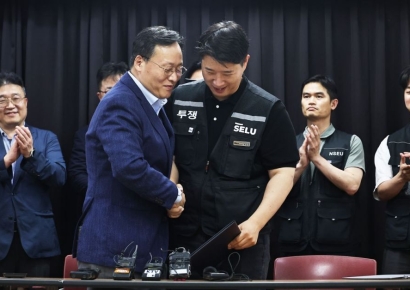 Up to 600 Million Won for Semiconductors, 160 Million Won Bonus for Loss-Making Non-Memory… Samsung Electronics Labor and Management Reach Tentative Deal on Unprecedented Performance Compensation (Comprehensive)
- "Could I Also Receive 370 Billion Won?"... No Limit on 'Stock Manipulation Whistleblower Rewards' Starting the 26th
- "From a 70 Million Won Loss to a 350 Million Won Profit with Samsung and SK hynix"... 'Stock Jackpot' Grandfather Gains Attention
- [Current State of Foreigner K-Finance]③"The Essence Is Ultimately Communication... Lending and Financial Education Must Go Hand-in-Hand"
- "Who Is Visiting Japan These Days?" The Once-Crowded Tourist Spots Empty Out... What's Happening?
Choi Byung-gwan, Director General of the Local Finance and Economy Bureau, emphasized, “In difficult domestic and international economic conditions, local allocation tax distributed from citizens’ taxes must be efficiently invested by local governments where it is truly needed,” and added, “The Ministry of the Interior and Safety will also strive to allocate the local allocation tax in a way that revitalizes the regional economy and responds to future structural changes.”
© The Asia Business Daily(www.asiae.co.kr). All rights reserved.
!["Please Help": How Much Do Those Bowing 90 Degrees Really Earn? [Data Pick]](https://cwcontent.asiae.co.kr/asiaresize/307/2026052010120870131_1779239528.png)